




The moment Francisco Duarte cut the ribbon to celebrate the opening of his seafood restaurant in Tijuana, he looked up and made the sign of the cross. It was his way of hoping for the best in this new venture.
Read more Scripps Encinitas opens new patient tower
For over 30 years, Duarte had made a living selling ice pops from a pushcart in southern San Diego. But in late September, after years of fighting his immigration case, a judge ordered his removal. He and his wife made the difficult decision not to appeal the ruling and turned themselves in for deportation. Their story went viral on social media when he posted a video saying goodbye to the community he had served for decades.
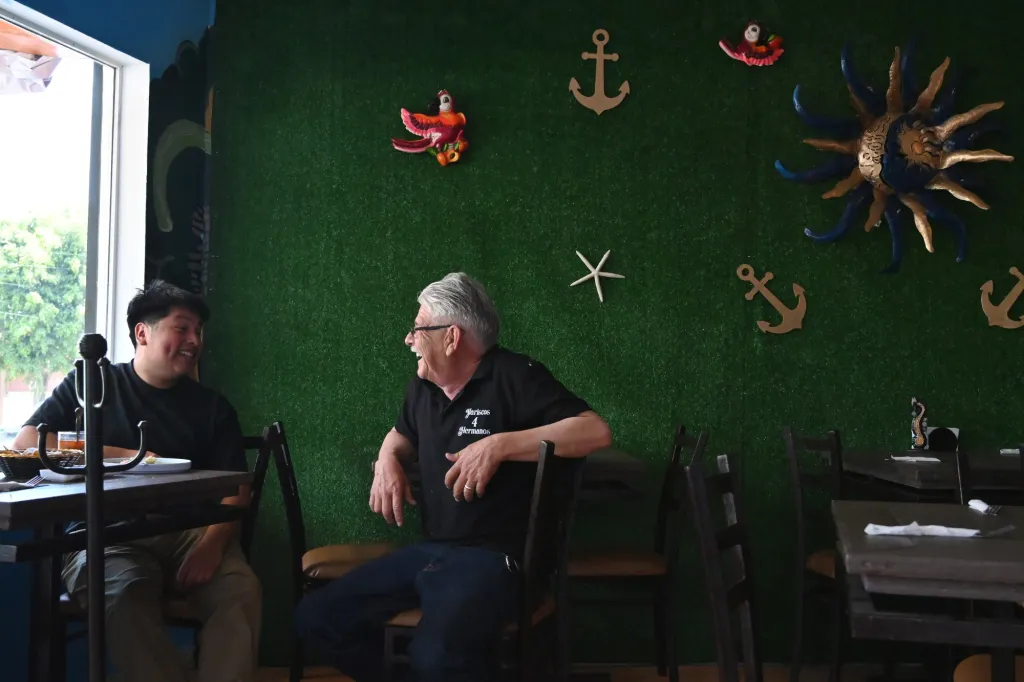
Seven months later, he traded in the pushcart for a brick-and-mortar restaurant in Tijuana’s Zona Centro, serving seafood inspired by his youth in the Mexican state of Sonora.
He and his wife named the restaurant Mariscos Cuatro Hermanos, or Four Siblings Seafood, after the four U.S.-citizen children the couple left behind in San Diego.
“When I walk into my restaurant, I want to see the name and feel the bond I share with them,” Duarte said in an interview earlier this month.
The chef is also from Sonora, and the Duarte family is on-site, welcoming customers. The restaurant’s signature dish is cahuamanta, a traditional Sonoran seafood stew made with manta or sting ray, shrimp and vegetables. It can also be served as tacos.
His wife, Rosenda Pérez, said that she never thought her family would one day open their own restaurant. “We’ve worked really hard,” Pérez said. “It’s a great achievement.”
In May 2017, Duarte and his wife were arrested by Border Patrol agents outside their National City home on suspicion of human smuggling. The case was widely reported on by local news outlets at the time. However, Duarte said that they were not charged with the crime, and both he and his wife were eventually released. In October, a Department of Homeland Security official said that Duarte had a prior conviction for illegal entry.
After eight years of fighting to stay in the country, the couple decided not to appeal their removal. Duarte said then that their longstanding cases had taken a toll on their health and finances.
Deciding to go back to Mexico wasn’t easy. It helped that his children are now in college or working and can take care of themselves.
He said he misses the regular clients he used to sell ice cream to, many of whom have stayed in contact with him and often reach out to see how they can help.
Read more Navy preparing to sink two prominent and retired San Diego warships off Hawaii
But traces of the paletero life remain. A black-and-white photo of him standing next to the pushcart he used for many years sits on the counter of his new restaurant. And one of the freezers he used to store popsicles in San Diego now holds seafood in Tijuana.
Not so long ago, while taking a stroll with his wife through Teniente Guerrero Park in Tijuana, two blocks from the restaurant, he met a fellow paletero. Seeing the vendor brought back memories, so he bought a bunch of paletas to give to kids who were playing in the park, he said.
Gone are the days of Duarte going to work in San Diego in fear of not returning home. “I would always leave with God’s blessing,” he recalled of his days as a paletero, with the uncertainty of his immigration status in the U.S. hanging over his head. “My wife would say a prayer for me and walk me out.”
His daughter, Aracely Duarte, said that her father is no longer living with the anxiety of not knowing what will happen to him. “Now that he’s here, although he’d like to be with his family, he’s free,” she said.
Aracely and her brothers visit their parents at least once a week, while her sister, who lives in Stanford, does so when she is in town.
Duarte and his wife are renting a two-story home in Tijuana owned by one of their friends from their San Diego church.
Duarte’s farewell video posted last year got some 2.8 million views on Instagram. Earlier this month, Aracely posted an update to express her gratitude to everyone who helped her family.
“Thank you for all your support and donations,” she wrote in an Instagram video titled “What Happened to the San Diego Deported Paletero?” The video showed his family at Mariscos Cuatro Hermanos.
“Without them, this wouldn’t have been possible. You changed my family’s life, and for that, we will forever be grateful.”
Read more Pro-Palestinian activist Mahmoud Khalil wants Supreme Court to weigh in on deportation fight