







Oceanside’s Planning Commission has recommended the city go slowly on compliance with the state’s new Abundant and Affordable Homes Near Transit Act.
Read more Cornyn tries to hold on to Texas Senate seat in runoff with Paxton, the latest test of Trump’s power
Known as Senate Bill 79, the act takes effect July 1 and will make it easier for developers to build low- and mid-rise housing within one-half mile of Oceanside’s seven Sprinter train stations on the east-west rail route to Escondido.
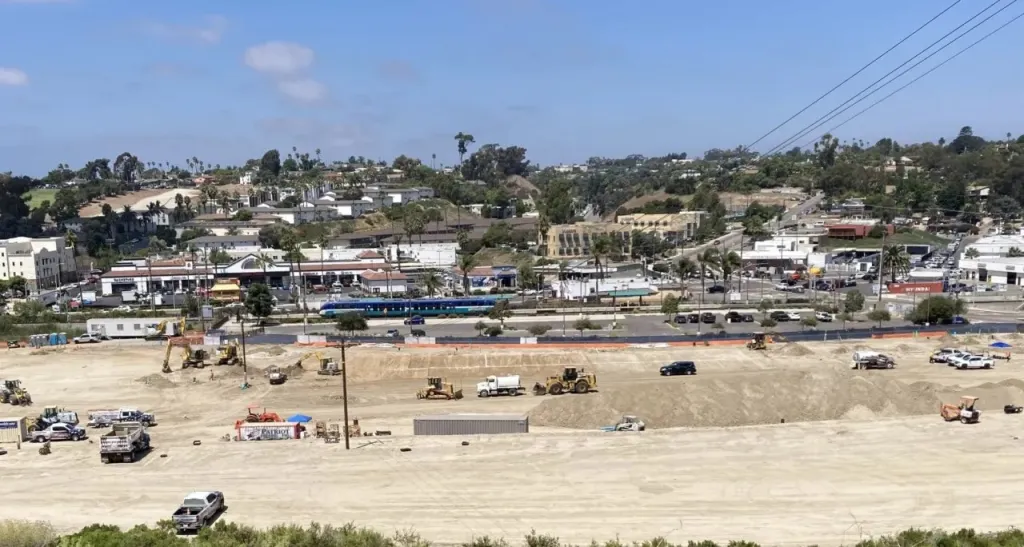
The so-called transit-oriented development has already begun at or near some of the train stations. Construction started in 2024 on 295 apartments in five four-story buildings with ground-floor shops and restaurants on 18.9 acres near the Crouch Street Sprinter Station.
San Diego County is one of 15 counties in California with train stations or transit centers covered by the bill. In the city of San Diego, where light-rail trolley stations would be affected, the City Council voted unanimously earlier this month to take a similar go-slow approach.
SB 79 requires a development to include a minimum amount of deed-restricted affordable housing units to benefit from its provisions. In return, the project may receive incentives, waivers or concessions such as taller buildings, smaller setbacks and fewer parking spaces than allowed under local zoning.
Read more Here’s how much San Diego County’s top school leaders are paid
Local officials have long maintained that the state’s density bonus law unfairly increases the burden on nearby roads and utilities such as water and sewer lines that were designed for lesser populations. They say SB 79 law further erodes local control over development.
The Oceanside Planning Commission voted unanimously Monday to recommend the Oceanside City Council approve an ordinance to exclude the provisions of SB 79 at some sites and defer implementation at others, as allowed by the law. No individual sites were specified.
The city also reserves the right to contest the state’s designation of transit-oriented development sites and will prepare its own TOD plan, states a city staff report.
Sites in high fire danger zones, near wetlands, or without adequate pedestrian access, for example, can be excluded from SB 79.
Read more Trump will see doctors for his annual physical. What the public finds out is up to him