




The campaign message from supporters of San Diego’s Measure A seemed like a powerful one: Tax the wealthy out-of-towners who are keeping their second homes empty much of the year so the rest of us might have more housing we can afford to rent or even purchase.
Read more Planning commission seeks more details on Trump’s planned 250-foot arch near the Lincoln Memorial
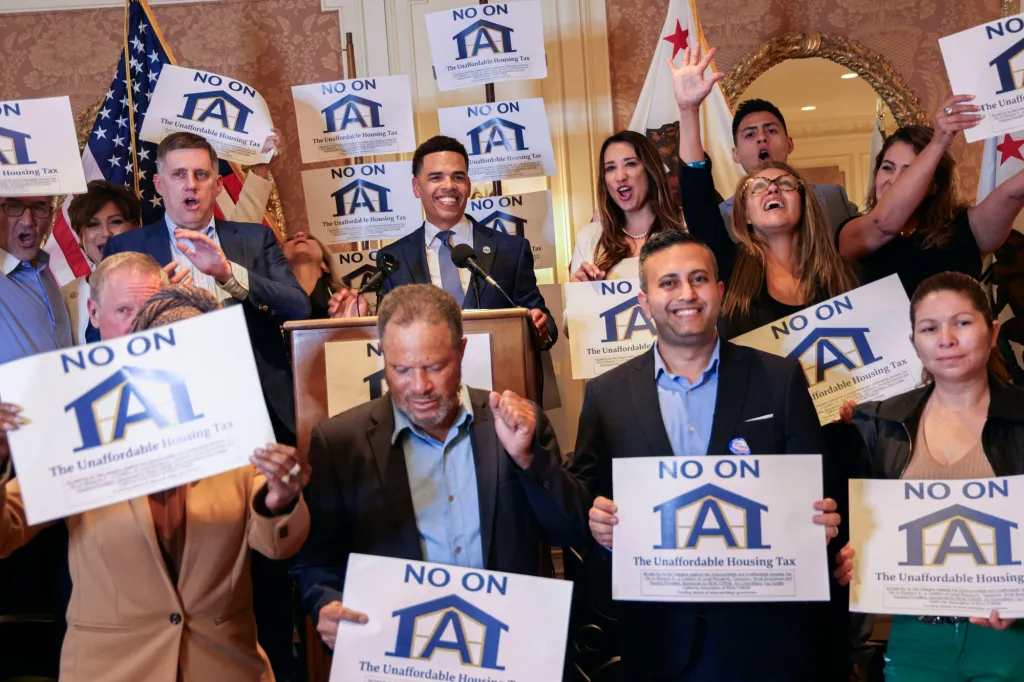
That messaging, though, fell far short, drowned out by a nearly $1.4 million Realtor-funded drive to kill the non-primary homes tax, which now appears headed for defeat. The proposed levy of up to $10,000 a year on second homes that remain unoccupied for more than half the year was still trailing by a comfortable margin of 13 percentage points on Thursday, according to the latest unofficial election results from the San Diego County Registrar of Voters.
While an opposition campaign that outspent Yes on A supporters by a margin of nearly 5-to-1 may seem like the obvious explanation for the less-than-enthusiastic support for the tax, the more probable reason for its likely defeat is an electorate that deeply distrusts the San Diego City Council to do anything right, say insiders and political analysts.
Although the principal goal of Measure A was to incentivize the owners of second homes to either sell their properties or rent them out long term, the tax would also generate up to $24 million a year for the city’s general fund that the council and mayor could use to address a still-lingering budget crisis. The primary election also came on the heels of multiple financial controversies that greatly angered locals, chief among them much higher than promised fees for trash pickup and paid parking in Balboa Park.
“The theory in politics is that money can be very influential, but in San Diego, the bigger issue is the city government: The City Council and mayor have lost so much trust with the voters that they would not even pass a tax increase on their own houses if they were on fire,” said Carl Luna, a visiting political science professor at the University of San Diego. “I can’t remember the last really good headline that came out of City Hall, so I think that you have a loss of trust that builds on San Diegans who say I don’t want to be taxed, give me the stuff I want, and I’ll scream when I don’t get it, but please don’t tax me for it.”
Even as more states across the country are embracing higher taxes on the wealthy and New York City Mayor Zohran Mamdani has pushed for a “pied-à-terre tax” that would affect second homes worth more than $5 million, the notion of taxing well-heeled investors didn’t find resonance in San Diego.
“The supporters could have painted the opposition as big money trying to squash everybody else, and they may have had a chance, but I didn’t see them putting the leg work into doing it. They should have held off and waited to do it in November when you’re going to have a larger, more progressive body voting. So I saw the whole thing as just a fumble,” Luna said.
Measure A sought to impose an initial annual tax of $8,000 on second homes that are deemed to be unoccupied for more than 182 days in a single year. In subsequent years, the tax would rise to $10,000. For corporate-owned housing, there would be an initial surcharge of $4,000 that would increase to $5,000 thereafter. The city estimated that there are more than 5,100 such homes across the county, from wealthy enclaves like La Jolla to inland communities like Ranch Peñasquitos and Mission Valley.
Yes on A supporters agree they faced a major challenge, given the lopsided spending — their campaign raised a little more than $300,000 — but some also acknowledge that the even tougher challenge was the growing enmity the public has with its elected leaders. One of the more persuasive arguments of the opposition was that there were no guarantees that the money raised from the proposed tax would even go to address housing issues.
To do so would have required a two-thirds majority vote, a seemingly impossible threshold these days when it comes to taxes. Councilmember Sean Elo-Rivera, who championed the measure, said as much in an interview before the election.
“Hitting a two-thirds threshold when you are taking on the wealthy is very, very challenging,” he said. “So yes, would my preference be that every single dollar of this went right into affordable housing and eviction prevention and homelessness prevention? Absolutely, but doing that would effectively take this off the table as a tool that the city could use.”
Stephen Russell, president and CEO of the San Diego Housing Federation and one of the key leaders of the Yes on A campaign, agreed that there were just too many factors working against what would have otherwise been a persuasive campaign.
Read more Trump says Pulte won’t be his nominee for director of national intelligence
“I think that the mood right now, given the trash tax, the parking fees, is just really negative in all ways,” Russell said. “And a lot of the comments that I’ve collected just really have to do with the fact that voters didn’t trust that the money would be used for the right purpose, that it was going to be just thrown into the general fund. And yes, that’s a fact. But I’d also say that the opposition blasting all these mailers out, they have wide coverage, and every one of these things had a new story of why this was a terrible thing.”
Elo-Rivera was more pointed in his post-election analysis, saying that it was difficult to rebut what he said were outright lies in the campaign flyers mailed by the No on A campaign. For example, one mailer suggested that a $10,000 tax could hit deployed service members. In truth, the measure provided an exemption for members of the military who have been temporarily relocated.
“There was a disingenuousness of the opposition campaign that just can’t be understated, because there’s folks who have said this doesn’t actually build more housing, who are staunch opponents of any attempts to build more housing,” Elo-Rivera said. “We have brought forward the biggest overhaul of tenant protections in San Diego in two decades and passed that, and we’re working on another one to address the use of fees. We banned the use of AI technologies to rig rental prices. I’m not going to stop, because this is the most foundational issue for people to believe that they have a future in this city, so if it requires a ballot measure to get that stuff passed, we’ll pursue it.”
If anyone was deceptive in the campaign, it was the proponents, who sold a “false hope” that the tax would address the city’s housing issues, said No on A campaign spokesperson Shane Harris.
“Throughout the campaign, we heard consistent concerns about two issues in particular: first, whether the measure would meaningfully address San Diego’s housing affordability challenges, and second, how the city would enforce the tax and administer the program,” Harris said. “Those questions remained central to the public discussion from the beginning through Election Day.”
While many other cities and states across the country have enacted second home tax measures, not all efforts have been successful. A South Lake Tahoe measure on the November 2024 ballot failed by a wide margin, with more than 70% of voters opposed. As in San Diego, the opposition campaign relied heavily on Realtor groups for fundraising, with the National Association of Realtors contributing $625,000.
San Diego Councilmember Raul Campillo, who was the lone no vote on placing a second homes tax on the ballot, had opposed the measure primarily because he thought that an inevitable legal challenge to it would fail in the courts. San Francisco paused its voter-approved measure last year after a Superior Court judge struck it down, saying that it violated the U.S. and California constitutions and was preempted by California law.
But that wasn’t what troubled voters, Campillo acknowledges.
“The broader message is that voters want us to balance the budget and figure out how we’re going to properly spend the money we have right now and prove that we have good stewardship of their taxpayer dollars before they give us more,” he said. “One of the arguments that I kept hearing from the proponents was you don’t need to worry about this tax. It will never affect you. So if 99% of people aren’t affected by a tax and 57% of people still vote against it, it clearly seems to me that the outcome is more of a rebuke of the proponents and the City Council for putting it on the ballot in the first place.”
As for what’s next in the fight to bring down the cost of housing in San Diego, Russell said he’s hopeful that a proposed multibillion-dollar bond issue to help expand the supply of low-cost housing will make it onto California’s November ballot. The one catch, though, is that if successful, it would require a local funding match.
“If we are not willing to dedicate revenue at the local level,” Russell said, “it’s impossible to cultivate a really efficient pipeline of housing production, so we’re going to have to grapple with that.”
Read more Trump plans to attend Knicks Finals Game 3 at Madison Square Garden on Monday: sources