







The agreement to restore nearly all of the proposed city cuts to San Diego arts programs was widely lauded not just for what it does now, but potentially in the future.
Read more Chula Vista reclaims a piece of its past in acquiring historic Vogue Theater
The plan — promoted by a broad coalition of government, arts, tourism and philanthropic interests — promises to set up a collaborative structure aimed at giving the arts stable funding in the future.
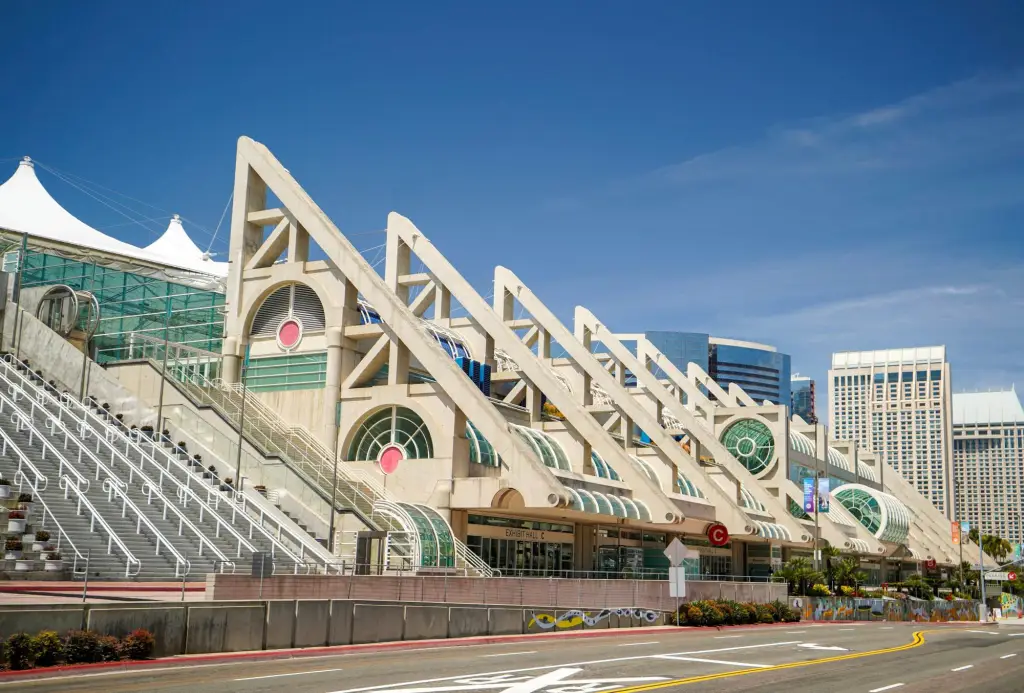
A creative stop-gap measure to come up with about $10 million to mostly offset Mayor Todd Gloria’s $11.8 million in planned reductions leaned heavily on diverting money targeted for a voter-approved, much-delayed expansion to San Diego’s waterfront convention center.
In a sort of backfilling bank shot, $6 million in hotel taxes targeted for the convention center expansion authorized under 2020’s Measure C would be used for the arts. There was hardly a peep of opposition when the deal was proposed on June 5. Notably mute were the tourism, hotel and business communities that are often protective of the convention center as an economic driver for their specific interests and San Diego at large.
Since then, considerable unease has been expressed about such financial maneuvers — but in the future.
“While we recognize the significant fiscal challenges the City is facing this year, we are concerned about the use of voter-approved tourism and expansion revenues to address broader budget pressures,” Clifford “Rip” Rippetoe, president and CEO of the San Diego Convention Center Corp., said in a statement.
“… We look forward to working collaboratively with the City to develop a sustainable long-term approach. Any continued diversion of Measure C and Special Promotional Program Fund revenues risks undermining public trust and weakening the City’s positioning for expansion.”
Despite pledges from City Council members that this is a one-time budget move, the temptation will be there again.
The city has a structural budget deficit that results in annual shortfalls that need to be covered with cuts, additional revenues or both. Meanwhile, the hotel taxes are coming in for a convention center project that, for now, doesn’t actually exist.
Mayor Gloria last week approved the council’s revisions to his budget with the arts deal included, but expressed reservations.
“Decisions like diverting Measure C funds from the Convention Center may avoid difficult cuts this year, but they set us up for the same budget challenges next year,” Gloria said.
The San Diego County Lodging Association, in a letter to the council last month, urged the city “to maintain appropriate guardrails around the use of these funds and avoid redirecting them toward general or unrelated expenditures that fall outside the measure’s original intent.”
Measure C was specifically designed and sold to voters to fund the convention center’s expansion, homelessness programs and road repairs.
There are likely plenty of reasons for the initial low-key response and lack of opposition from Measure C backers.
For one thing, $6 million is a relatively minor sum, compared with both the city’s estimated $2.2 billion general fund and the eventual price tag of a convention center expansion, the future of which is far from certain.
Litigation over whether Measure C needed a two-thirds majority to pass — it gained 65.2 percent — took years until the courts ultimately determined it won approval. The city only started collecting the increased hotel tax a year ago.
Meanwhile, the previous convention center expansion financing plan became woefully outdated. What was once estimated to cost around a half-billion dollars could cost twice that much or more, depending on what is proposed.
Read more Kids’ nonprofit in Seattle returns 20 free World Cup tickets over barring of Somali referee
The city must wait until a lease on nearby property expires next year before it can start planning an expansion. To move ahead, more money than Measure C can provide will be needed, according to businessman Steve Cushman, a special assistant to the mayor.
“I anticipate by January of 2027, when we can start working on the expansion part of the project, I will be looking for additional sources of funding,” Cushman told the Union-Tribune’s Lori Weisberg at the beginning of this year.
The city has already diverted Measure C funding from the original goals of the ballot measure.
The city has agreed to spend $118.7 million in Measure C money over the next five years for deferred maintenance and modernization at the facility. Some $200 million more in such spending is estimated over the next 20 years.
For the arts funding, the agreement proposes to use Measure C money for payment on the center’s 2001 expansion debt to free up other money.
While all that Measure C spending technically is on the convention center, it’s paying off expenses generated in the past and not what San Diegans were voting for in 2020.
During the campaign, some advocates for Measure C downplayed the possibility of diverting tax money from the stated purposes, but there was always wiggle room.
“The City Council may use Measure C money for any purpose. Measure C says so,” Cory Briggs, the attorney who waged the legal fight against the city over the ballot measure, said in a text last week. “They just have to follow the prescribed process.”
City Attorney Heather Ferbert signed off on the arts funding transfer.
There’s another reason why the arts funding deal appears to have so much support and little opposition: Protecting the arts is very popular.
In the letter to the city, the lodging association said opposition to “disproportionate arts funding cuts” was one of its budget priorities, but through the so-far unsuccessful “Penny for the Arts” policy. There was no mention of Measure C money here.
“The organizations and programs supported through this framework are an integral part of San Diego’s visitor experience and identity as a cultural destination,” the letter said.
During the campaign, some Measure C opponents expressed concern that funds generated for homelessness programs could be diverted to other uses. In its recent letter, the lodging industry said that was essentially proposed in Gloria’s budget.
“Furthermore, while the clear intention and language of Measure C called out these funds as additive to existing programs and services, this budget not only uses these new revenues to fund existing programs and services, but actually reduces overall spending on them,” the letter said.
Some of the cuts were restored by the council on Tuesday.
Rippetoe may have struck a nerve about city actions “undermining public trust.” That’s been a growing concern in San Diego, according to polls and analysts.
That dynamic helped put pressure on officials to roll back new trash-collection fees and scuttle Balboa Park parking fees, and was considered part of the reason for the overwhelming loss of Measure A, the so-called “second homes tax.”
How Measure C money is being used could be seen as a saving grace for some programs it was never intended to fund — or as not keeping faith with the voters.
Read more Mexican police investigate body found outside Tijuana stadium where Iran prepares for World Cup
PatriotTakes (@patriottakes).
“Bud Light branding is on display for the White House UFC match.”