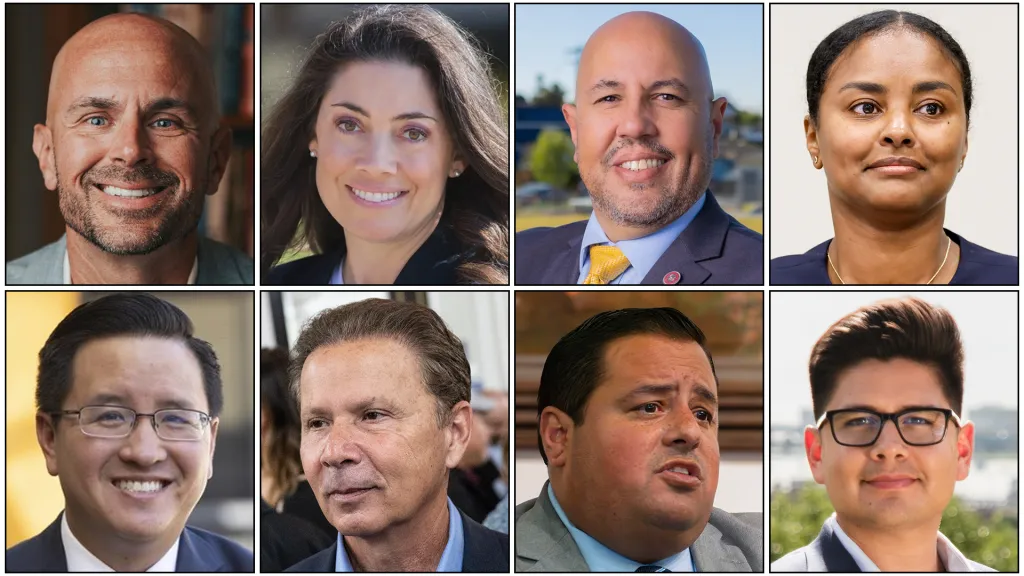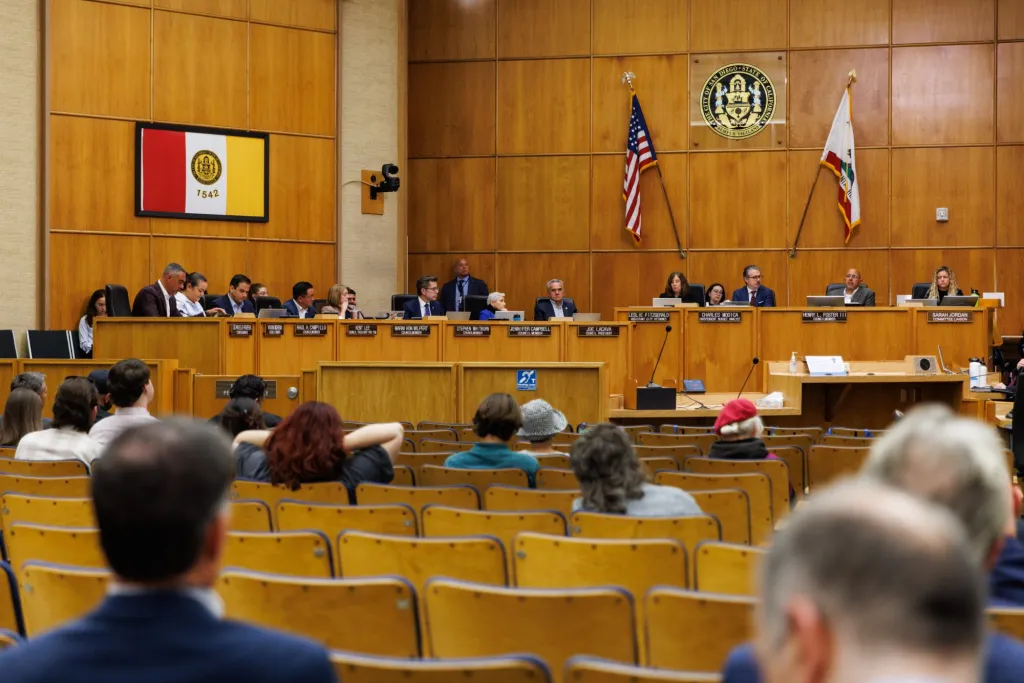




The San Diego City Council unanimously finalized a deal Monday that slashes new trash fees for single-family homes starting next summer and eliminates paid parking in Balboa Park this December.
Read more SDG&E, Qualcomm and Scripps team up to curb wildfires and extreme weather with AI
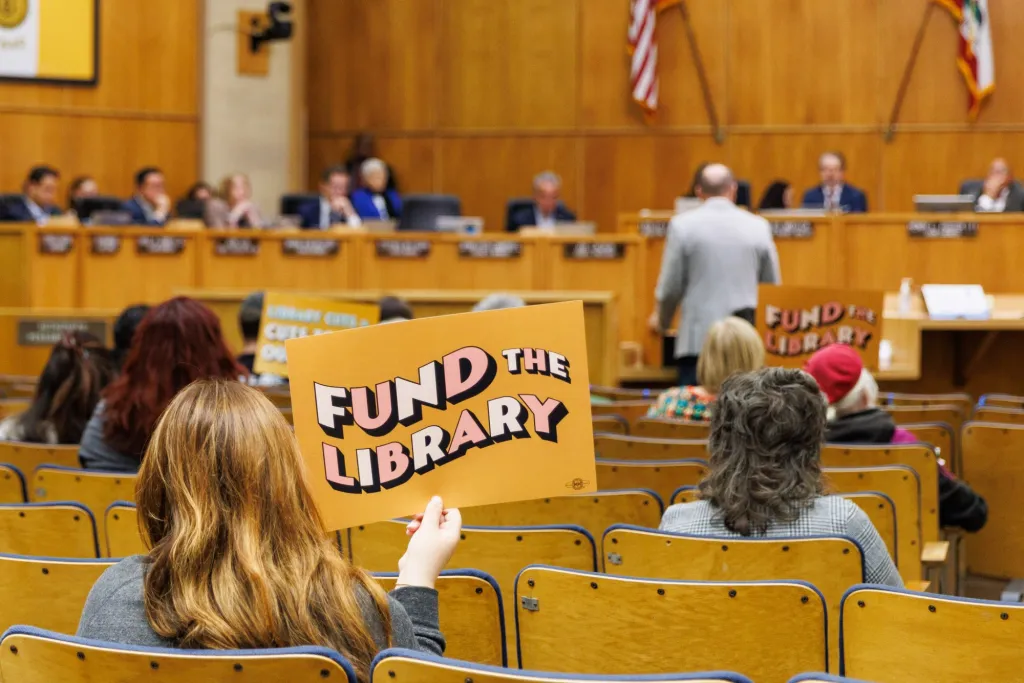
Council members said the deal helps restore public trust by setting trash fees closer to what voters were initially told to expect and by eliminating a revenue experiment hated by Balboa Park museums and visitors.
“These changes are an important step toward restoring the trust and providing relief to San Diegans who are facing significant affordability challenges,” Councilmember Raul Campillo said of the reduced trash fees.
Campillo, the only member of the council to vote last year against both the initial trash fees and the paid parking in Balboa Park, said restoring free parking there would benefit everyone.
“Whether you’re a senior visiting a museum or a family attending a community event or a volunteer supporting a nonprofit or just a visitor experiencing San Diego for the first time, this repeal makes it easier to enjoy one of the city’s greatest public assets,” he said.
The only skepticism came from Councilmember Sean Elo-Rivera, who said it’s frustrating to allow tourists to park for free in Balboa Park and that the trash deal will cost residents by accelerating closure of the Miramar landfill.
“I don’t think San Diego is better off when we subsidize the vacations of folks who are expecting to pay to park,” he said. “It is not better for San Diego to allow free parking for Zonies or for someone who flew across the country and rented a car.”
The deal, which was first announced last month, kills a ballot measure effort that could have cost San Diego $300 million by prohibiting the city from collecting anything for trash service during fiscal years 2028 and 2029.
It also settles a lawsuit that challenged the trash fees, which took effect last July, for being higher than voters were told before they approved a 2022 ballot measure that made the fees possible.
The council approved $1 million in total fees Monday for the attorneys who filed that lawsuit, Mike Aguirre and Maria Severson.
Rolling back the trash fees by 30% will cost the city an estimated $100 million — about $47 million in fiscal 2028 and $53 million in fiscal 2029. But only about $20 million of that $100 million will impact the city’s general fund.
About $44 million will come from the city’s recycling fund, which is created by fees people and businesses pay to dump at the Miramar landfill and generates between $25 million and $26 million per year.
To soften the impact of the trash fee reduction, city officials plan to send $22 million from the recycling fund to the general fund in both fiscal 2028 and fiscal 2029.
Before the deal to lower trash fees, that money had been earmarked to help build a city household hazardous waste facility, enhance recycling efforts at Miramar and help educate apartment and condominium residents on recycling.
The city will save millions more by not moving forward with its previous plans to add new services next summer, including bulky item pickup and greater frequency of recycling pickups — once a week versus every two weeks.
Elo-Rivera said this move is likely shortsighted, contending that lower recycling rates will force Miramar to close sooner than the city’s current projection of 2031.
“There’s no easy way out of this,” said Elo-Rivera, stressing the city would lose millions in fees it gets from users of Miramar. “That cliff is not that far out, and anything we are not diverting from the landfill speeds up the closure of the landfill.”
Another way the city plans to save money will be by canceling plans to shift its fleet of trash haulers to all-electric, an effort that had been slated to begin next year.
Full-service trash fees won’t be reduced to $29 per month like the lawsuit sought, but they will drop to $38.75 next summer — far less than the $55 per month they would have been next year before the deal to lower them.
And in fiscal year 2029, the fees for full service — a 95-gallon trash can — will be $39.91 per month, far less than the $57.55 that had been slated.
The city will also continue with a “pay-as-you-throw” incentive, giving customers who use smaller cans a discount.
Read more Reward offered for arrest of vandal who destroyed locks at Patrick Henry High
The monthly fee for those using 65-gallon cans will be $34.47 in fiscal year 2028 — instead of $48.76 — and the fee for using 35-gallon cans will be $28.52 instead of $40.57.
City officials said they plan to do a new study in 2027 or 2028 to determine what the fees should be after the period covered by the deal ends in June 2029.
Jordan More, who works for the city’s independent budget analyst, warned the council that the total general fund subsidies required by the deal could rise beyond $20 million if trash workers get pay raises or vehicle costs rise.
On the Balboa Park parking part of the deal, city officials provided far less negative information. But they did note that the fees were projected to generate between $7 million and $10 million per year for the city that will no longer be available.
Peter Comiskey, leader of the Balboa Park Cultural Partnership, praised the repeal of the parking fees and thanked the council.
“Your creativity and leadership will begin to pull Balboa Park back from the brink,” Comiskey said.
He said park leaders are prepared to deal with the city’s decision to delay the repeal until the end of December to avoid worsening the deficit for the upcoming fiscal year.
“We recognize that the next several months will not be without challenges,” Comiskey said. “We’re committed to working through these challenges together as the paid parking era comes to a very happy close.”
Councilmember Stephen Whitburn, who helped broker the deal with labor leader Mike Zucchet and former Mayor Kevin Faulconer, stressed that the repeal goes beyond just paid parking in the park’s large lots.
It also covers hundreds of new meters installed within the park. They are on Presidents Way, Village Place, Balboa Drive, El Prado, Quince Drive, Juniper Road and Park Boulevard.
In addition, anyone who has purchased a parking pass — monthly, quarterly or annually — can get a refund for any time their pass covers after the repeal takes effect.
Margaret Virissimo, a local community leader who has ardently opposed paid parking in Balboa Park, said the repeal should be effective immediately — not nearly seven months from now.
“The people of this city are done waiting,” she said.
But no one on the council suggested an immediate repeal.
The city plans to eliminate a new tram service it created when paid parking began Jan. 5.
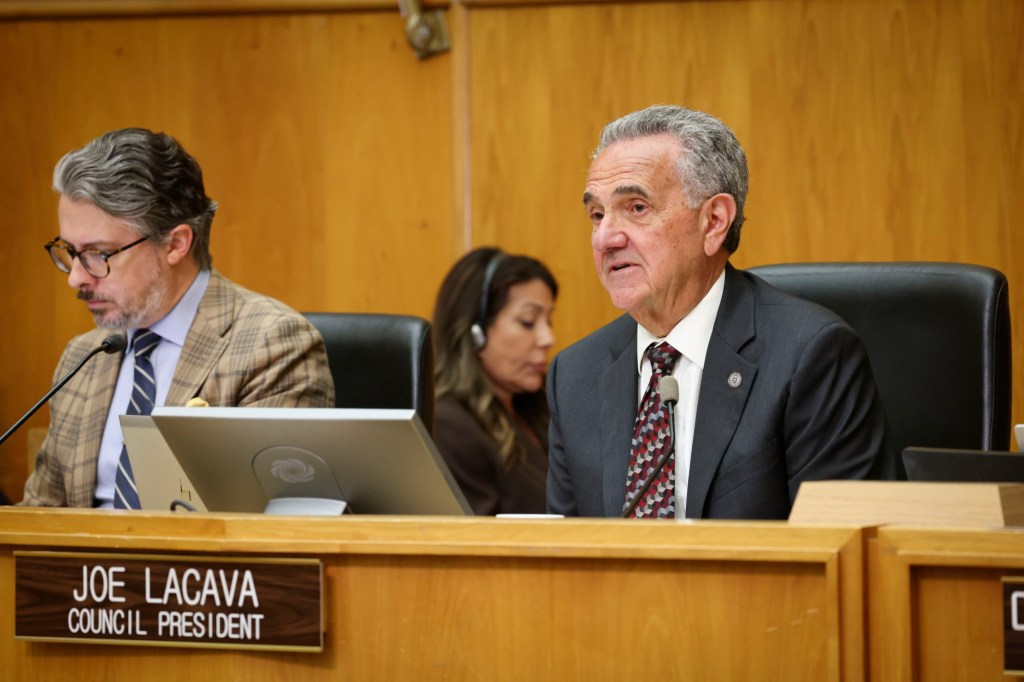
Council President Joe LaCava praised Whitburn and Zucchet for brokering the deal, noting they took over after he was unsuccessful.
“You were a tougher negotiator, and you got a better deal,” LaCava said to his council colleague. “Kudos to you and Mr. Zucchet. You made a very awesome team.”
The two men negotiated with Aguirre to drop his lawsuit and with Faulconer to drop a ballot measure effort he was spearheading on behalf of the Lincoln Club Business League.
The lawsuit had sought a rollback on monthly trash fees to $29, which was the high end of the $23 to $29 range that voters were told the new assessment would likely cost when they agreed to overturn the century-old People’s Ordinance in 2022.
The $38.75 per month included in the deal approved Monday is equivalent to that $29 figure adjusted upward for inflation since 2021, the year the $23-to-$29 range was estimated by the city’s independent budget analyst.
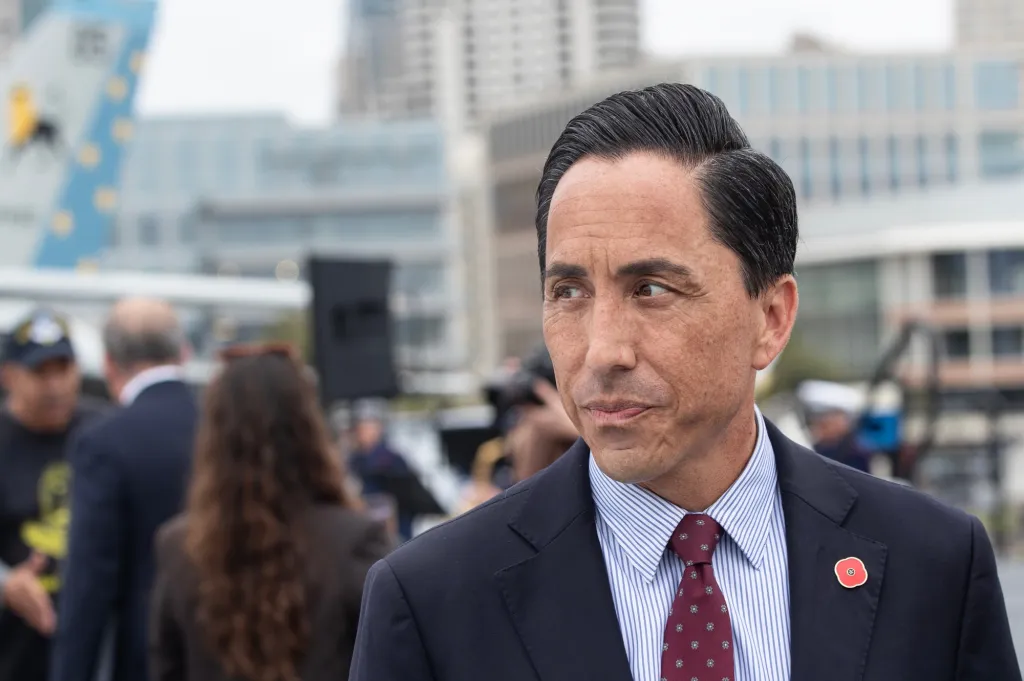
Mayor Todd Gloria praised the deal after the council’s vote.
“Today’s City Council action reflects a compromise reached to protect the city from prolonged litigation and the risk of even deeper financial consequences that could have resulted in far more significant cuts to core services,” he said in a news release.
Read more Netanyahu and Trump are at odds over the war they started together