







A one-two punch around the turn of the century redefined the American experience and set a new standard for security in an open and gun-friendly society.
Read more Police investigate threat at San Diego Zoo but find no danger
The events at Columbine High School in 1999 and the Sept. 11, 2001, terror attacks rewrote the rules over public safety. They also helped spark billions of dollars in new security spending by governments and private entities.
Both the federal government and California now award millions of dollars a year to nonprofit schools, churches and other facilities that are vulnerable to hate crimes like the shooting last week at the Islamic Center of San Diego.
The Clairemont mosque was attacked last Monday by two teenage shooters armed with multiple weapons, killing three people before taking their own lives immediately after the assault.
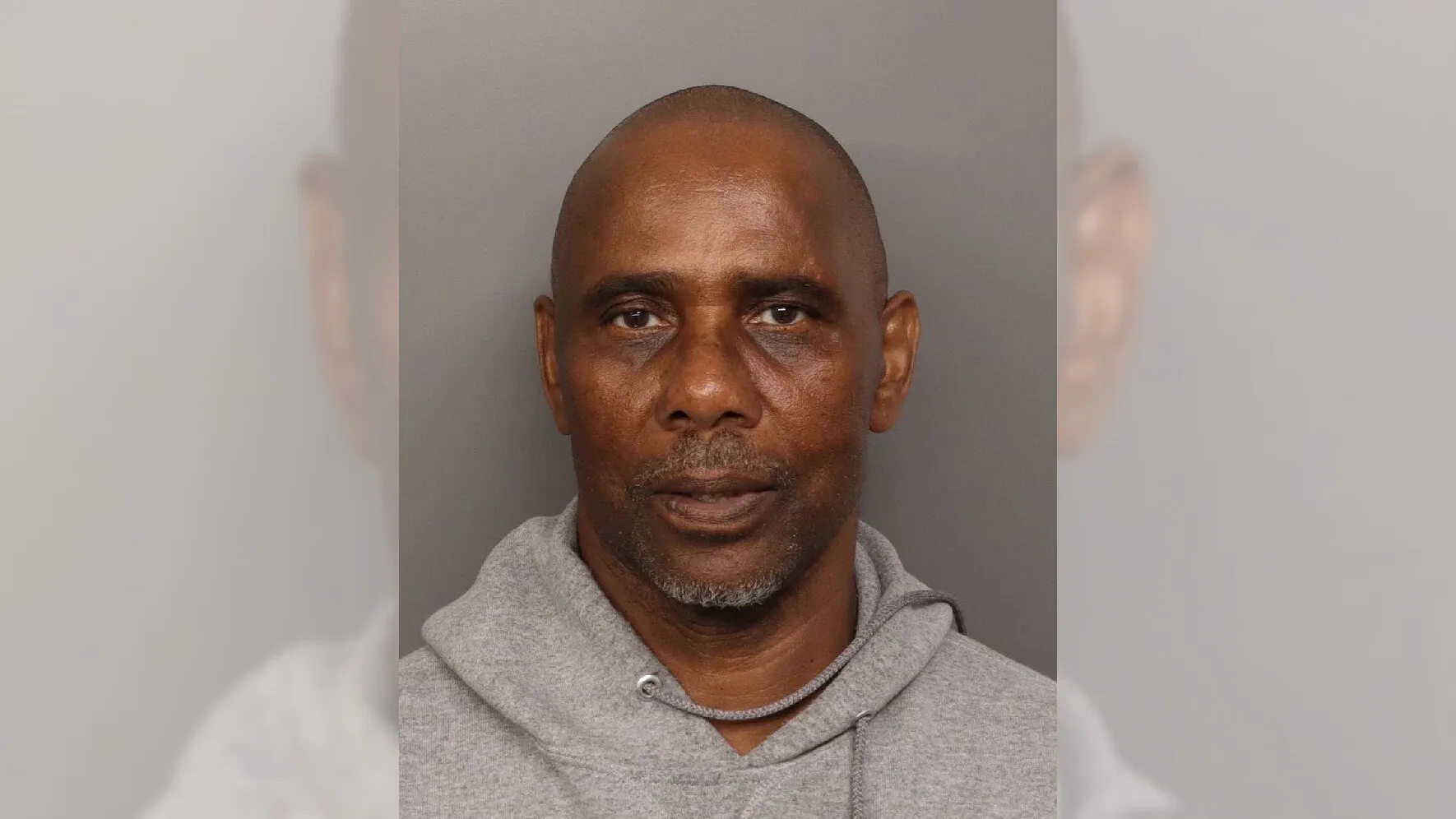
San Diego police said the shooting could have been far worse. The number of fatalities was limited by the actions of licensed security guard Amin Abdullah, who bought precious time for survivors by exchanging gunfire with the suspects while also warning others to flee.
“Undoubtedly, he saved lives,” Police Chief Scott Wahl said in the early hours of the massive police response.
Abdullah was armed and patrolling the house of worship on a routine Monday morning because leaders of the mosque have long recognized the threat their community confronts due to the rise in hate crimes.
Speaking at a news conference with San Diego police and the FBI the day after the shooting, the Islamic Center’s imam said the mosque was accustomed to receiving hate mail, hateful messages online and hearing passing drivers scream and curse at community members.
“But such horrible crime, we never expected this,” Taha Hassane said.
Even so, center officials spent years preparing for just such an attack, the imam acknowledged.
“We tried throughout the years everything,” Hassane said on Tuesday. “Applying for Homeland Security grants, (we) have a fence, security armed guards, security cameras covering every single spot inside and outside the Islamic Center. What could we do more than this?”
Records show the Islamic Center of San Diego and its sister campus in El Cajon collected a total of $1.2 million in state and federal grants that provide money to schools, churches and other nonprofits that might become targets for political extremists.
The Federal Emergency Management Agency gave the center $600,000 over the past 10-plus years, and the state of California awarded $590,000 under its own nonprofit-security program.
Ghouse Mohammed is the Islamic Center of San Diego’s head of security, who has served on the group’s board of directors since 2013.
He said the early grants paid for portions of the black metal fencing that now encircles the property. Later grants were used to install bulletproof glass around a playground near the street, as well as bulletproof glass in other classroom windows.
“Unfortunately, we have to give this environment to the kids, but for their safety,” Mohammed said.
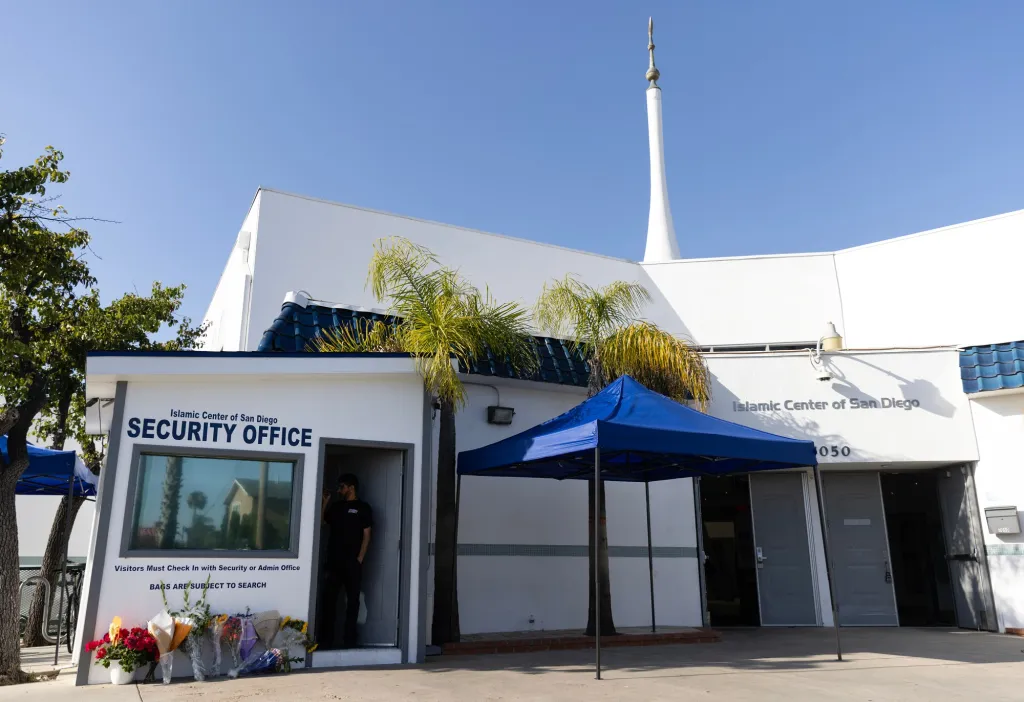
The center used one of its most recent state grants to build a steel security booth with bulletproof glass just outside the main entrance. Mohammed estimated that construction on that booth finished within the last 18 months.
“All the walls are made of steel because we were always at the receiving end of threats and hate, and we didn’t want to take chances with our kids and with our community members,” he said.
Applications for the security grant funding include a vulnerability analysis. The self-review is supposed to identify specific needs expected by the applicant as well as any specific threats received by the organization.
Neither FEMA nor the California Governor’s Office of Emergency Services, the two agencies that administer the security grants, immediately responded to requests last week for copies of the Islamic Center of San Diego’s applications.
‘Not achievable’
Experts say no level of spending can guarantee public safety. The very nature of shopping centers, schools, churches and other soft targets leaves them vulnerable to attacks from people committed to hate crimes and political violence.
“Absolute, zero-risk ‘safety’ is not achievable, so every institution, every government body and every organization has to make a risk assessment of the level of threat they face and how much of the safety risk they want to attempt to mitigate,” said David Schanzer, who directs the Triangle Center on Terrorism at Duke University in North Carolina.
“There is no ‘right’ answer to this question” of investing in security, Schanzer said. “It is a judgment call and a difficult one at that. It is especially difficult because if something goes wrong, those in charge will be second-guessed.”
Security consultant William Marcisz said the level of security that businesses and institutions employ has even broader implications than cost.
“When you have an open environment, it’s really difficult to deploy security measures because part of your business profile is to attract people into your facility — whether it’s a hospital or a school or a church,” he said.
“It runs contrary to your business plan to institute weapon-screening systems, ID checks and such,” he said.
Read more Possible drowning victim found on Black’s Beach later died at hospital
Marcisz said advances in security technology continue to drive spending decisions for private companies and organizations — and will keep doing so as more tools are developed.
Researchers already are using artificial intelligence to identify potential threats and boost facial-recognition systems, he said. He also singled out improving radar imaging that can spot bulges in pockets that may be firearms and other types of what he called passive screening.
“But we are not there yet,” Marcisz said. “The technology is going there, but it’s not at a point where it’s affordable for most businesses.”
Hundreds of millions of dollars
In the aftermath of the Sept. 11 terror attacks, the U.S. government launched a special grant program to help so-called soft targets improve their security.
Millions of dollars were made available to nonprofits that would otherwise not have the resources to pay for armed guards, fencing and other measures to keep their constituents safe.
The Nonprofit Security Grant Program started as a pilot project of the newly created U.S. Department of Homeland Security in 2005. But there was no shortage of applicants — or need — and it expanded quickly.
By 2010, Congress appropriated $19 million for the effort. By 2020, funding had climbed to $90 million. The grant program grew exponentially under President Joe Biden, swelling to almost $455 million in 2024.
But the Trump administration pared the grant allocations to just under $275 million last year. The current-year funding is still being negotiated in Congress.
The decision worried dozens of members of Congress — both Democrats and Republicans — who said the cuts were antithetical to the government’s goal to protect Americans from terrorist threats and hate crimes.
“The NSGP is one of the most effective and critical programs for protecting the Jewish community and all faith-based communities from attack,” said signed by 79 House representatives.
“There are numerous examples available that demonstrate the direct return on investment for communities under threat,” they wrote.
While the federal government has reduced the amount of funding set aside for nonprofit security grants, Gov. Gavin Newsom has increased the awards distributed under the California State Nonprofit Security Grant Program.
Since it launched in 2015, the state program has distributed $228 million, including a record $76 million in the 2024 fiscal year. The grants were due to be phased out last year — until a host of state and local officials urged the governor to reinstate them.
San Diego Councilmembers Marni von Wilpert and Raul Campillo, the chair and vice chair of the council’s public safety committee, were among those who advocated for the funding. In a Jan. 30 letter to the governor, they said the expired program had provided “critical investment … for organizations at greatest risk of violent attack and hate crimes.”
Campillo said at a Wednesday news conference that their advocacy was based on concerns they’d heard from religious groups, especially Muslim and Jewish people. “They are constantly worried about an attack like this happening because of the radicalization they’re seeing in communities,” Campillo said.
In his revised budget released just days before the Islamic Center shooting, Newsom proposed in spending for the grant program. The budget is now being debated by the Legislature.
Campillo and von Wilpert sent a second letter last week and held a news conference urging legislators to approve the funding in light of the Islamic Center attack.
“(That) tragedy is a devastating reminder that hate-fueled violence and attacks targeting religious institutions and community organizations are not abstract threats — they are happening in our communities right now,” the duo wrote in the letter dated May 19, the day after the shooting.
San Diego attorney May L. Harris, whose For Purpose Law Firm specializes in representing tax-exempt organizations, said many nonprofits operate in vulnerable spaces that are open to the public, and they often lack the resources to invest in security on their own.
“Special grant funding helps these organizations address risks that most nonprofits simply cannot afford to manage, including securing their facilities, training staff and implementing emergency responses,” she said.
“The tragic events at the Islamic Center underscore how critical this support is, and the real-world consequences when those critical funds get cut.”
Mohammed, the Islamic Center’s security chief, said the center decided to hire an armed security guard after the 2019 attacks in Christchurch, New Zealand, where 51 people were killed and 89 others injured in consecutive shootings at two separate mosques.
“We took a lesson,” he said, “and we said that we don’t want to be sitting ducks.”
Read more Oceanside police make arrest in fatal Saturday altercation