





While most pray for a surgeon with steady hands, what is in those hands matters a lot in determining whether a patient has an easy recovery.
Read more In a high-stakes race for Congress, Democrats vie to take on a well-known Republican in North County
Even if everyone does their work at the bedside perfectly, improperly sterilized surgical instruments can cause infections that turn a routine operation into a life-threatening nightmare. And a health system’s ability to schedule surgeries is gated not just by the availability of doctors and nurses, but also by its ability to maintain a constant flow of clean, reusable medical tools to its operating rooms.
And this need is not just inside hospitals. An ever-greater percentage of medical procedures occur in outpatient centers. The recent opening of a new center, explained Jill Martin, senior director of food and nutrition services at UC San Diego Health, argued for creating a new training program rather than a recruitment push.
“There just aren’t as many sterile processing department technicians available in the workforce that are able to meet the needs and the standards that UC San Diego Health has,” Martin said.
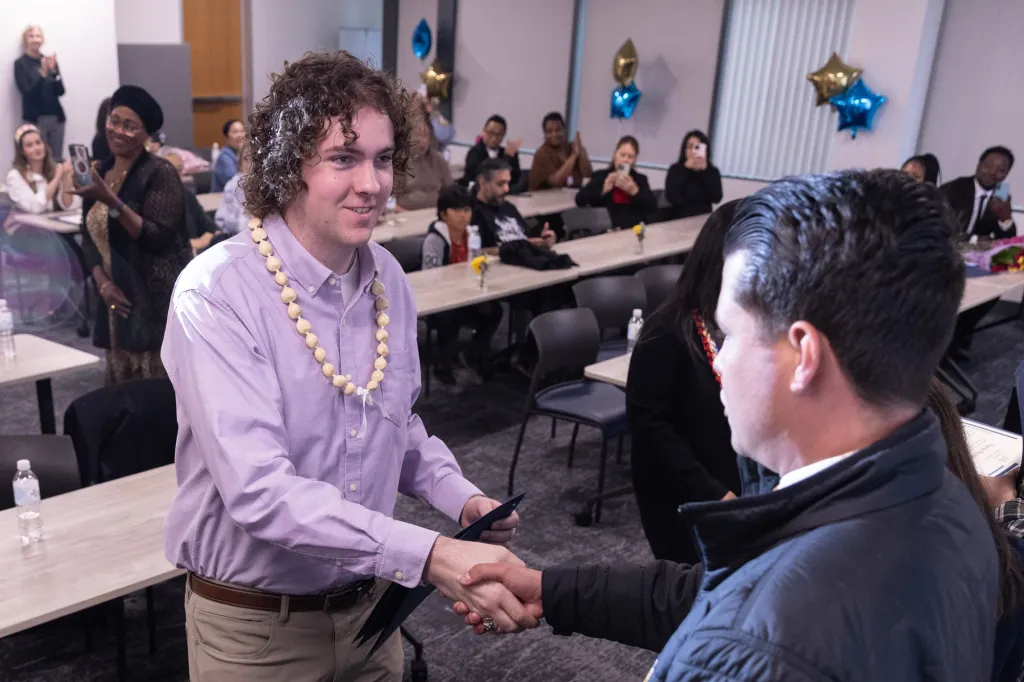
She stood on the second floor of a University City training center where a group of 10 students had just received their certificates of completion for an 18-week course that prepared them to take the state’s licensing exam for sterile processing technicians.
It’s UCSD’s second group of 10, and it is a sign of the times in health care generally. A collaboration between the university, Southwestern College and Jewish Vocational Service, a nonprofit that creates quick-entry training programs, the surgical processing program “upskills” UCSD Health workers in the organization’s food service and environmental services departments.
As the name implies, upskilling involves helping students evolve their existing skills, allowing them to quickly enter new careers.
Workers who cleaned rooms and prepared or delivered meals within the university health system completed 112 hours of live lectures and labs and 440 hours of clinical rotations. Across just 30 days in April, students processed about 120,000 surgical instruments, memorizing the specific cleaning requirements for the many types of clamps, scissors and other devices used to perform everything from tumor biopsies to heart transplants.
Miles Mahon said he worked as a room service attendant, delivering meals to patients at UCSD Hillcrest Medical Center before starting the program. He made it clear that he and his fellow newly minted sterile techs understand the gravity of their new jobs, even though they will be performed behind the scenes, often managing autoclaves, the industrial furnaces that use heat and pressure to kill any contaminants present after procedures are performed.
Read more State, city, county dodge budget crises, for now
“Every instrument we handle, every autoclave cycle that we monitor and every tray that we wrap is a direct line to protecting a human life,” Mahon said. “We carry an immense responsibility, and this program has prepared us to meet it with absolute precision and accountability.”
On average, upskilled workers are said to reap a starting wage increase of $3 per hour.
Upskilling is a growing trend, especially in “allied” health care, a field projected to grow 93% by 2038, according to the U.S. Health Resources and Services Administration. Ranging from physical and occupational therapists to medical technologists, these workers handle all of the support services needed to carry out the wide range of health care activities that doctors order and oversee.
Teddy Martinez, vice president of strategic and policy initiatives for San Diego Workforce Partnership, noted that a similar upskilling effort is underway in behavioral health care, with San Diego County’s $75 million “ELEVATE” program announced last year aimed at training 3,000 workers over five years. The plan both helps train entry-level workers to be substance use counselors, case managers and community health workers and also offers zero-interest forgivable loans to workers already in those jobs. This funding helps those who already have experience pursue master’s degree-level training that allows them to become clinical social workers, licensed professional clinical counselors and marriage and family therapists.
“A lot of times, we know that the people are already here, they just need the on-ramps, and so, where we can, we should be building these kinds of programs that can accomplish quick upskilling or on-the-job training,” Martinez said.
The UCSD sterile processing technician program, he said, is a good example of what’s needed in the larger workforce, an ability to directly match quick-turnaround training to specific needs. And, he added, while the need for more nurses tends to get most of the attention, the need for a wide range of technicians is also quite large.
“We need to keep options that mesh with demand based on employers’ particular situations, and we want to scale them both for folks who need pathways to get to work quickly and for employers that need roles filled,” Martinez said.
Read more Ghanaian mother and child who arrived in US on valid visas to fly home after detainment, lawyers say