






Hundreds of owners of vacation rental properties across unincorporated areas of San Diego County are failing to pay the taxes they owe.
That’s costing the county around $10 million every year in unrealized revenue, officials estimate — money that if collected would nearly triple the size of a long-controversial county grant program.
The transient occupancy tax equals 8% of rent charged to customers and applies to hotels, motels, Airbnb and VRBO rentals, and other spaces rented out for stays of 30 days or less.
It’s one of the biggest sources of uncollected tax revenue for the county, Treasurer-Tax Collector Larry Cohen said in an interview, largely because the tax is self-reported. It “requires everyone to be honest about what’s going on,” he said.
Cities have their own regulations for short-term rentals, but the county oversees rentals in unincorporated areas.
Last fiscal year, the county brought in $9.5 million in revenue from the tax. As of April there were about 1,200 registered short-term rentals in unincorporated county, according to the tax collector’s office.
But there are about 700 more that have failed to register and pay the tax.
Fallbrook has the most, with 114 as of late April; dozens were also present in Spring Valley, Valley Center and areas outside Escondido. There are about 40 in Julian and 30 in Borrego Springs.
By contrast, the city of San Diego is currently investigating 214 short-term rental properties for operating without a license. That compares with about 8,400 short-term rentals that are licensed to operate in the city.
Of the noncompliant rentals in unincorporated areas, a few dozen are owned by LLCs, but most are owned by individuals or family trusts, treasurer records show.
The county’s transient occupancy tax revenue goes to the county’s controversial Community Enhancement Program, which lets county supervisors give grants to nonprofits and public agencies for services that promote tourism, economic development, cultural activities and quality of life.
Last fiscal year, supervisors handed out $5.3 million in grants. They were used to help subsidize nonprofits’ costs — including staff salaries, rent and marketing — and to pay for specific programs and events for the public, such as a mobile eye clinic, community festivals, Fourth of July parades, buses for field trips, food distributions, concerts in parks and more.
That means that if the county were collecting all the short-term rental taxes it’s owed, the sum supervisors hand out every year could almost triple.
County supervisors individually decide on their own how to dole out the grants, and they do so behind closed doors, after deciding three years ago to stop approving the grants in public.
Critics have argued that Community Enhancement and a similar county grant program, Neighborhood Reinvestment, can be used by supervisors to solicit and reward political support, with little public oversight. Supervisors have awarded grants to groups that have run afoul of state rules for charities, and some grants have lacked documentation showing they were properly spent.
Unlike local cities, the county has no regulations specifically for short-term rentals, beyond requiring them to pay the transient occupancy tax and display a transient occupancy certificate.
Read more Homeless outreach goes from HOT to HEART in Oceanside
Other local governments have more extensive regulations — for example, the city of San Diego requires owners to maintain fire code compliance, take human-trafficking awareness training, ensure their property doesn’t become a public nuisance, apply for biennial renewals of their rental license and more.
The county tax collector’s office began cracking down on unpaid transient occupancy taxes two years ago, when Dan McAllister was treasurer. The office contracted for third-party software that scours vacation rental websites Airbnb and VRBO for listings in unincorporated areas, then compares their parcel numbers with those on the office’s list of registered properties, Cohen said.
On the first search, the software found 1,600 properties that were advertising on those vacation rental sites but were not paying the tax, compared with 400 that were registered and paying.
Since then, the tax collector’s office has brought about 900 properties into compliance, leaving the roughly 700 remaining. Officials reach out to small batches of owners at a time to notify them of their tax obligation, get them registered and have them pay the total amount owed.
Cohen said his office has been cracking down on properties slowly, because it can take weeks or sometimes months to get one to comply. Owners may not respond quickly, and it takes time to review old business records to find out how much they owe.
Some owners ask why they weren’t notified earlier, Cohen said. “As you can imagine, sometimes they’re not happy to hear that news,” he said.
Some property owners may owe tens of thousands in back taxes and interest; his office offers payment plans with terms depending on their situation.
“We’re here to help you be compliant. We don’t want your business to suffer,” Cohen said.
Noncompliant property owners face multiple penalties and interest for not paying: There’s a 5% penalty after being one month overdue, then an additional 10% penalty after two months overdue. They also owe 1-2% interest for each overdue month.
The tax collector’s office will put a lien on the property if its owner doesn’t respond after at least two notification attempts, Cohen said, which comes out to about 120 days.
It’s not just owners of noncompliant properties who are unhappy to hear there are unpaid taxes; it’s also unwelcome news to owners who are complying with the law.
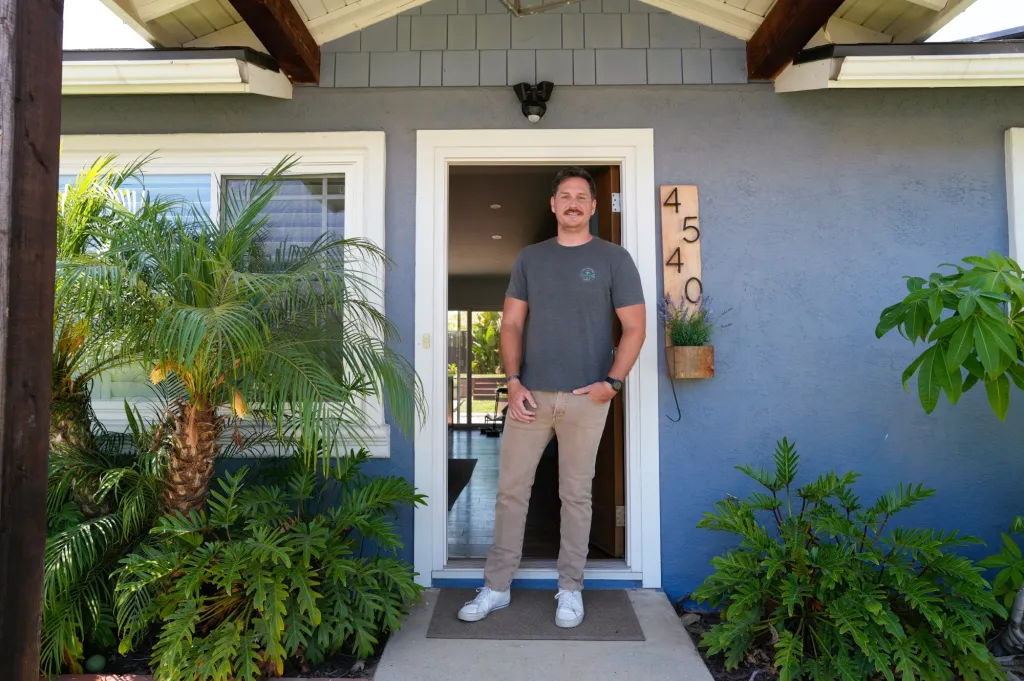
Three years ago, Stephen Brooks bought the three-bedroom, two-bath home in Borrego Springs he had once stayed in as an Airbnb to celebrate his 30th birthday after falling in love with the desert area.
These days the Clairemont resident, now 35, rents it out on Airbnb, but he says he doesn’t make a profit, and the transient occupancy tax cuts into his earnings.
“It’s very frustrating when you’re doing something the right way and paying your fair share, and you find out there are people who aren’t,” Brooks said.
Read more La Mesa weighs parking options for downtown village