









Nearly 100,000 people across San Diego County could lose CalFresh food assistance under new federal eligibility requirements that start Monday, leaving more to turn to local groups for help.
Read more Homeless outreach goes from HOT to HEART in Oceanside
Beginning June 1, most adults must meet new work and volunteer requirements to keep accessing benefits from the Supplemental Nutrition Assistance Program, or SNAP, more commonly known as food stamps.
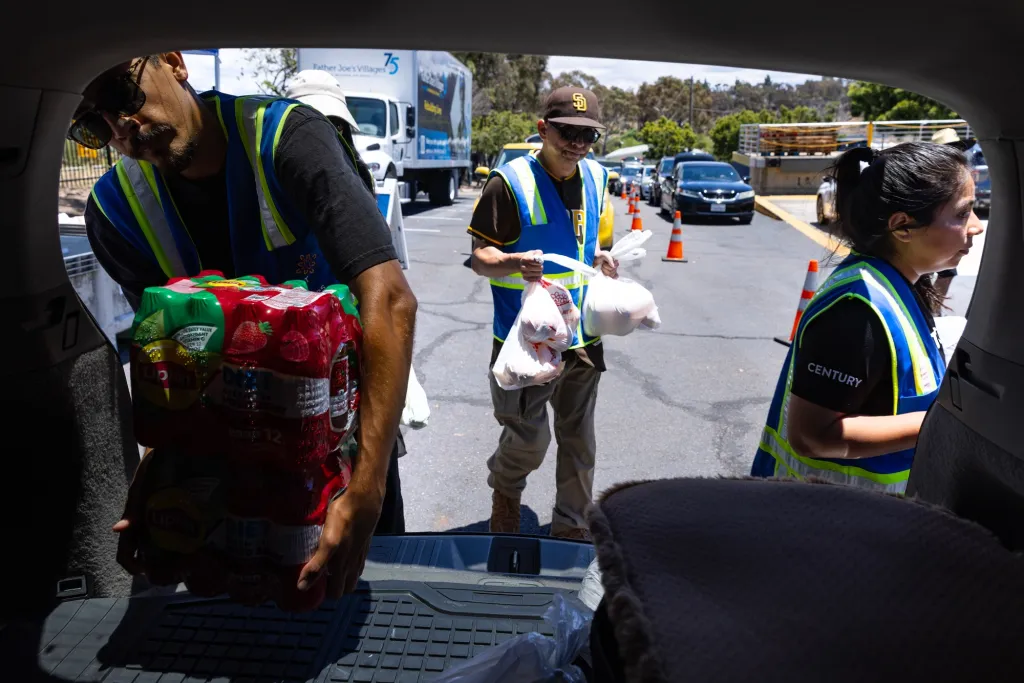
The change comes as rising prices for groceries, gasoline and more have already pushed growing numbers of San Diegans to seek support from food banks and other nonprofits, many of which are already at capacity.
And some local leaders say they’re especially concerned about how certain groups will meet the work requirements — especially parents, veterans and people without housing.
“We anticipate that (homeless veterans) will struggle the most, and that’s because work requirements are difficult when you are unhoused,” said Akilah Templeton, president and chief executive officer of Veterans Village of San Diego.
Under the new rule, most adults must work, volunteer or participate in job training at least 80 hours a month — or 20 hours a week — to qualify for CalFresh. There are some exemptions, such as for those who are pregnant or have a disability, but otherwise the requirement applies to most anyone 18 to 64 years old.
It’s the latest upheaval for the CalFresh program. In April, a rule went into effect that bars many legal immigrants from accessing the federally funded food assistance program. Both changes are due to the federal law known as H.R. 1, or the One Big Beautiful Bill Act, signed last July, that limits federally funded benefits for several immigrant groups and low-income people.
San Diego County officials estimate that as many as 93,500 people could lose their benefits under the June 1 requirements, on top of the 13,000 CalFresh participants who are expected to lose eligibility with the changes that went into effect in April.
Not everybody will be affected right away. Affected CalFresh participants can use their benefits until they are recertified, typically every 12 months.
But food banks and nonprofits are bracing for more clients to come through their doors as they lose CalFresh. The aid groups have already seen the need steadily rise over the last year, and the Hunger Coalition estimates that a quarter of San Diego County residents could go hungry without help.
Robert Marquez runs the food distribution at La Maestra Community Health Center in City Heights, getting food from both the San Diego Food Bank and Feeding San Diego. His group has enough food to keep up with demand, but that demand has been growing; they currently serve about 700 people each week at its distributions.
“It keeps going up and up and up,” he said.
In some cases, the situation has become dire. Father Joe’s Villages’ weekly Friday food distribution gave out more than 700 bags of food on May 15 before it ran out, leaving a line of drivers without any, said Deacon Jim Vargas.
Read more La Mesa weighs parking options for downtown village
“It’s (at) absolutely critical proportions,” he said. “We’ve been seeing the increased food insecurity in the community for a while, and it’s just gotten worse.”
Local food banks are preparing what they expect to be higher demand after the Monday changes take effect.
Feeding San Diego has extended its on-site shopping center hours and plans to increase its food output by 500,000 pounds over the next couple of months, said Sam Duke, Feeding San Diego’s director of programs.
Both Feeding San Diego and the San Diego Food Bank also offer to help clients sign up for CalFresh benefits, and recipients can also volunteer at the organizations — hours that can go toward their eligibility requirements.
But for those looking for work to keep their food benefits, this could be a tough time to seek a job in San Diego, said Alan Gin, an economist at the University of San Diego. While unemployment has continued to drop, the region isn’t experiencing booming job growth.
“It’s good but not great,” he said.
Rachel Bereza, the president and CEO of the San Diego Workforce Partnership, which helps connect people to jobs, expects more clients to come in seeking resources.
“We do anticipate a huge increase and a huge influx in people coming in looking for a job,” Bereza said. “But if they’re coming and looking for their job, do we have part-time jobs available? How will our business model be affected?”
The Workforce Partnership also works with San Diego County to run its CalFresh Employment & Training, which helps CalFresh recipients gain the skills needed to find and keep a job. Such job training can count toward the new work requirements, too.
But some services providers worry people kicked off of CalFresh could be forced to choose between basic needs — food or rent, gasoline or child care.
“It’s mind-boggling to me how we can make such a fuss over just providing sustenance,” said Templeton, from the Veterans Village of San Diego. “Without food, people die. This issue is a matter of life and death.”
Read more Grant money sought to save lagoon on Carlsbad-Oceanside border