
Regional planners still need at least $3 million more to finish a final design and obtain permits before any sand is shoveled in the long-awaited restoration of the Buena Vista Lagoon at the borders of Carlsbad and Oceanside.
Read more He saw so much single-use, soft plastic lying around, this nonprofit founder wanted to clean it up
A recent federal budget earmark allocated an additional $1 million that could help the San Diego Association of Governments advance the project, SANDAG Senior Regional Planner Kim Smith said Thursday. The money is expected in grants to be distributed by the National Oceanic and Atmospheric Administration.
“We will know by September,” Smith said.
Construction is estimated to be in the neighborhood of $150 million, with most of that to come from state and federal grants yet to be awarded. However, costs everywhere are rising rapidly, which is a concern, and when the final design is ready in a few more years, it will include a better estimate of the total.
Proposition 4 passed by California voters in 2024 is a possible source of more money, Smith said. Prop. 4 authorized the state to issue $10 billion in bonds for state and local parks, energy projects, water infrastructure and environmental protection.
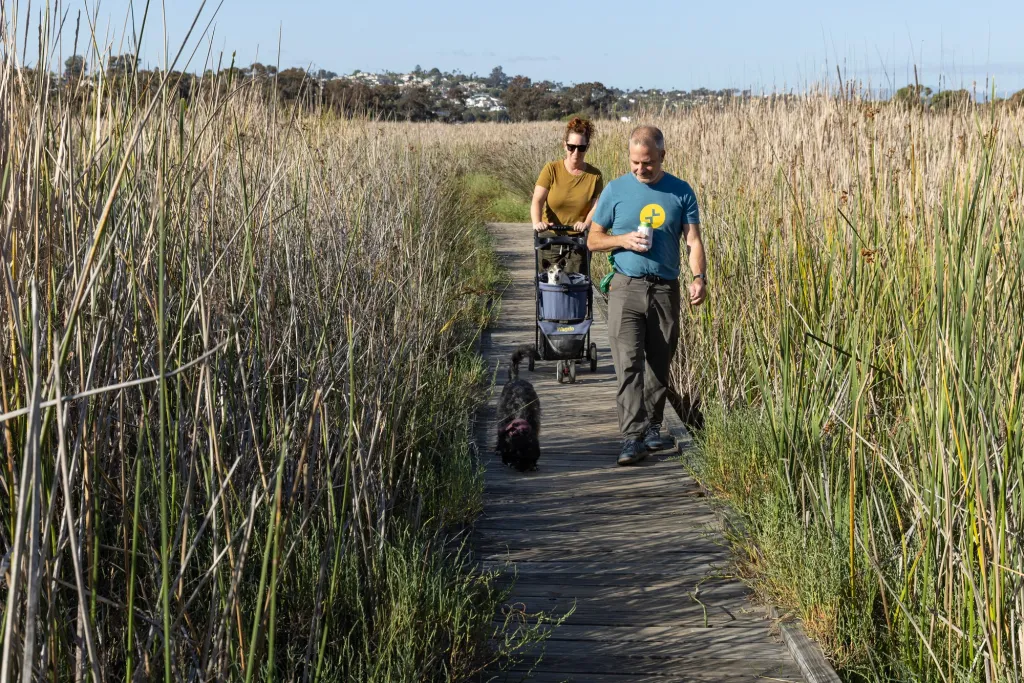
The 220-acre Buena Vista Lagoon has been shrinking for decades, slowly filling in from the edges with sediment and cattails. The water grows stagnant and breeds mosquitoes.
“It saddens me and everyone to watch it decline,” said Janis Jones, a longtime Oceanside resident. She’s lived near the lagoon for 25 years, and recalled taking students there on field trips when she was a teacher at South Oceanside Elementary School.
“Open water is disappearing and birds are losing their habitat,” Jones said Thursday, and, “I want to see a living, breathing lagoon again.”
Big steps have been taken toward the lagoon’s restoration, but more work is needed before construction can start and restore the wetlands that were designated California’s first ecological reserve in 1968.
Even if all the money were suddenly obtained, construction remains several years away, Smith said at Thursday’s meeting of the Buena Vista Lagoon Joint Powers Committee.
The joint powers committee consists of the mayor, one city council member, and one community member each from Carlsbad and Oceanside. It reviews matters related to the lagoon and advises the cities, the county and other agencies associated with the lagoon, which is owned by the state Department of Fish and Wildlife.
Finishing the designs and obtaining the permits needed from various local, state and federal agencies for dredging, grading and replanting the lagoon will take three or four more years, Smith said. Construction then is expected to take about two-and-a-half years.
State and regional agencies worked with residents and property owners for more than 20 years to develop a basic plan for the project.
A key result of their discussions was an agreement to remove the weir, a low dam near the mouth of the lagoon that keeps the water a few feet above sea level and prevents the tides from entering. The barrier, first added in the 1940s and replaced several times, keeps the water at a near-constant level, unlike other lagoons in the region, and makes it coastal San Diego County’s only freshwater lagoon.
SANDAG’s board of directors approved a final environmental impact report for the restoration in 2020, a significant milestone for the project.
That cleared the way for the planning, design and long list of agency approvals now in progress. The agency received $4 million in 2021 and ’22 from the state Wildlife Conservation board and the California Department of Fish and Wildlife to advance the plan.
Read more Rift widens between San Diego County probation and independent review board. Is a court battle next?
Anyone looking for lagoon enhancements a little sooner can watch for a smaller, separate restoration project coming from the Buena Vista Audubon Society.
The Audubon Society purchased 3.5 acres of degraded wetlands in 2016 at the edge of the lagoon, across South Coast Highway from the society’s nature center in Oceanside. The land had been partially filled with imported soil for a proposed hotel that was never built, and was covered with trash, invasive plants and eroded, random footpaths.
“It’s in very poor shape and it’s getting worse,” said society Executive Director Natalie Shapiro.
The group’s plans for its wetlands project have progressed steadily and should be ready for construction in 2028, Shapiro said.
An initial design has been completed, and the society is finetuning some details at the request of the state Fish and Wildlife Department.
“An important part of our project is to engage resource agencies throughout the process to ensure we aren’t missing anything in our design details that is important to wildlife and coastal wetlands functioning,” Shapiro said.
Fish and Wildlife officials looked at how long-term changes to the lagoon would affect the Audubon Society’s land. Although SANDAG’s restoration is still years away, when finished it will significantly affect the preserve.
Removing the weir will lower the entire lagoon’s water level by several feet and restore the ebb and flow of ocean tides to the basin. That will create more mud flats, but also leave more of the Audubon preserve as dry land. Then, over the decades and centuries ahead, sea-level rise is expected bring back the higher water levels, eventually above areas that are dry today.
“In review of our early design concepts, the agencies urged us to build more space in the design for future wetlands, to allow ‘wetlands migration’ as sea level rise occurs,” Shapiro said.
“This helps ensure there are wetlands in the future when current wetlands are lost as oceans rise due to climate change,” Shapiro said. “Our team agreed to the redesign suggestion, noting it would make the project more resilient to climate change and provide for better wetlands functioning and habitat for wildlife.”
The restored wetlands will serve as an ecological buffer between the lagoon and nearby urban development. The site also will help preserve endangered native species such as a plant called the southwestern spiny rush and a bird known as the light-footed Ridgway’s rail.
“It will be a place for birding and slow recreation,” Shapiro said, adding that a chicane gate, which forces people to slow down as they pass through, will be added to discourage cyclists from speeding through.
Planning for the society’s restoration has been partially funded by a $600,000 grant from the state Coastal Conservancy and a $380,000 donation from the Dorrance Family Foundation.
A budget is being developed for construction, Shapiro said. The amount needed has not been determined, and additional grants will be sought.
Read more They once delivered meals. Now they’re on the front line of patient safety.