






San Diego’s regional water agency is proposing modest rate increases in the coming years.
Read more Senate blocks extending key surveillance program following backlash over Trump pick to lead intel
That’s not a description usually associated with the San Diego County Water Authority.
Just a few years ago, the beleaguered agency was charging double-digit increases in wholesale water rates. Last year’s increase was 8.3%, which was whittled down from a much higher proposal.
Now, the authority is planning on 3% increases in each of the next handful of years, mostly to keep up with inflation.
Officials say the change is largely the result of revenue from unique water sales to California jurisdictions outside of San Diego County. This week, the authority took another groundbreaking step to replicate those on a much larger scale with an agreement it signed with the federal government, water agencies in Arizona and Nevada, and the Los Angeles-based Metropolitan Water District.
Scott Cameron, acting commissioner of the U.S. Department of Reclamation, described the agreement as a pioneering step toward easing what experts describe as an existential threat to water supplies in the region.
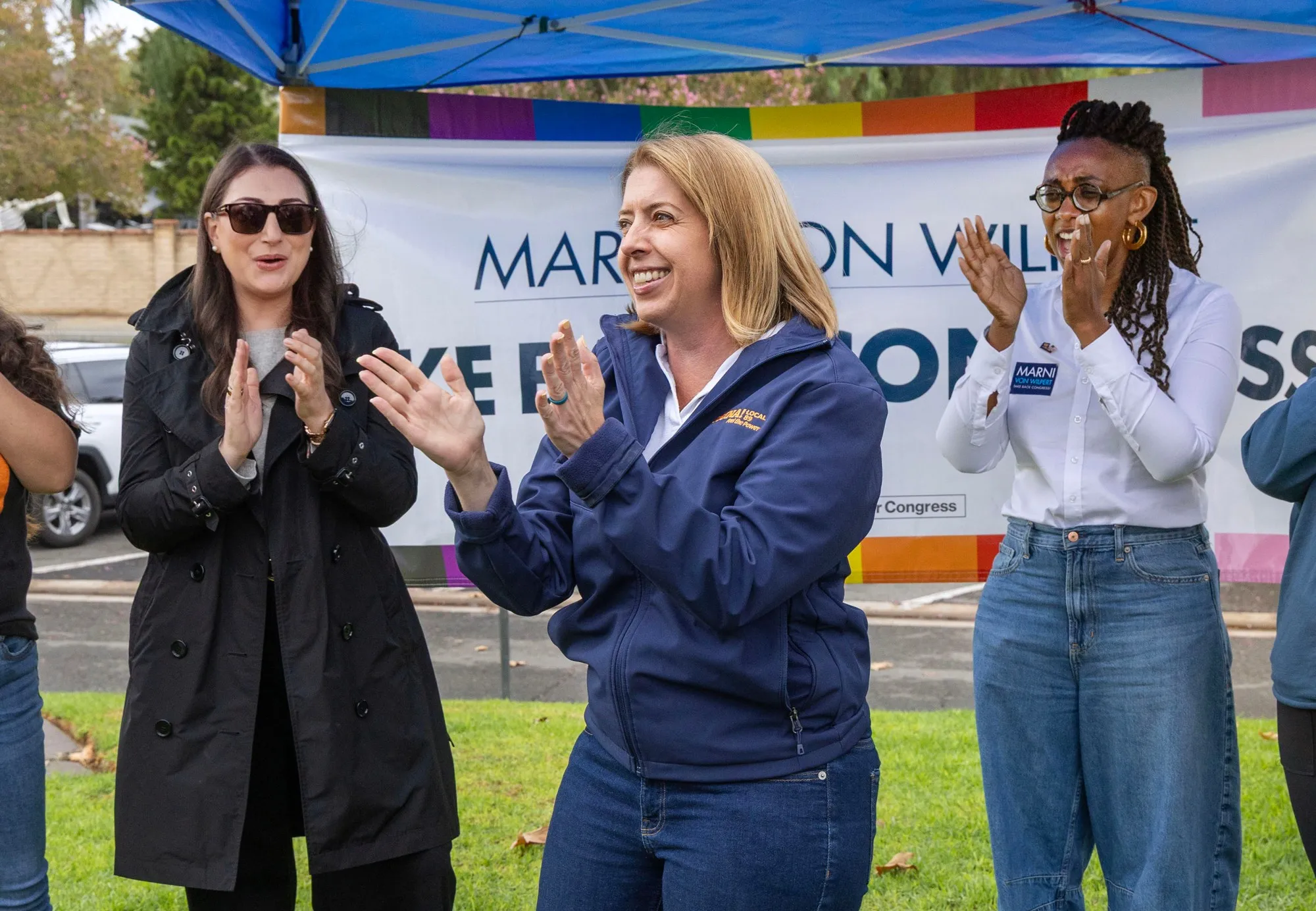
“Today, we are signing a short document that represents a potential great leap forward for the water security of the people of the Southwest,” he said Wednesday at a ceremony outside the Carlsbad desalination plant.
In the Byzantine western water world, this is revolutionary stuff, if a bit technical. The pact, a memorandum of understanding, doesn’t actually include any water sales, but creates what officials like to call a “legal framework” that allows future interstate sales the likes of which haven’t happened before.
Various circumstances led to this point, some of them not good. The ongoing drought throughout the Southwest and its impact on the overdrawn Colorado River are major drivers, of course. But so are decisions decades ago in San Diego based on faulty projections that led to overbuilding the water system and too much supply — a seemingly nice problem to have until you look at what it has done to water rates for residents.
Nationwide praise for the water authority’s foresight in developing an independent, reliable supply soon faded as residents and their elected representatives loudly complained about the crushing water costs and huge rate increases. Some San Diego City Council members questioned whether the San Diego County Water Authority should even exist anymore.
Infrastructure costs and decreasing water sales left the authority with a budget morass and few options but to keep piling on big rate increases.
For perspective, the water authority considered it a Herculean effort in 2024 to reduce its proposed rate increase for the following year to 14%, which was down from about twice that much as initially suggested.
Dan Denham, the water authority general manager, said the 3% increases are a direct result of recent agreements to sell water over the next two decades to the Eastern Municipal Water District and Western Municipal Water District in Riverside County.
Some front-loaded payments brought in tens of millions of dollars, with $660 million in revenue estimated over the life of the agreements.
At least one more California agreement, with the city of Burbank, is being negotiated.
Read more Senate OKs $70B immigration bill after rejecting efforts to permanently ban Trump’s settlement fund
The interstate sales could have considerably more impact, and not just for ratepayers in San Diego. It could help ease drought pressures for the Nevada and Arizona districts, which, like San Diego and so many others, rely heavily on the Colorado River, which serves about 40 million people but has experienced historically low flows and near-unprecedented low levels in lakes Mead and Powell.
“Just think about where we were three years ago,” Denham said about huge rate increases. That’s changing “all because of the transfers. It went from being a theory into a reality.”
That’s good news for sure but, to be clear, these aren’t rollbacks. This only goes so far in taking the sting out of the previous onerous water rate increases that were passed down to the authority’s member districts and cities, such as San Diego, which ultimately set the rates charged to their users.
The water agency’s rate forecast due to water sales and “enhanced operational efficiencies” — budget cuts and streamlining in recent years — keeps estimated increases around 3% annually through 2032, which is much lower than expected. The increase is projected to bump up to 3.7% in 2033, 4.9% in 2034 and tops out at 6.3 percent in 2035.
Many variables could affect those projections, particularly toward the end of the 10-year timeline.
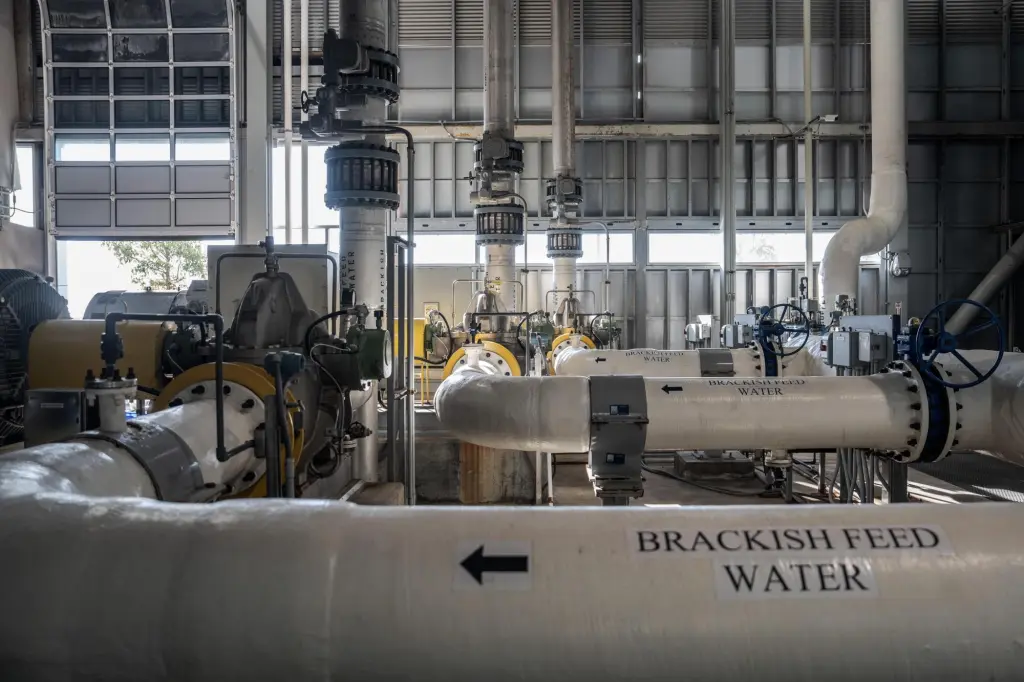
For now, the future water sales largely revolve around two big things — the agreement with the Imperial Irrigation District in 2003 that brings Colorado River water to the authority, and the desalination plant in Carlsbad.
(Current negotiations to update the Colorado River pact that expires at the end of this year are at an impasse among seven states, Mexico and Native American tribes. Even in a worst-case scenario of forced federal cuts, Denham said there shouldn’t be much of an impact for San Diego. IID has among the most senior rights to the river water and would be one of the last to face reductions.)
The deal with IID secured San Diego a water source for 75 years. The desalination plant also generates reliable water, but at a tremendous cost.
Given the surplus, the plant has been viewed by some critics as something of an albatross for the water authority. That may change. The potential sales to Arizona and Nevada would be — on paper — for desalinated water. In reality, they would get a share of San Diego’s river water yet pay desalinated water costs, according to Denham, because San Diego would backfill with more expensive water from the plant. No new infrastructure is needed for this.
Denham acknowledged the authority has faced questions about the wisdom of selling water supplies when extreme drought has threatened water availability throughout the western United States.
“We’re not giving away one ounce of our reliability with any of these transfers,” he said.
In addition to the existing surplus, he noted that more will be coming in the region with the opening of wastewater recycling operations in San Diego, Oceanside and East County. Cameron advocated broadly for more desalination and recycling plants.
Denham said that while pursuing more water sales, the San Diego County Water Authority would be cautious to avoid overreaching and, this time, running short — perhaps something of a lesson learned from the past.
Read more Colorado appeals court overturns homicide convictions for 2 paramedics in Elijah McClain’s death