



Another California offshore wind farm is blowing away, with one more energy company accepting a payout from the Trump administration.
Read more Carlsbad adds wildfire prevention, road extension to city budget for 2026-27
The U.S. Department of the Interior announced Wednesday a $765 million buyback of four wind leases in locations across the country held by Invenergy, a Chicago-based multinational power generation company.
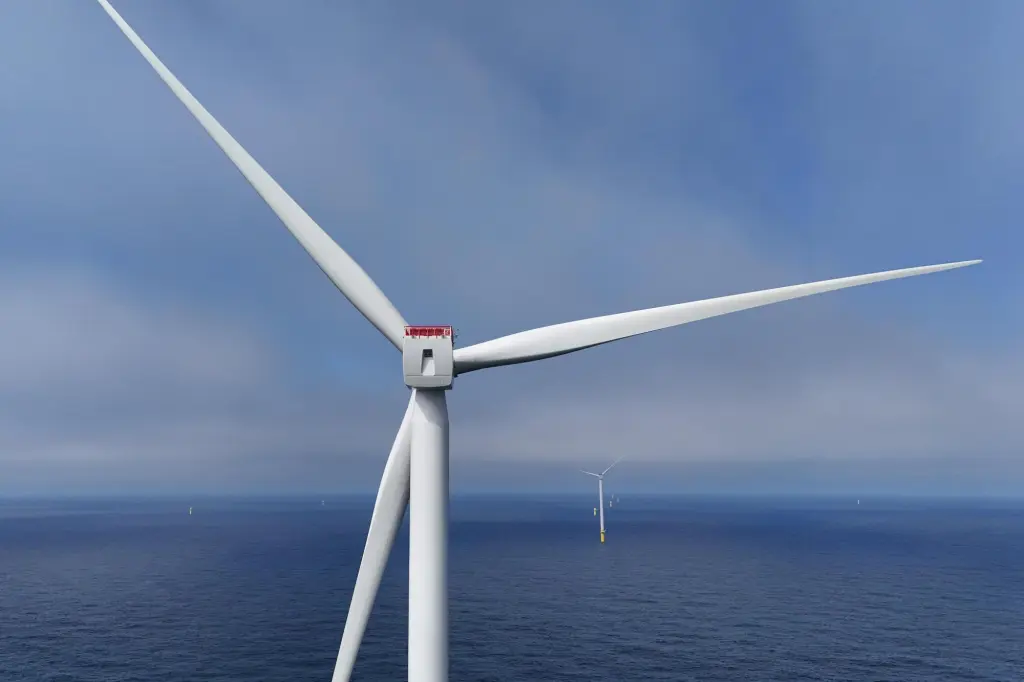
The withdrawals include the Even Keel Wind project off the coast of Morro Bay that would have covered more than 80,000 acres.
The wind farm was expected to generate 2 gigawatts of offshore wind capacity, which is enough to power about 1 million homes. On Wednesday afternoon, the webpage for Even Keel Wind was no longer on the company’s website.
Under the terms of the deal, Invenergy will redirect the money to other energy projects that include developing natural gas power plants in Indiana, Wisconsin, Iowa, Kansas and Missouri, plus geothermal projects in the West.
“The offshore wind leases were sold under the assumptions that taxpayers would indefinitely subsidize costly, unreliable projects and that no national security concerns were implicated — both assumptions have since been proven false,” Secretary of the Interior Doug Burgum, said in a statement. “Under President Trump, companies are shifting investment back toward dependable, secure energy infrastructure that can power our economy and lower utility costs.”
Building out offshore wind facilities is a critical piece of California’s goals to derive 100% of the state’s electricity from carbon-fee sources by 2045, if not earlier.
But Wednesday’s announcement marks the second wind project in the Golden State to make a U-turn.
Two months ago, Golden State Wind LLC agreed “to voluntarily end” its lease for its project, also in Morro Bay. In exchange, the company will be eligible to recover $120 million in lease fees through the Department of Interior by spending an equal amount on oil and gas assets, energy infrastructure or liquefied natural gas (LNG) projects on the Gulf Coast.
In the administration’s news release announcing the move, Invenergy’s senior vice president for development, Daniel Runyan, said, “At a time of unprecedented energy demand, Invenergy is focused on delivering reliable, affordable energy for our customers and supporting disciplined investment at scale.”
With the Even Keel and Golden State Wind projects off the table, California is now down to three offshore wind leases — one in Morro Bay and two off the coast of Humboldt Bay in Northern California.
“California strongly condemns yet another taxpayer-funded deal brokered by the Trump administration that undermines clean energy growth and U.S. energy security,” California Energy Commission spokesperson Stacey Shepard said in an email.
California policymakers aim to produce 25 gigawatts of electricity from offshore wind farms by 2045. For perspective, the Diablo Canyon nuclear plant in San Luis Obispo produces 2.2 gigawatts of capacity, which accounts for about 9% of the state’s power mix each year.
“We have a chance to build cheap, clean, reliable power right off our own coasts,” Rep. Jared Huffman, D-San Rafael, said in a Facebook post. “Instead, Trump is using your tax dollars to kill these projects and make America more dependent on dirty, volatile fossil fuels.”
Eddie Ahn, executive director of Brightline Defense, an environmental group based in San Francisco, questioned the legality of the Trump administration’s moves through its use of the federal government’s Judgment Fund — an appropriation that was created by Congress.
“The scale of what’s happening under offshore wind is way different” than the fund’s original intention, Ahn said. “It was never meant to be an end-run around the congressional appropriations process.”
Recent deals that the Department of Interior made with companies to withdraw their offshore wind projects prompted lawsuits from at least seven different states. California officials also to executives at Golden State Wind, seeking documents about what the state energy commission called “backroom deals that would turn back the clock on innovation.”
In the aftermath of Invenergy pulling up stakes, the commission said the state is “exploring all options,” including legal remedies.
“If the federal government is funding buyouts, Californians who invested years of time, money and effort preparing for these projects should not be left empty-handed while developers are rewarded for walking away,” Shepard said.
Dan Jacobson, senior adviser at Environment California, is a die-hard supporter of offshore wind and, despite Invenergy’s pullout, he said he’s still optimistic.
“It’s incumbent upon us to stave off the worst impacts (of climate change) and offshore wind is one of those tools we can use,” he said. “It’s really disappointing that things will go slower, but I don’t think this will stop the development of clean energy, like offshore wind.”
But opponents welcomed Wednesday’s announcement.
“That’s two down and one to go,” for Morro Bay, said Nicole Dorfman, board member and secretary of the REACT Alliance, based in San Luis Obispo.
“The environmental impacts (of floating offshore wind) are largely unknown, but we assume that from the research that has been done, this large-scale industrialization of the ocean will only serve to degrade the natural environment and will not at all be helpful,” she said.
Offshore wind projects in California are different than those in other parts of the country.
Unlike the East Coast, where turbines can be bolted into the seabed, the continental shelf off the Pacific coast plunges steeply.
That means offshore wind farms in California must float on the water’s surface, tethered or moored by cables to the ocean floor. Electricity generated by turbines will be transmitted to a floating substation and carried to a power plant onshore via buried cables.
California has yet to put “steel in water,” and the state is expected to be the first region in the U.S. to use floating wind turbines.
There have been no plans to develop offshore wind generation in San Diego and Southern California. That’s in large part due to discussions years ago between military officials and the Bureau of Ocean Energy Management that ultimately designated Southern California a “wind exclusion” area because of concerns that offshore wind facilities would interfere with training missions.
Besides, wind speeds in the south are not as steady and strong as those in Central and Northern California. As a result, efforts to build floating offshore wind projects have focused on Morro Bay and Humboldt County.
Read more San Diego man charged with using charity as an alleged ploy to financially support Hamas