








A review co-authored by a longtime supporter of the city of San Diego ditching San Diego Gas & Electric to create its own municipal utility says the potential benefits are greater and can be implemented faster than a previous study has projected.
Read more A judge orders ICE to free a Wisconsin mosque leader, citing a ‘substantial’ free speech claim
However, SDG&E disputes the figures and modeling assumptions.
“There’s just such a tremendous savings that it underscores the need to pursue this,” said Bill Powers, a board member for Public Power San Diego and a registered engineer.
Along with Mark Hughes, Powers wrote a report following up on studies by NewGen Strategies, a consulting firm that specializes in the utility industry, that analyzed the pros and cons of San Diego establishing a stand-alone municipal power company.
NewGen Strategies presented its most recent evaluation, called Phase II, to the San Diego City Council in April. The called a potential municipal electric utility an “operationally, technically and financially feasible alternative worth considering.”
While acknowledging the Phase II projections “remain highly theoretical and dependent on several assumptions,” NewGen said the potential financial benefits could ultimately result in annual savings of more than $600 million in the latter stages of a 30-year period, which would translate to $500 per customer.
The NewGen study used a baseline analysis of SDG&E rate increases of 4% per year, though the firm conceded that figure understates “historical trends where retail rates have risen over 6% annually.”
But the review done by Public Power San Diego said the 4% number was based on “very conservative assumptions” in the financial model, and estimated the actual SDG&E revenue growth rates is about 7% per year.
“A very low rate of growth is going to underestimate the potential economic benefit of public power,” Powers said in a phone interview with the Union-Tribune.
Earlier this week, SDG&E filed a request with the California Public Utilities Commission for its next general rate case proceeding that asked for a revenue requirement increase of 8.1% compared to estimated levels for 2027.
Even if the number is set at 6%, Powers said, it would boost the cumulative benefit of establishing a municipal utility to $60 billion over 30 years, compared to an estimated $19 billion in NewGen’s 4% scenario.
Further, the Public Power review calls for the city of San Diego to create a distribution-only municipal power company, rather than the transmission-and-distribution utility that the NewGen Phase II study envisions.
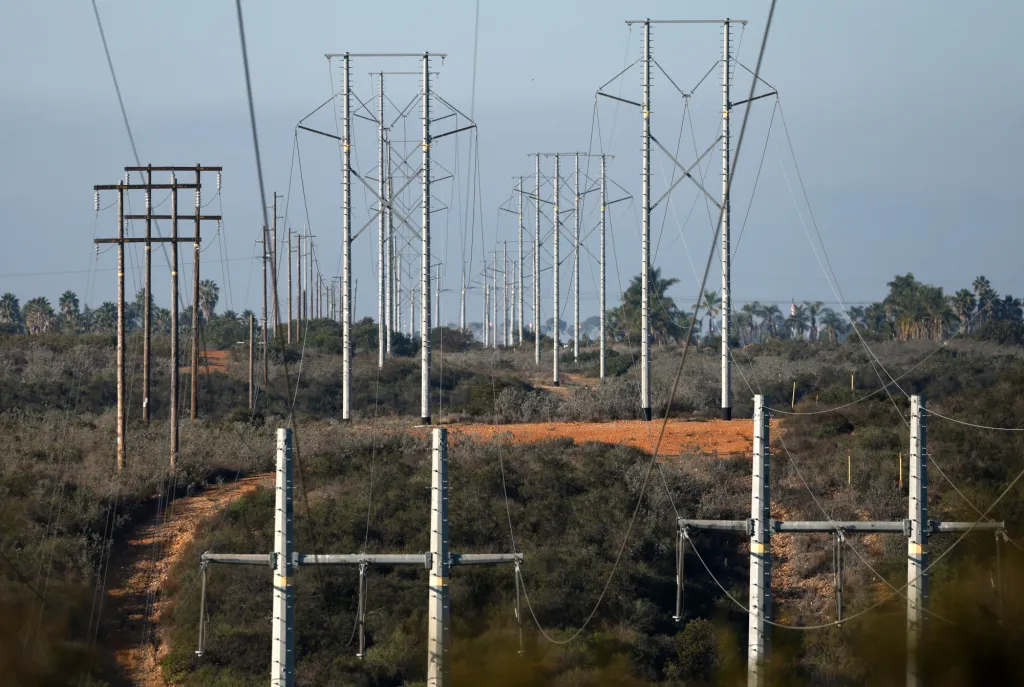
Transmission carries electricity over long distances on lines ranging from 60 to 500 kilovolts on towers you might see on the side of the freeway. Distribution lines cover shorter distances at lower voltages atop power poles you may see along neighborhood streets.
Read more US student loan defaults rise to 9.2 million amid crackdown
Powers said creating a distribution-only utility within the city of San Diego is feasible and predicts it will reduce the time it would take to get a municipal power company up and running. That’s because it would bypass involvement by the Federal Energy Regulatory Commission (which regulates transmission of electricity that crosses state lines), the California Independent System Operator and the Local Agency Formation Commission, known as LAFCO.
Doing so “allows us to cut the project implementation schedule in half,” Powers said, from roughly 11.5 years to 5.5 years.
“When you use a realistic SDG&E growth rate, there’s really no doubt that public power is overwhelmingly beneficial to the community,” Powers said. “And when you go with a distribution-only utility, you create a situation where the timeline is reasonable.”
NewGen’s Phase II study will be discussed during the San Diego City Council’s meeting on Monday, which starts at 2 p.m. No vote will be cast on the issue, as it’s an information-only item on the council’s agenda.
SDG&E challenged the findings touted by Powers.
The Public Power San Diego analysis “attempts to rework a transmission-and-distribution study into a distribution-only scenario without critical engineering and operational costs,” SDG&E spokesperson Anthony Wagner said.
Creating a municipal utility would require many steps, including San Diego purchasing all of SDG&E’s infrastructure assets within the city. SDG&E officials estimate those costs would come to at least $9.3 billion, which is significantly higher than the NewGen Phase II’s range of $2.4 billion and $7.6 billion.
“Most importantly, both studies omit key cost drivers including exit fees and rising wildfire insurance costs,” Wagner said. “Without these additional metrics, the Powers analysis does not offer a reliable basis to assess true feasibility.”
The city and SDG&E do business under a 20-year franchise agreement that was hammered out and ultimately approved by the City Council in June 2021. However, San Diego can opt out after 10 years if it creates a municipal utility.
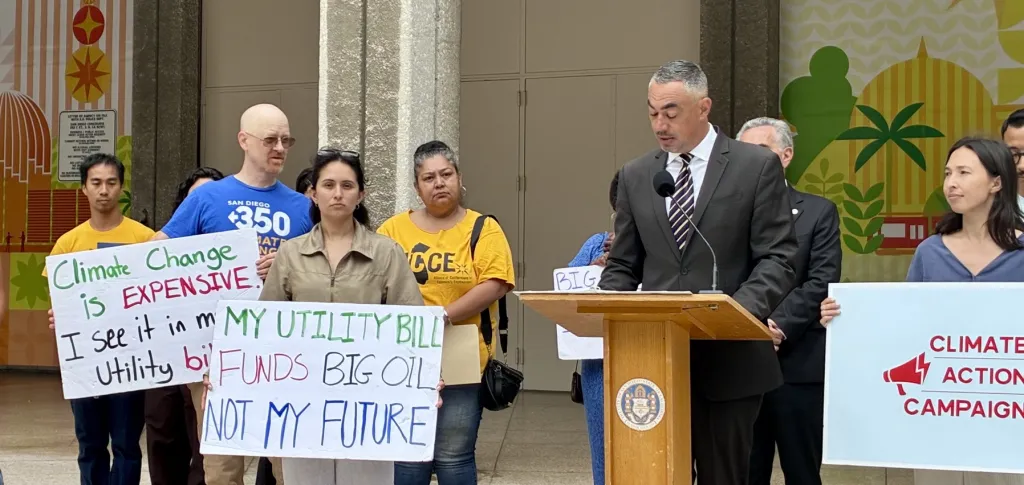
Soaring utility bills have become a hot topic for SDG&E and other investor-owned utilities in California.
According to the most recent electric rates report by the California Public Advocates Office, the average per-kilowatt residential rate has increased 98% in SDG&E’s service territory in the past 10 years. Southern California Edison customers have seen a 101% increase over the same time frame, with Pacific Gas & Electric average residential rates climbing 69%.
Read more There are many questions about the Iran deal. Here are (some) answers.