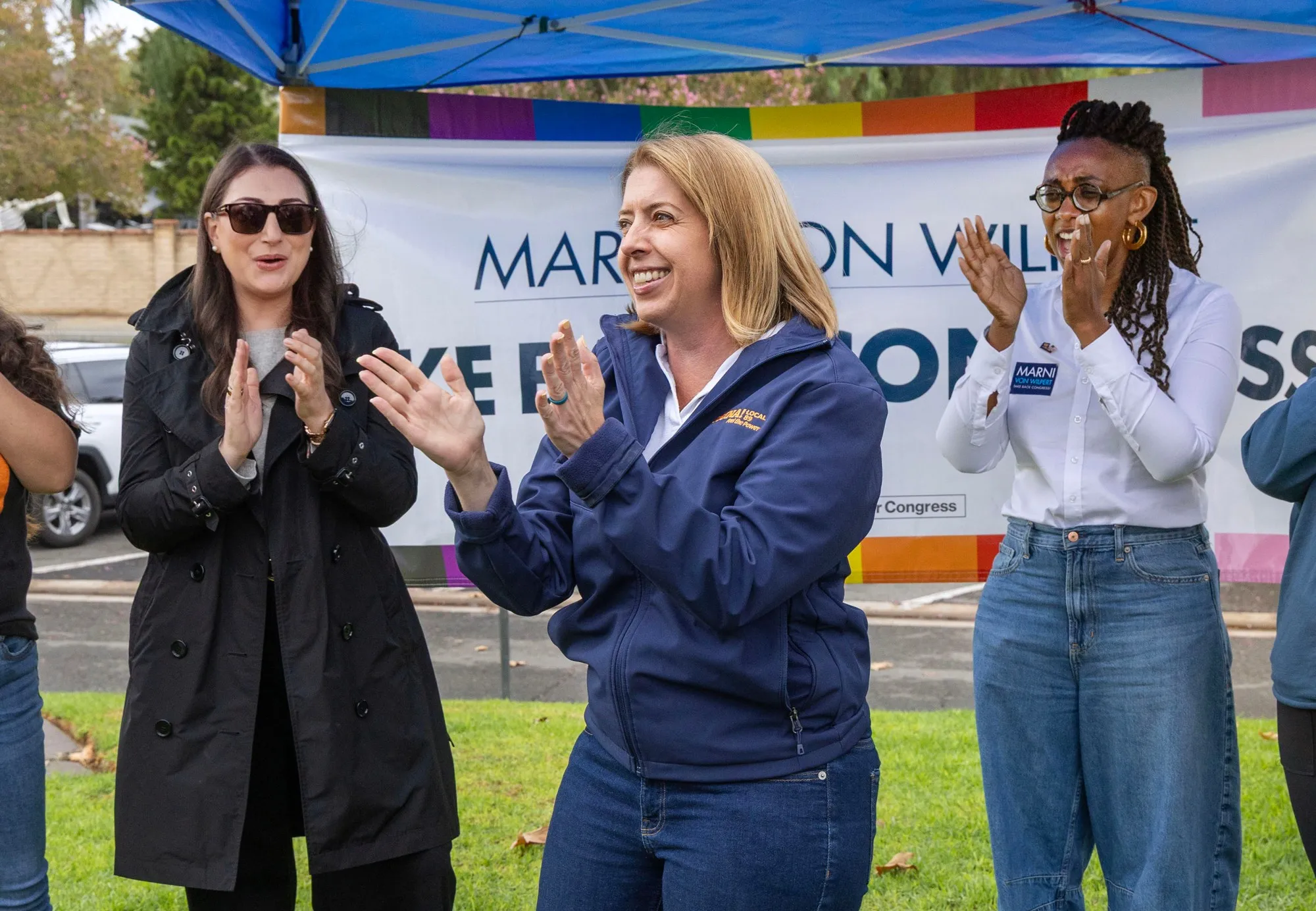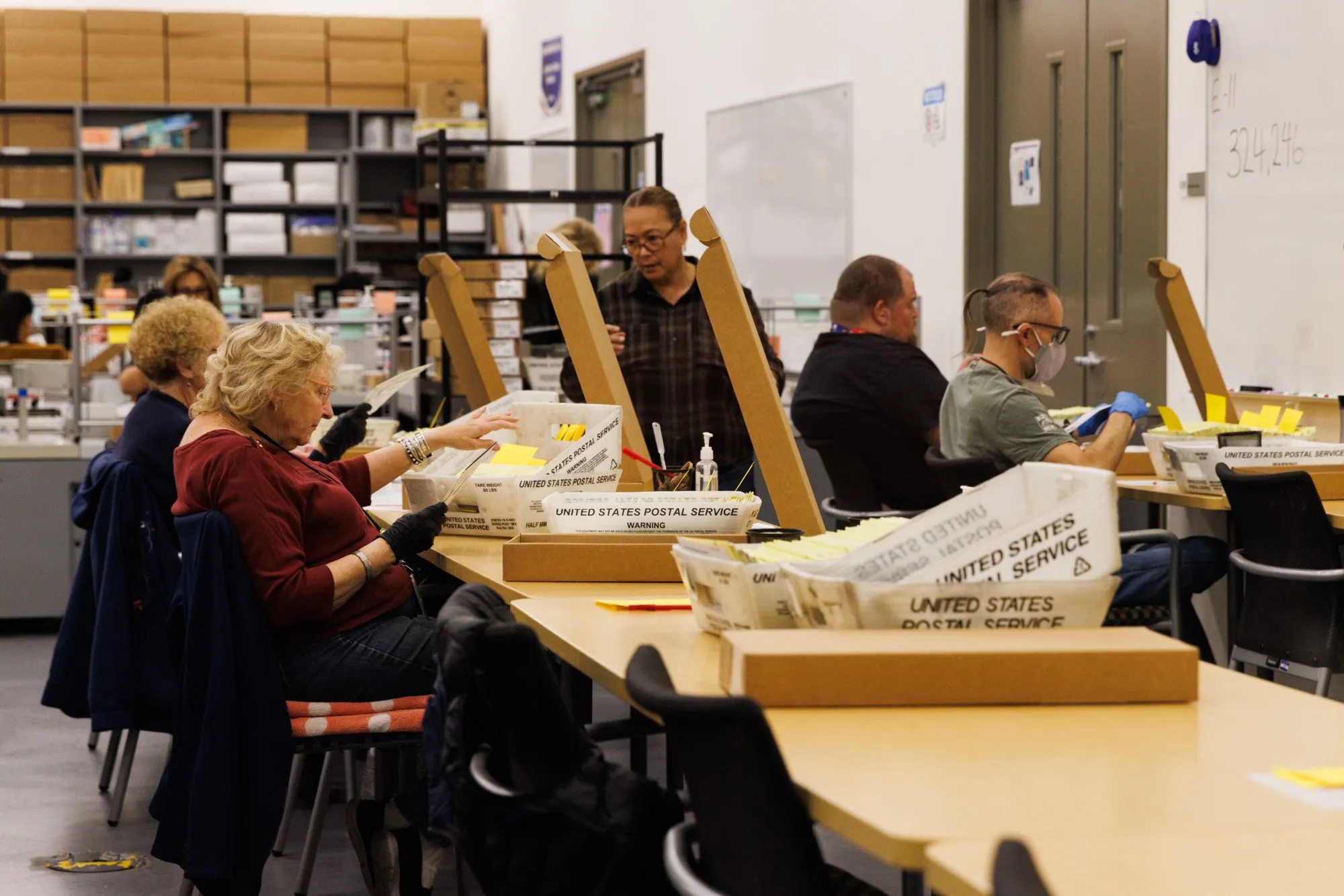








David Gallo is a legal specialist in civil trial advocacy, and his law office’s website indicates his practice includes employment law and complex business litigation. He is running to be a San Diego Superior Court judge and is seeking Office No. 32.
Read more Democrats test a new red state strategy: Back independents over their own nominees
Gallo faces two opponents for the seat. He does not have a campaign website and said he neither requested nor accepted any endorsements.
The San Diego County Bar Association said it was “unable to evaluate” Gallo.
According to the organization, a candidate may be deemed “unable to evaluate” if the Judicial Election Evaluation Committee “does not receive sufficient information from persons who know a candidate to fairly and adequately evaluate a candidate’s ability to perform the judicial function.”
Judicial races are nonpartisan.
The Union-Tribune emailed a series of questions to Gallo and other candidates to help inform voters about their positions, priorities and plans if elected.
Gallo said AI was not used in responding to the Union-Tribune’s questions.
I am one of the only fifty-five (55) Legal Specialists in Civil Trial Advocacy in the State of California. This is an earned credential (not an award or membership) conferred upon me by the State Bar of California Board of Legal Specialization. I hold a second Board Certification in Complex Litigation, conferred upon me by the National Board of Trial Advocacy. I received my legal education at the University of Texas School of Law, one of our nation’s best law schools. I have been in practice in San Diego since the 1990s, and have successfully litigated against multi-billion-dollar companies represented by 1,000-lawyer law firms. My work has often involved representation of employees (and groups of employees) who have not been paid properly, as well as class-action and commercial litigation. I very much enjoy volunteer work leading trial advocacy workshops offered through California’s premier non-profit trial advocacy CLE provider.
The crown jewel of our court system has been the 1990 Trial Court Delay Reduction Act, which promised that Californians would have meaningful access to the courts. But since the so-called “Great Recession,” the Legislature has starved the Judicial Branch of the funding and personnel it needs to function. It would take a 62% increase to restore Judicial Branch funding to its pre-Great Recession levels (as a percentage of General Fund Expenditures). The number of judges in San Diego County has not increased since our current, “unified” court was created in 2003. A SINGLE JUDGE CAN HELP. The judges you elect this year will join a very overburdened team of 128 Judges of the San Diego Superior Court. My intimate familiarity with our Civil Discovery Act, Evidence Code, and trial procedures, would allow me to contribute meaningfully to our Superior Court’s ongoing Herculean efforts to cope with its crushing caseload.
Read more Trump says sculpture garden honoring prominent Americans is planned for park along Potomac River
Judges — especially trial-court judges — are supposed to follow the law (i.e., not make the law). MY OBJECTIVE would be to apply my unique abilities and experience to see that litigants obtain just results according to law — and in the most timely and cost-effective way possible. I am acutely aware of the fact that most people who are parties to lawsuits are under great stress, and that the outcome of their litigation could have a major effect upon their lives. Litigation should be decided on its merits — not according to which party can survive a war of attrition.
I am confident that any of the three (3) attorneys seeking this office would make a fine judge.
As an attorney, I would never place a document before a court, or even before my opposing counsel, that was written by a computer. If an attorney uses AI to LOCATE authority which the attorney then personally verifies and describes to the Court in the attorney’s own words, that should be permissible. I do not believe any further use of AI in preparing documents for submission to a court is appropriate.
As our Supreme Court (and possibly the Legislature) adopts rules and guidelines related to AI, it will be the role of trial judges to adhere to, and enforce, those rules and guidelines. I would do so faithfully.
Read more Powell’s tenure as Fed chair marked by fight for independence while trying to tame inflation
The San Diego County Bar Association has not assigned any rating to me.