






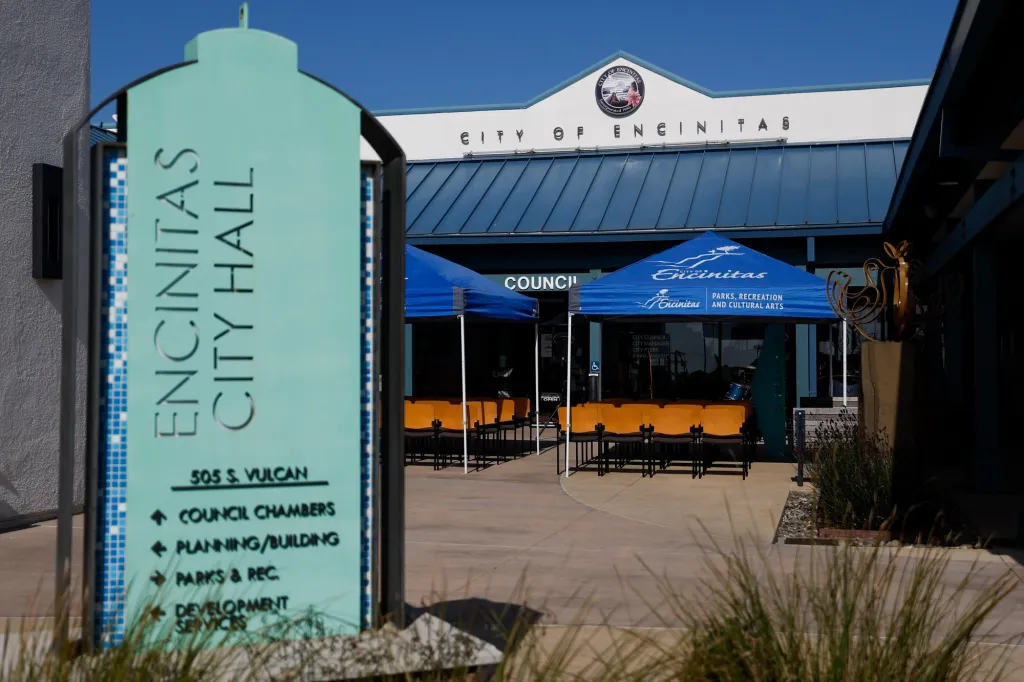
For the first time in years, Encinitas is drastically raising many of the impact fees it charges developers who build single-family or multi-family homes.
Read more Iran condemns US strikes as a show of ‘bad faith’ and warns of consequences
The City Council unanimously voted last week to adopt the new proposed fees, which in some cases will be 300% to 500% higher than the old ones. The fees, which aim to mitigate the impacts of development, raise money for parks, roadway improvements and community buildings.
Changes to state law in 2022 allow cities to begin charging developer impact fees on a square-foot basis, instead of per dwelling unit, if they conduct a fee study first and if that study is repeated within the next eight years. Encinitas has just completed its first fee study using the new state requirements and thus now can proceed with raising its fees, a city staff report states.
The new fees are expected to take effect July 20, and will apply to future developments, not the many, already permitted, housing projects in town.
For single-family home projects, the changes include:
- A park development fee that’s rising by 495% to $13.65 a square foot;
- A flood control fee that’s increasing by 519% to $1.30 a square foot;
- An open space acquisition fee that’s increasing by 209% to 78 cents a square foot;
- A community facilities fee that’s increasing by 326% to $1.40 a square foot;
- A traffic mitigation fee that’s increasing by 192% to $4.83 a square foot.
Under the new system, the developers of an average, 1,736-square-foot home in Encinitas will now owe $47,827 in impact fees, up from the old figure of $15,843, the staff report states. Developers of multi-family units will face their own fee increases, but people who build small accessory dwelling units — ones less than 750 square feet — won’t.
Some of the city’s impact fees were last increased in 2015, while others haven’t changed since 2000, the city staff report indicates.
While the building industry understands that the fees haven’t changed in years, this proposal seems excessive, Amiee Faucett, president and CEO of the Building Industry Association of San Diego County, wrote in a letter to the City Council.
Read more Oceanside commission says go slow on state’s transit-oriented housing
She wrote that “the magnitude of several proposed increases — particularly those in the range of 300 percent to 500 percent — comes at a time when the residential development industry is already facing significant cost escalation across land, labor, materials, insurance and financing. In this environment, abrupt and substantial fee increases risk further constraining housing production and exacerbating the region’s affordability challenges.”
And, she asked the council to re-evaluate some of the proposed fees and consider phasing the changes in over a multi-year period.
At Wednesday’s meeting, council members said they wanted the fees in place now.
“I think this is a long time in coming and I’m glad we’re talking about it today,” Councilmember Jim O’Hara said, adding that Carlsbad charges far more and that doesn’t seem to have slowed development there.
Councilmember Luke Shaffer said he supported the increases, but added that he did worry about their impact on the developers of small, 1-acre projects where only three or four houses were planned.
One city impact fee is decreasing — the parkland acquisition fee is dropping by 5% to $3.70 a square foot. That’s because the new fee study found that Encinitas is already exceeding its goal of setting aside 3% of its land for park areas, Councilmember Joy Lyndes said.
Lyndes added that she would like city employees to look into increasing the parkland goal to 5%, given how important outdoor spaces are to the city’s residents.
Read more Cornyn tries to hold on to Texas Senate seat in runoff with Paxton, the latest test of Trump’s power