


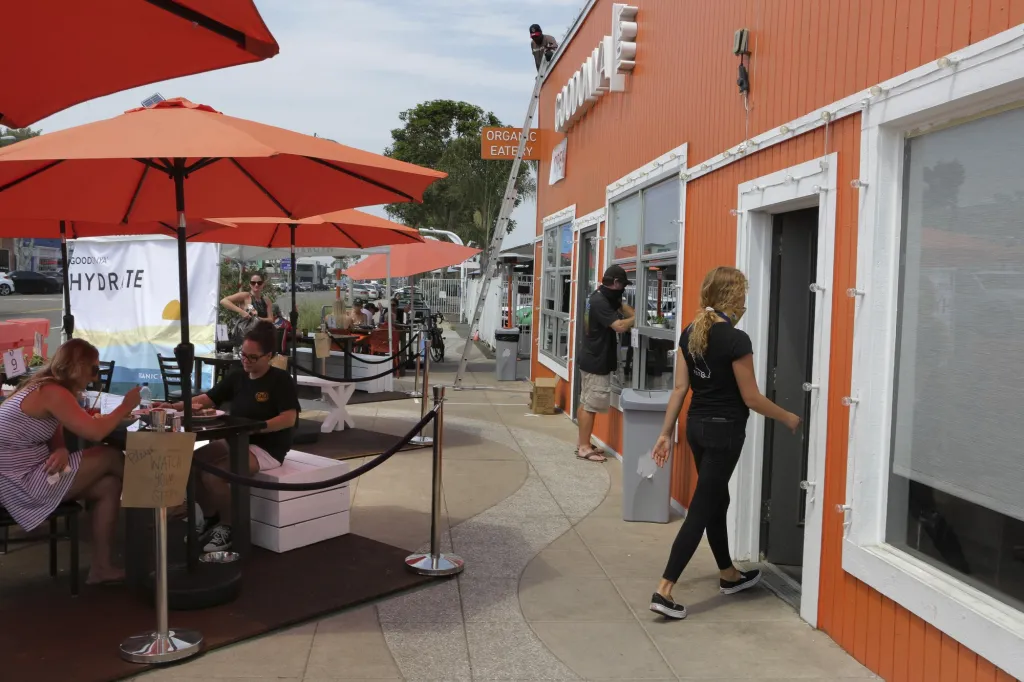
The Encinitas City Council agreed Wednesday to continue allowing roadside outdoor dining areas along Coast Highway 101, but change eventually will be coming.
Read more Trump is facing a new inflation warning from the bond market, adding to his midterm challenges
Expect the walls around these dining areas to get an upgrade and plan for new requirements regarding everything from stormwater runoff to rodent control, City Council members said. Also, they’re considering doing a new assessment of downtown parking generally to see what can be done to alleviate the reported shortage of spots.
Encinitas needs to “think outside the box” when it comes to parking, said Councilmember Marco San Antonio, who owns a sign-making business in downtown. “There are creative ways to do this.”
Councilmember Joy Lyndes, who represents the Cardiff region, said Cardiff’s downtown business organization has encouraged businesses to share private parking lots, and that might be an option for downtown. For example, she said, a Cardiff dentist’s office shares its parking with a neighboring bar, allowing the bar’s customers to use the private lot at night and on weekends when the dentist’s office is closed.
Currently, there are 18 dining establishments using 47 former public parking spots for outdoor dining in Encinitas, city records indicate. There also are seven establishments using 42 privately owned parking spots for outdoor dining areas.
The temporary outdoor dining spots — sometimes referred to as “parklets” — started sprouting up along Coast Highway 101 in the early days of the COVID-19 pandemic in 2020. Encinitas agreed to let restaurants use the public parking spots after the state lifted some regulations on a temporary basis to help mitigate the financial impacts of the pandemic.
Initially, Encinitas restaurants were allowed to use the public parking spots for free, but the city now charges a monthly usage fee of $2.58 a square foot. That fee raises about $209,000 a year for the city, a staff report indicates.
Read more US bombs Iranian military sites and Tehran targets American troops in Kuwait
In the years since the pandemic, the council has twice extended temporary permission for the outdoor dining spots to remain in place. On Wednesday, the council unanimously agreed to do so one more time, meaning they’ll be allowed to stay until July 2027. However, council members said, this will likely be the last extension.
A proposed ordinance that will allow these temporary structures to become permanent is in the works, and it’s going to come with higher standards for the structures, city officials said. A draft version of the proposed ordinance will be out for review either late this year or early next year, and it will cover “all aspects of outdoor dining,” including concerns that have been raised about drainage issues, noise, signage and structure height, city senior planner/mobility coordinator Evan Jedynak told the council.
Mayor Bruce Ehlers said he wants the dining areas to look less temporary, and he recommended following what Oceanside’s downtown Mission Avenue area has done. The sidewalks there have been broadened and restaurants have expanded into those wider sidewalk areas, he said.
“I want the council to think permanent when we come back here a year from now,” the mayor added.
Mark Dobbins, one of the owners of Roxy Encinitas restaurant, encouraged the council to do whatever it could to keep the outdoor dining areas, saying they were “a godsend for us coming out of COVID.” Customers love them, he said, and they help create a lively atmosphere downtown.
“If we could have (both) more parking and the patios, that’s a win-win for everyone,” Dobbins said as he offered various suggestions for increasing the parking spot supply, including allowing restaurant customers to park at City Hall on nights and weekends.
Read more US strike on an alleged drug boat kills 3 in the eastern Pacific Ocean in fourth attack this week