






Today’s column is the second in a series about the birds and animals that visit Secret Spring, a small waterhole in the oak and pine forest of Palomar Mountain.
Read more Sharp sees strategic advantage in new deal with Tri-City Medical Center
I’ve always considered skunks inquisitive and cute, thanks to fond childhood memories of the fictional young literary character Homer Price and his adventures with Aroma, a pet skunk who lived under his porch.
It wasn’t until my adult years I learned skunks can also be little stinkers.
Happily, that education came at the expense of others who had unfortunate encounters, mostly by surprising skunks around their home.
Today’s column is about the skunks who frequently showed up at Secret Spring, a tiny waterhole in the woods of Palomar Mountain where I have maintained a wildlife camera for nearly a year.
I began this series with the birds that flock in to drink at the spring. They are by far the most frequent visitors, but skunks rank No. 2 in visitor frequency.
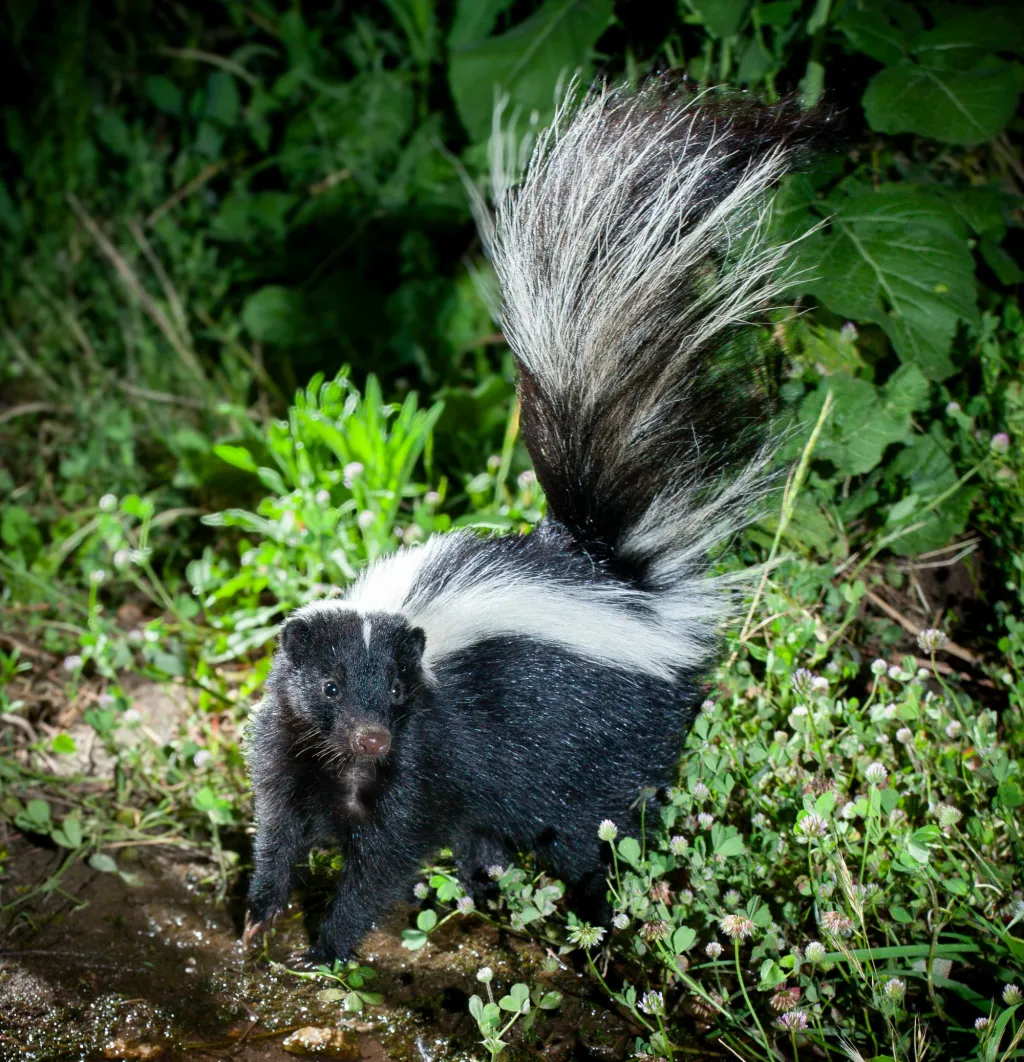
I’ve had a few trail confrontations with skunks, but other than the aggressive hissing, foot stomping, and the puffed-up, furry tail being thrust straight into the air, mutual retreat has avoided the unpleasant spray of the animal’s version of tear gas.
Just like rattlesnakes, skunks prefer not to attack.
Given the opportunity they will escape to safety, but as a last resort will shoot a strong stream of oily, foul-smelling liquid from glands under their tail.
If you, or a pet, are unlucky enough to get sprayed, expect temporary blindness, eye irritation and sometimes nausea, not to mention an odor that will linger for days.
And here’s good news, if you are trying to wash off with water, it can temporarily increase the effect of the skunk oil.
So, here’s a pro tip.
To neutralize the skunk oil, use 1 quart of hydrogen peroxide, ¼ cup of baking soda and 2 teaspoons of dish soap.
I still think skunks are adorable, with their silky, jet black and stark white coloration, but I also respect their defense systems that can be very unpleasant.
These curious but cautious forest mammals showed up every night at Secret Spring and often seemed to pose for pictures as the remote camera continued taking images as long these furry visitors hung around.
Skunks are creatures of the night, rarely showing up on camera before midnight and often most active between 2 and 4 a.m. During the day they will be sleeping in underground burrows, hollow logs, alcoves in rock piles or dense brush.
Likely, it’s the size of their home range that explains why they are the most frequent nighttime visitors to Secret Spring.
In the wild, skunks generally have a home range no larger than about 2 square miles. Those home ranges often overlap, however, since researchers have found as many as 40 skunks per square mile in areas of abundance food and water.
Read more Santee increasing fire safety measures along San Diego River corridor
Urban skunks, however, can have far denser populations of 50 to 100 per square mile, due to the availability of fruit and vegetable gardens, food waste, pet food and shelter opportunities provided by humans.
In the wild, skunks feed on a wide range of items and that diet changes with seasonal availability.
In spring and summer, the abundance of beetles, crickets, grasshoppers and grubs provide a high protein source of food for skunks.
Native fruits and berries, acorns and eggs from ground nesting birds are also on their diet list, and in winter they may feed on dead animals.
Around ponds, frogs and toads will be eaten, and when worms emerge after rainfall, skunks will eagerly feed on those.
You may notice the long, stout claws on skunks. These are important tools used for both feeding and building their dens and digging for other menu items such as mice, gophers, voles and shrews.
Their sturdy claws also allow them to tear into rotting logs for insects.
There are two species of skunks found in San Diego County, but the larger, striped skunk is widely distributed and most often seen.
The smaller, Western spotted skunk did make an appearance at Secret Spring, but the species is considered rare and localized.
The spotted skunk is about half the size and weight of a striped skunk, which averages about 25 inches long and has an average weight of around 7 pounds.
Due to their effective defense mechanism, skunks are relatively successful in avoiding predators and live about seven years in the wild.
Coyotes, bobcats, foxes and mountain lions will all feed on skunks, but the most significant natural predator is the great horned owl who attacks silently from the air and as a plus, has a very poor sense of smell, allowing it to tolerate the skunk scent.
As the range and size of visitors to Secret Spring increase, they will be seen less frequently at the small waterhole.
Next you will meet the sly and curious gray fox.
Cowan is a freelance columnist. Email [email protected] or visit erniecowan.substack.com.
Read more These community health clinics are led by pharmacists and filling in gaps in health care