








A San Diego federal judge ruled Friday that despite her mistake in a previous ruling last year, a lawsuit by four Indonesian fishers alleging human trafficking and forced labor violations against San Diego-based canned tuna giant Bumble Bee Seafoods can continue toward trial and will not be dismissed.
Read more Trump says US military strike killed leader of Tren de Aragua gang with help from Venezuela
Friday’s ruling by Chief U.S. District Judge Cynthia Bashant, giving a legal win to the plaintiffs, came about two weeks after she had delivered a legal victory to Bumble Bee in a different aspect of the case. In her May 27 ruling, Bashant declined to order Bumble Bee to make several wide-ranging changes to its operations and treatment of workers — at least while the case is pending.
The case involves four plaintiffs, all men from rural Indonesian villages, who sued Bumble Bee in March 2025 in U.S. District Court in San Diego, alleging they were subjected to severe physical abuse and debt bondage on long-line tuna boats that are part of Bumble Bee’s “trusted fleet.” The lawsuit alleged that Bumble Bee had known for years that the fishing vessels in its supply fleet used forced labor but failed to stop the practice.
The suit is believed to be the first to accuse an American seafood company of forced labor at sea and relies on claims made under a federal anti-trafficking law known as the Trafficking Victims Protection Reauthorization Act. Bumble Bee has argued, essentially, that the parts of that law at issue in the case don’t apply to conduct that occurred outside the U.S.
In her ruling Friday, Bashant rejected those arguments. She also denied Bumble Bee’s request to immediately appeal the ruling.
“This important decision affirms that our clients — Indonesian men who were looking for good jobs to build a future, and instead say they were trapped and isolated at sea — have every right to pursue their claims against Bumble Bee here in the United States,” Agnieszka Fryszman, one of the attorneys for the plaintiffs, said in a statement. “We thank the Court for this thoughtful ruling and look forward to advancing our clients’ pursuit of justice.”
A statement from Bumble Bee said the company was pleased with Bashant’s May 27 ruling, and that Friday’s ruling “does not include any finding that Bumble Bee engaged in wrongdoing. Bumble Bee looks forward to vigorously defending itself in this matter.”
The company told the Union-Tribune in a statement last year: “We care deeply about the people behind every bit of seafood we sell and unequivocally condemn forced labor.”
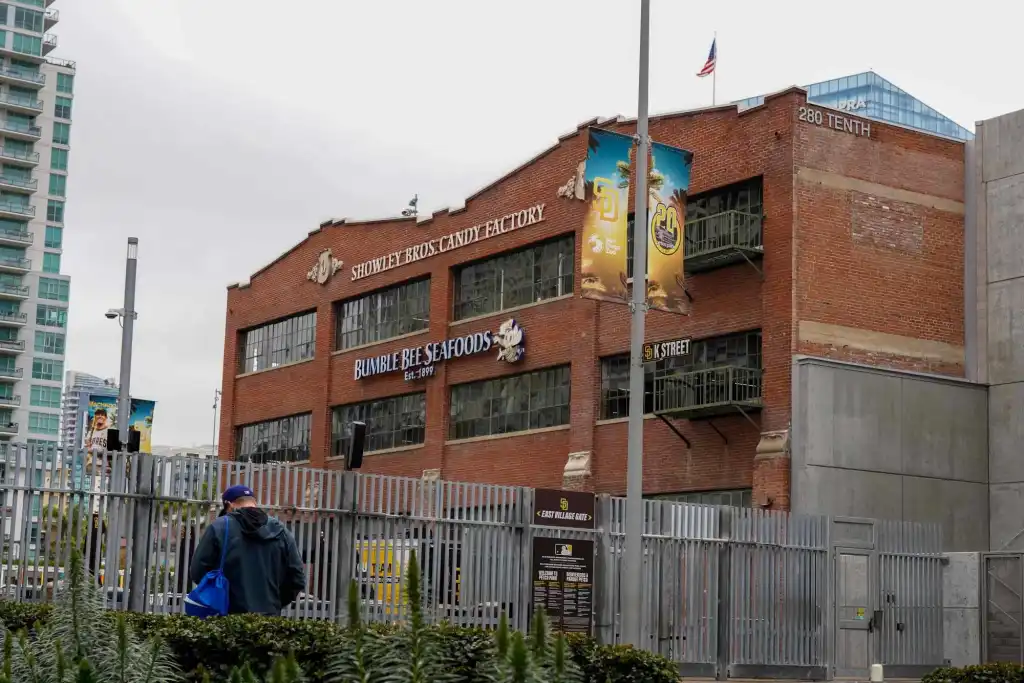
Bumble Bee was sold for nearly $1 billion in 2020, a year after it filed for bankruptcy, to the Taiwanese tuna-trading giant FCF Co. Ltd. But as a subsidiary of FCF, it remains headquartered in downtown San Diego inside the gates of Petco Park.
In numerous reports over the , the U.S. State Department, the United Nations and other organizations have identified forced labor as a particularly significant problem in the deep-sea fishing industry. The lawsuit against Bumble Bee alleges that it has not taken the same steps to combat forced labor as has much of the rest of the seafood industry.
Read more Two arrested in Spring Valley motorhome slaying
One of the plaintiffs alleged that he was denied medical attention after hot oil from the ship’s kitchen splashed down his body, causing burns so severe that “he felt like his genitals exploded.” Another alleged he was ordered to keep working after a load of fish landed on him, gashing his leg to the bone and overflowing his boot with blood. Two others alleged they were routinely beaten and stabbed with needles by their captains.
Bashant’s ruling Friday was similar to one she had made in November. But she acknowledged that she had made a “clear error” in that November decision by misstating the legal precedent established in a similar case. She also acknowledged that her November ruling in the Bumble Bee case “heavily relied upon a misinterpretation” of that other case.
But she ruled Friday that even after taking into account the correct legal precedent, the Indonesian plaintiffs have valid claims to pursue against Bumble Bee. She ruled, essentially, that the company should have known about allegations of forced labor in its fleet based on evidence it had, even if it didn’t have direct knowledge of forced labor occurring on the specific boats the plaintiffs worked on.
Greenpeace USA, which is helping to represent the plaintiffs, celebrated Friday’s ruling as a broader win for the federal anti-trafficking law at the heart of the case.
“The ruling strongly affirms that the TVPRA, the primary U.S. law used to combat human trafficking, applies to abuses that occur outside the United States,” Greenpeace USA said in its statement.
Sari Heidenreich, senior human rights adviser with Greenpeace USA, said Bumble Bee and the rest of the seafood industry know how to address the risk of abuse in their supply chains. She said the Bumble Bee case is a reminder why those safeguards are necessary.
“Bumble Bee must answer for its role in a supply chain where forced labor and horrific abuse are endemic,” Heidenreich said. “The allegations in this case are serious, and they are not going away.”
A hearing in the case to determine how exactly it will move forward is scheduled for next month.
Read more ‘Democrats want to win’: Platner’s support reflects a changing party in the Trump era