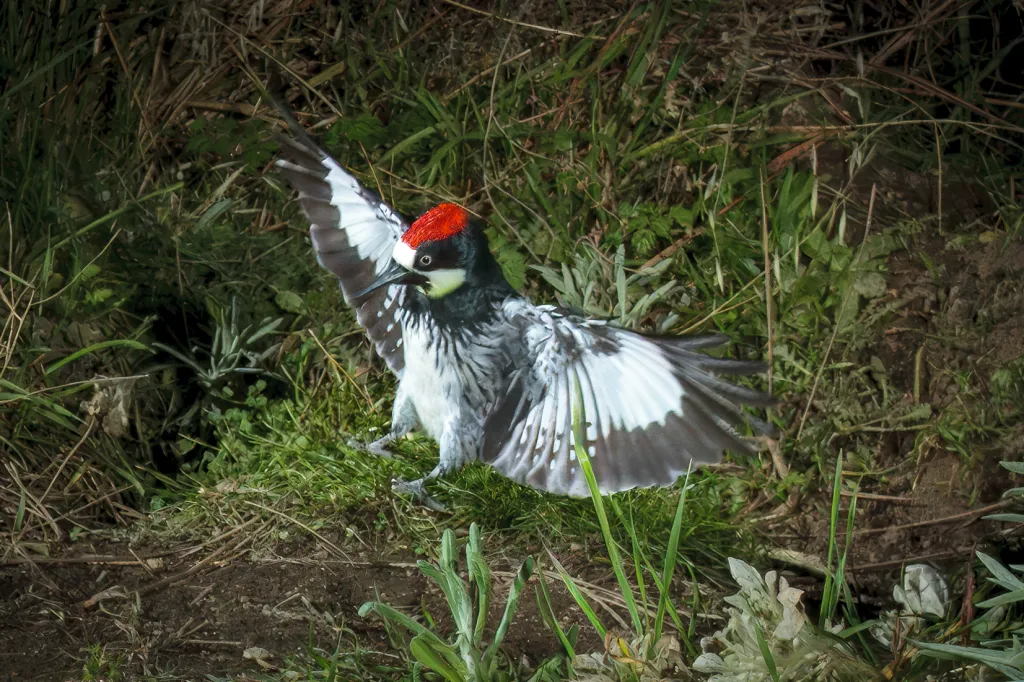







Today’s column is the third in a series about the birds and animals that visit Secret Spring, a small waterhole in the oak and pine forest of Palomar Mountain.
Read more Solutions for Change repays money improperly taken from reserve accounts, names new CEO
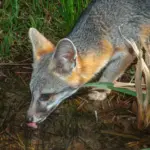
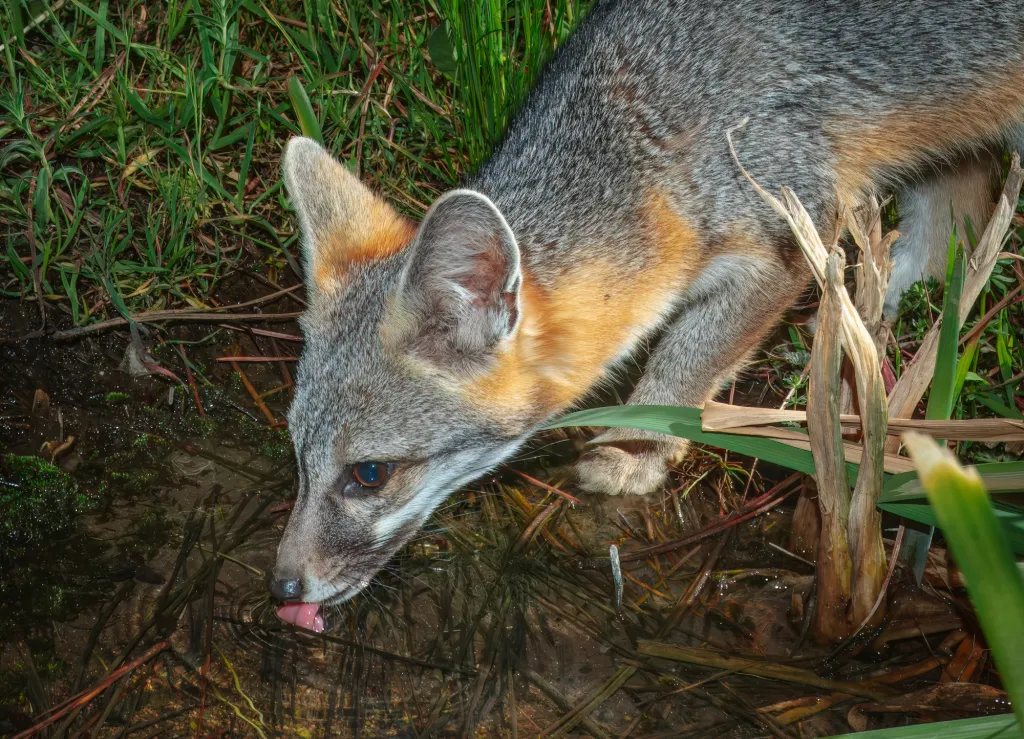
In the midnight darkness the gray fox with its salt-and-pepper pelt looked like a ghostly figure as it moved cautiously in the shadows to see what this strange thing was next to its favorite waterhole.
Despite the camouflage colors of the case holding the wildlife camera, the fox could tell something new was there and kept its distance until confident enough to come and drink.
Unlike bobcats, which are extremely curious, the gray fox might be described as exceedingly cautious and patient until satisfied that anything new is not a threat.
As the fox approached the small puddle of spring water, the wildlife camera sprang to life, triggering flash units to record the wee-hour visit of this nocturnal creature.
Already convinced that this strange object was no threat, the fox continued to drink, and the camera kept taking pictures.
I was able to watch all this activity with a second, inexpensive infrared trail camera that has a broader view of Secret Spring where I have had the more sophisticated wildlife camera set up for nearly a year.
If there is one thing I’ve learned from this effort, it is that forest wildlife is keenly in tune with its habitat. We may go to great efforts to blend, camouflage or conceal the game camera from view, but the animals know it’s there. Some ignore it, others are very cautious, and some, like bobcats, are very curious.
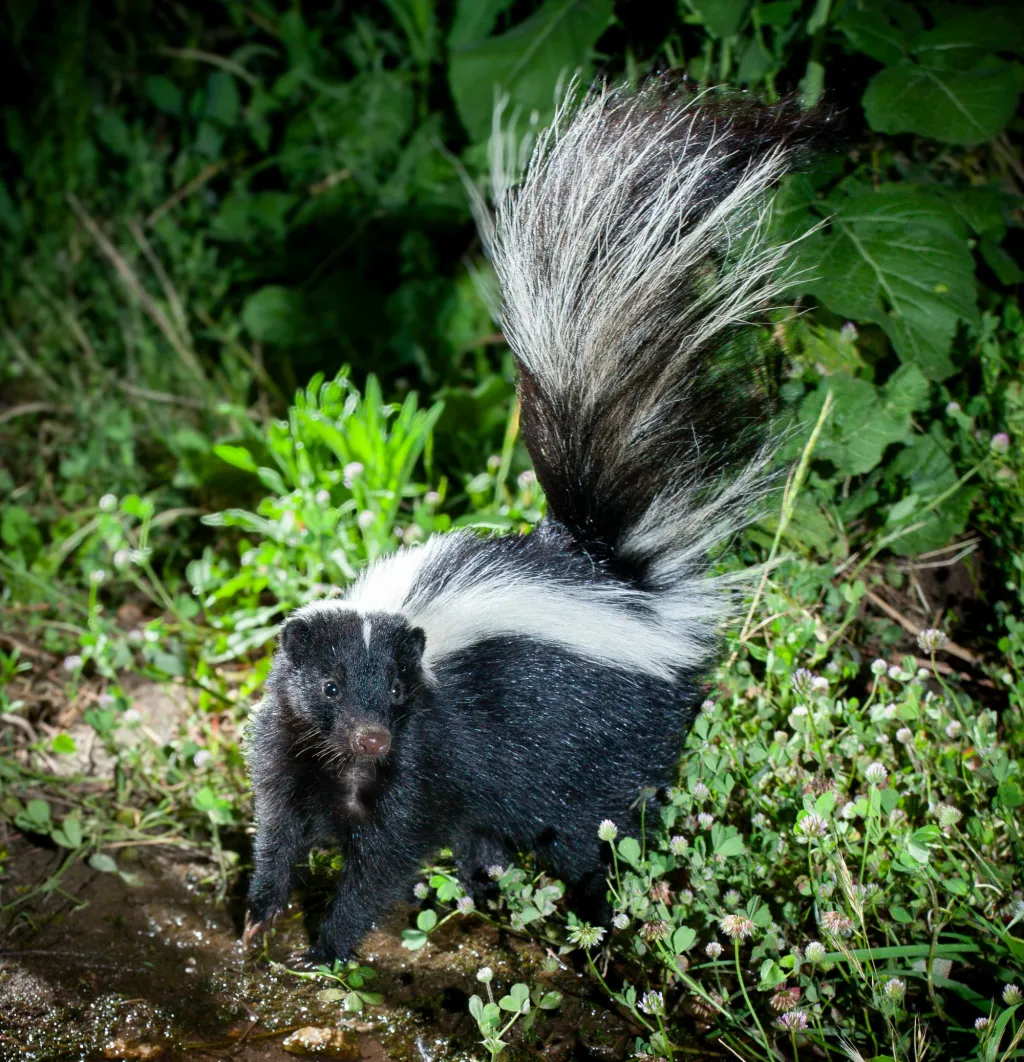
This series began with an account of the many birds that are the most frequent and varied visitors to Secret Spring. The series continues now with stories about the less-frequent visitors. Behind the daily bird activity and nightly visits from skunks, the fox is next for frequency of visits.
The game camera did not see foxes on a nightly basis, because their home territory can be up to 5 square miles, so they are likely using other food and water sources as they move about.
The western gray fox is a beautiful animal, with a surprising population considering how rarely it is seen. While there is no detailed census information for the fox in San Diego County, it is considered common and widely distributed from urban to natural areas and with higher populations west of the desert.
They have delicate features, with lush, grizzled fur, a reddish-brown neck and legs, a white throat and belly, and a long, bushy tail. A jet-black band runs down their back and tail.
While not prized as much as the eastern red fox, the gray fox was trapped for its pelt that was used to create jackets, capes and stoles.
They are relatively small, weighing 8 to 12 pounds and measuring between 3 and 4 feet in length.
The gray fox is a canine, a member of the dog family, but has a unique mix of characteristics once described on a PBS documentary as “dog hardware running cat software.”
That comes from some of their habits, such as being mostly nocturnal, with cat-like eyes, whiskers that help them navigate at night, hair on their back that stands up when they are alarmed, and their unique ability among canines to climb, thanks to partially retractable claws.
The fox’s speed and ability to climb help it escape predators such as coyotes, bobcats and mountain lions, and to locate dens in hollow tree limbs where kits can be raised safely away from danger.
Since gray foxes and great horned owls are both active at night, the large owl is one of the fox’s most common predators.
From an ecological standpoint, foxes are considered beneficial by keeping populations of rodents and small mammals under control, but they are omnivores with a diet that can include birds and their eggs, crickets and larger insects, manzanita berries, and fresh carrion.
I’ve enjoyed the many photos recorded of the beautiful gray foxes that visit Secret Spring.
The gray fox is a special little creature that has adapted somewhat to the pressures of urbanization.
But they thrive best in natural areas, and we should never ignore efforts to set aside connected tracts of habitat for our wildlife neighbors.
You are fortunate if you get to see a gray fox.
I have seen two in the wild during the day and had quick glimpses of a few others while driving the backroads at night.
An encounter with this gentle ghost of the night is something very special. I hope it’s something that each of you will experience.
Next you will meet the opossum, North America’s only marsupial.
Cowan is a freelance columnist. Email [email protected] or visit erniecowan.substack.com.
Read more San Diego County finances teetering toward structural deficit, watchdog study finds