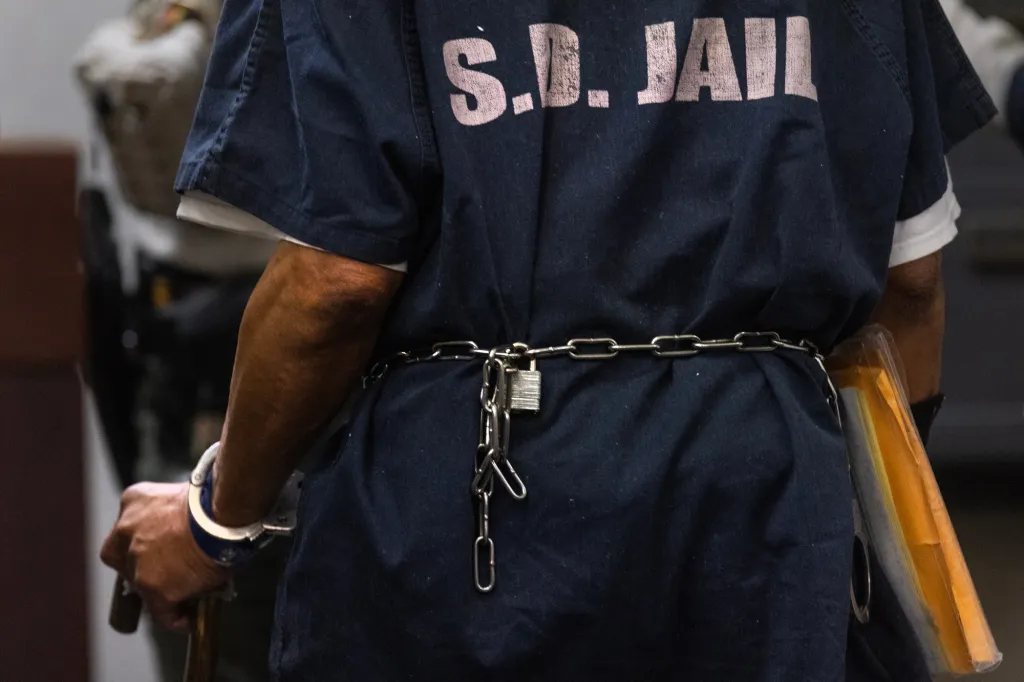









The Sheriff’s Office confirmed this week the first suicide in a San Diego jail in nearly three years: a 34-year-old man with schizophrenia and bipolar disorder who had previously tried to take his own life while in custody.
Read more Got a parking ticket in San Diego? City must pay more than $16M to drivers hit with late penalties
The death raises questions about how San Diego County jails house and monitor people with severe mental illness, particularly those with a known history of suicide attempts while incarcerated.
Parker, 34, was housed in one of the Central Jail’s administrative separation modules, where conditions are similar to solitary confinement. A medical examiner’s report says he hanged himself inside his cell the afternoon of March 8 using strips torn from a blanket that was supposed to be tear-resistant.
Parker had been in custody for less than a month. San Diego police arrested him Feb. 14 on suspicion of murder, after he fatally stabbed 41-year-old Mark Thomas outside the Hotel Churchill in downtown San Diego. He was booked the following day on charges of murder and assault likely to produce great bodily injury.
Parker died March 10 at a hospital.
Deputy Medical Examiner Melanie Estrella found that his brain had been deprived of oxygen for too long. The autopsy documented a ligature mark around Parker’s neck and fractures and hemorrhaging consistent with hanging.
According to the medical examiner’s report, Parker had been diagnosed with schizophrenia and bipolar disorder and had previously attempted suicide in jail by trying to drown himself “in a small pool of water with wet clothing around his face.”
After that incident, he was placed in an enhanced observation module for 24 hours before being cleared and moved into administrative separation.
There, investigators say, he managed to tear strips from a blanket designed to resist tearing and attached the material to a bunk bed. The medical examiner’s report also indicates Parker used his bunk bed as the suspension point.
“At approximately 2:55 p.m., Sheriff’s Deputies at the San Diego Central Jail were performing their routine duties when they discovered Mr. Parker hanging inside his assigned cell,” the Sheriff’s Office said in a statement. Deputies began life-saving efforts before paramedics took him to a hospital.
Court records from an earlier criminal case show Parker had previously been found mentally incompetent to stand trial and ordered to a state hospital for treatment. A judge authorized involuntary antipsychotic medication, writing that without treatment, “serious harm to the physical or mental health of the patient will result.”
Parker was the second person to die in sheriff’s custody this year. His death was the first apparent suicide in a San Diego County jail since 2023.
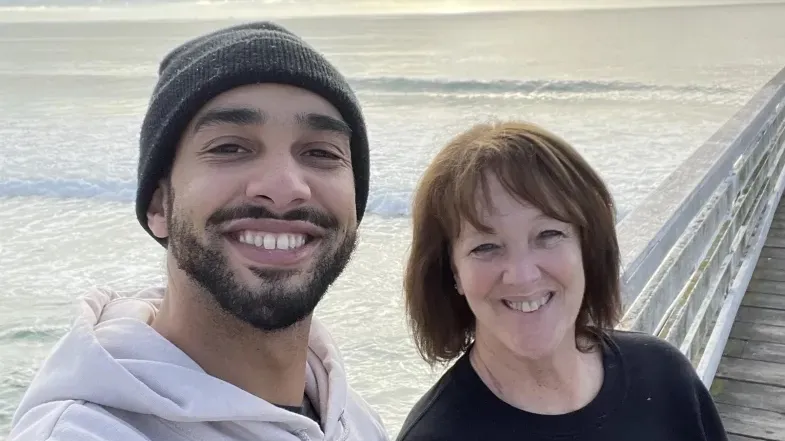
His mother, Sue Parker, described her son as “kind, caring and generous.”
“He was an avid snowboarder and a gifted artist whose work was featured in multiple gallery shows,” she said. “He was deeply loved by his family and many friends. We miss him every day.”
Parker’s death comes after years of scrutiny over suicide prevention measures inside county jails, which for years recorded some of the highest suicide rates among California’s large counties.
A 2018 report by Disability Rights California examined what was then a growing number of jail suicides and urged the Sheriff’s Office to eliminate tie-off points inside cells that could be used in hanging attempts.
Read more Brazilian court orders restoration of Fordlandia, Henry Ford’s Amazon ghost town
“Eight inmates died by hanging from December 2014 through 2016,” the report stated. “In all of these cases, ligatures were attached to ventilation grills or looped around beds that had a separation from the cell wall.”
A separate report by suicide prevention consultant Lindsay Hayes, presented to the sheriff in June 2018, similarly recommended that the department “conduct a comprehensive physical plant review of all jail cells utilized for the housing of suicidal inmates to ensure that they are reasonably suicide-resistant.”
The Sheriff’s Office later responded that “construction plans for modifications to these housing areas were submitted to General Services for implementation.”
At the time, sheriff’s officials pledged to remove or retrofit many of those features. But the renovations have stretched across years and remain incomplete.
The Sheriff’s Office has faced repeated criticism in recent years over its handling of mentally ill people in custody and the use of restrictive housing, such as administrative segregation.
A class-action lawsuit over jail conditions included allegations that people with serious mental illness were held in isolation, inadequately monitored and denied appropriate mental health treatment. In court filings, incarcerated people and outside experts described administrative segregation units as psychologically damaging environments that can worsen symptoms and increase suicide risk.
Sheriff Kelly Martinez has said the county has reduced jail deaths in recent years through expanded medical and mental health staffing, increased screening and new safety protocols.
Since Martinez took office at the end of 2022, the number of suicides have dropped significantly, from as many as six a year under her predecessor Bill Gore, to two in 2023 and none in 2024 and 2025.
Jail operations commander Jesse Johns said the blankets issued inside the jails are intended to reduce suicide risk but are not impossible to tear apart.
“It’s not infrequent that these blankets that are tear-resistant are torn,” he said. “It’s just a tighter stitch, and then there’s other fabric that’s a lot thicker than a cotton fabric — but it doesn’t mean they can’t tear it or undo the threading with a comb, the bottom of a toothbrush or any kind of hygienic equipment.”
“No vendors will put their names (on a product advertised as) tear-proof,” Johns added. “That’s why they use the term ‘tear-resistant.’”
Johns said the department has already retrofitted the George Bailey Detention Facility and Rock Mountain Detention Facility to remove ligature points and plans to begin doing the same at the Central Jail in January 2027, followed by the Vista Detention Facility.
“We’re committed to identifying these hazards and creating a safe environment for our incarcerated population,” Johns said.
Read more Canadian man pleads guilty to selling lethal substances to people who killed themselves