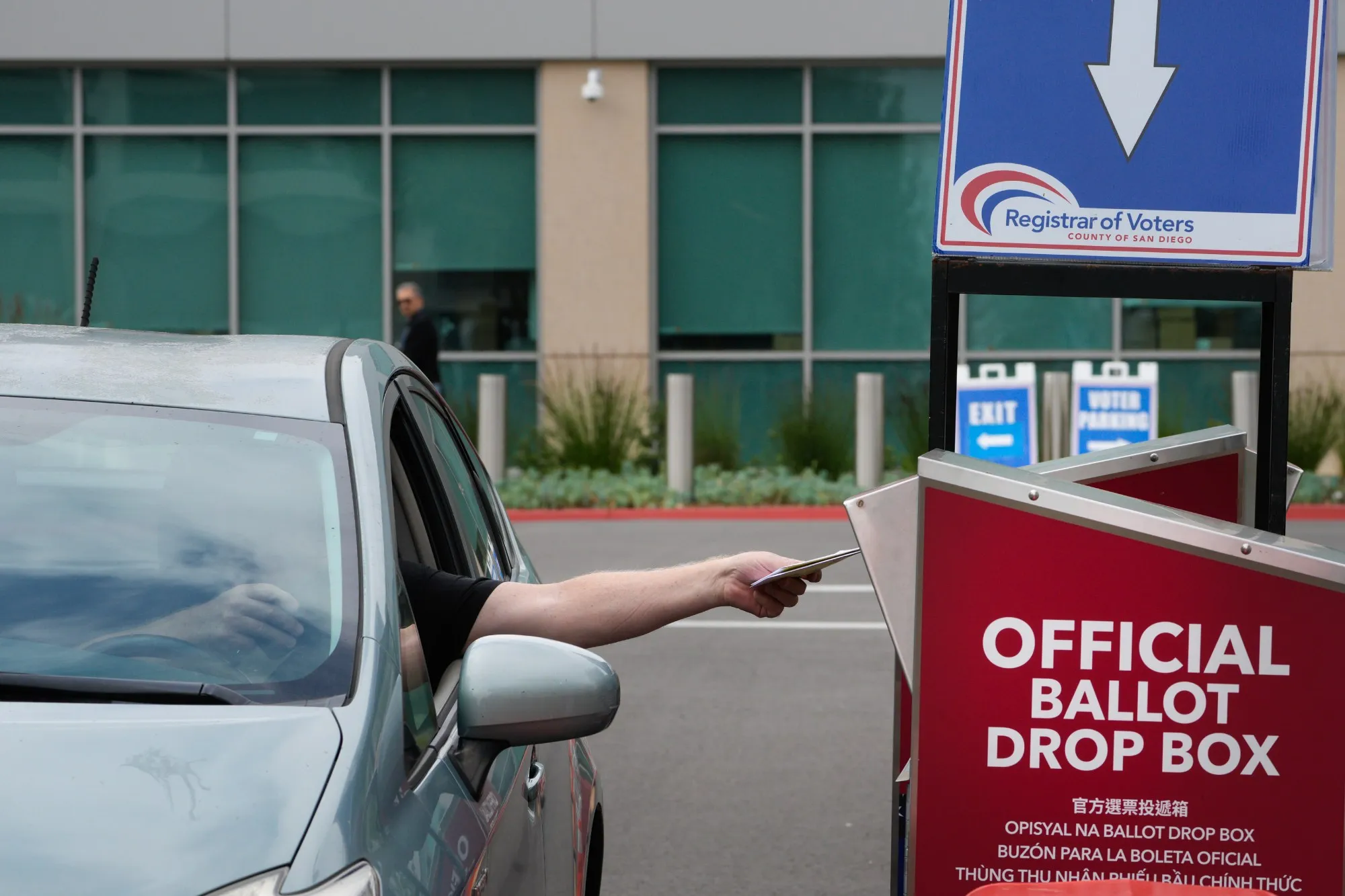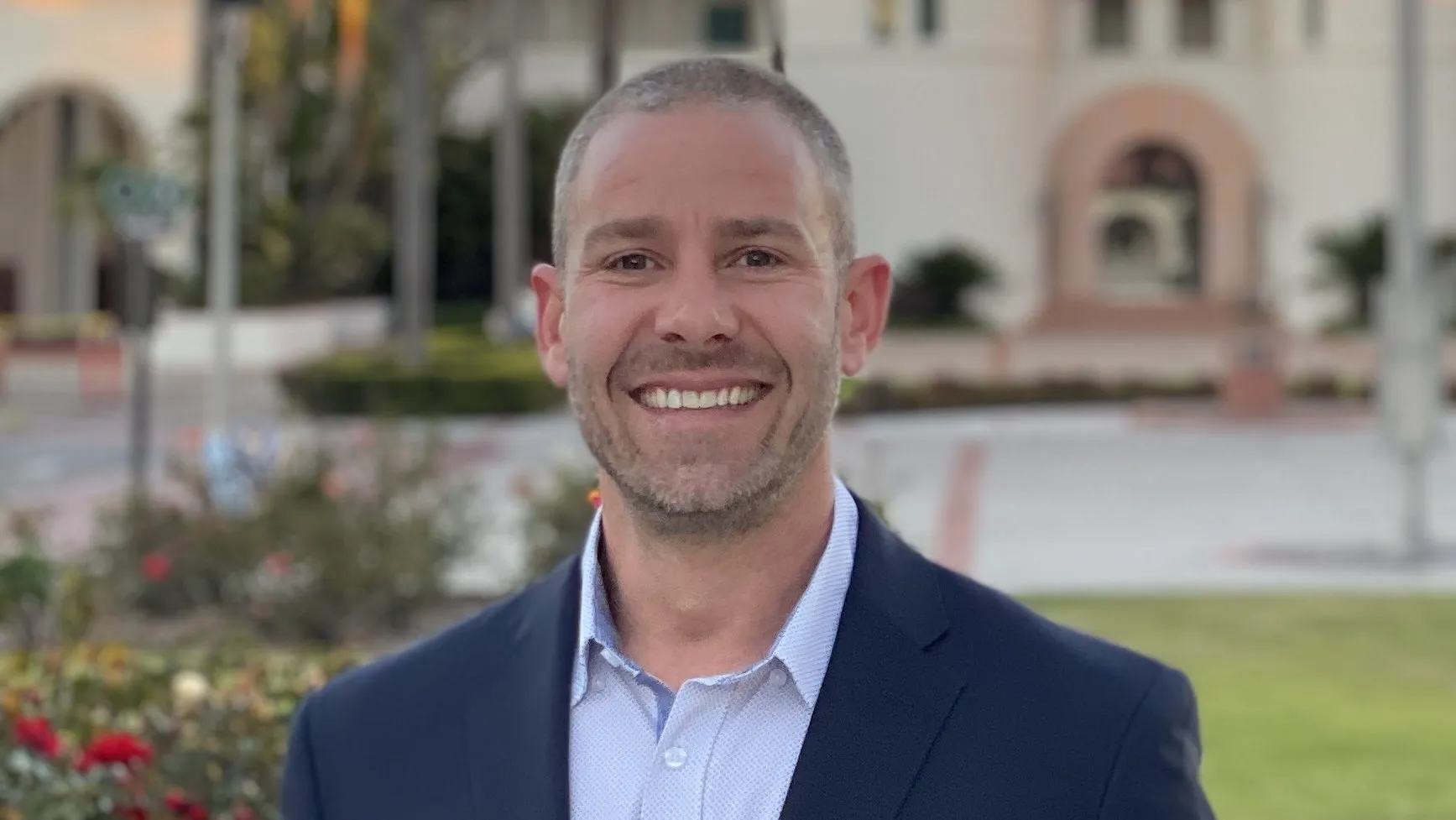





Proposition 39, which would require California’s roughly 23 million registered voters to provide additional identification to vote, is a statewide ballot measure that features a decidedly local flavor, having been authored by San Diego-area Republican state Assemblymember Carl DeMaio and championed by his group, Reform California.
Read more 2 states, 2 abortion ballot measures, and the effort to win over Gen Z voters
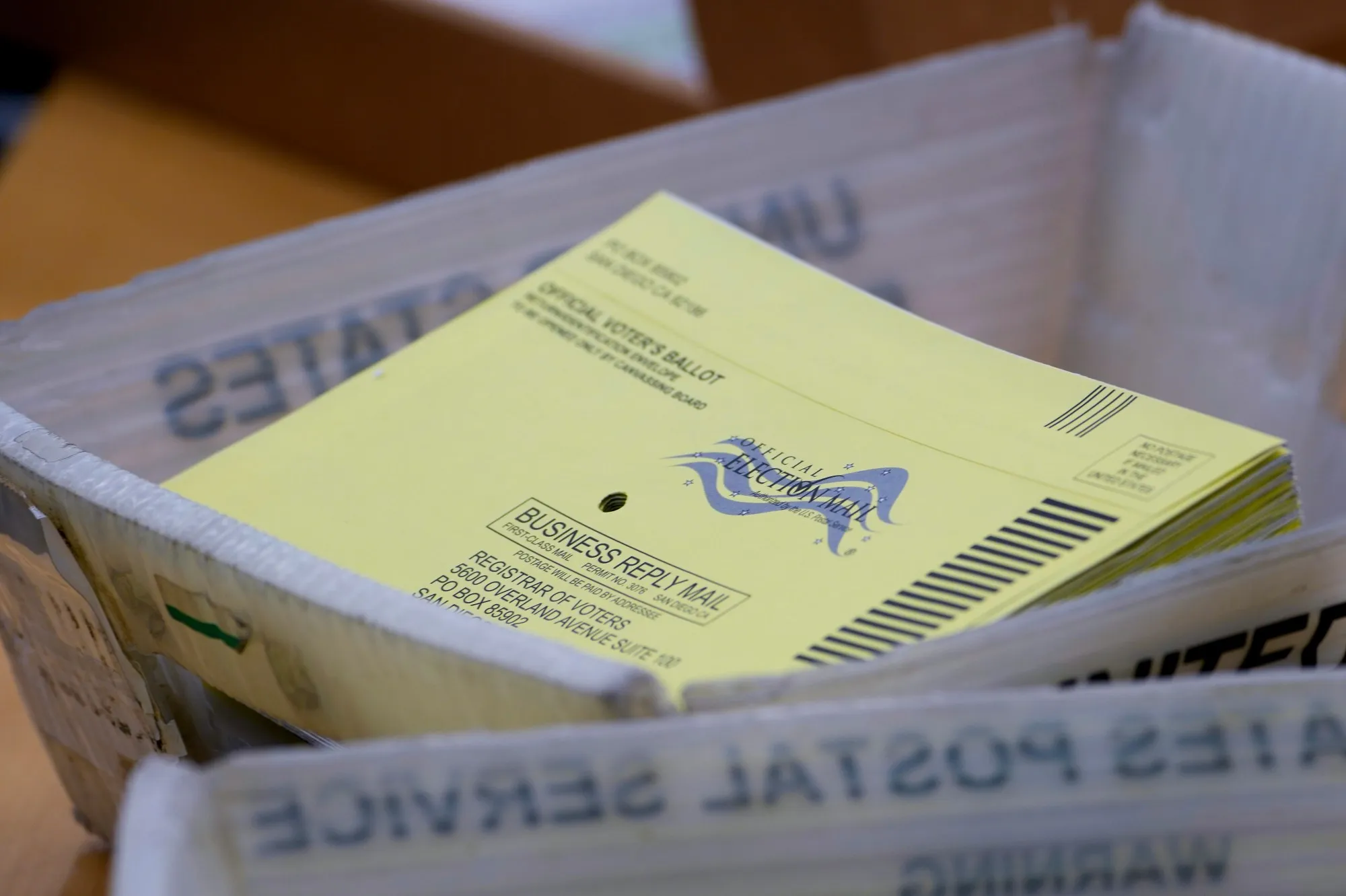
If passed, Proposition 39 would usher in two main changes to voting in California. The increasingly small percentage of voters who cast a ballot in person would be required to show a government-issued ID at their polling stations, while the large majority who vote by mail — about 82% — would be required to write the last four digits of their driver’s license, Social Security or other identification number on the outside of their ballot envelope.
With just about one week to go until the election, local officials have been making their final arguments for and against the measure.
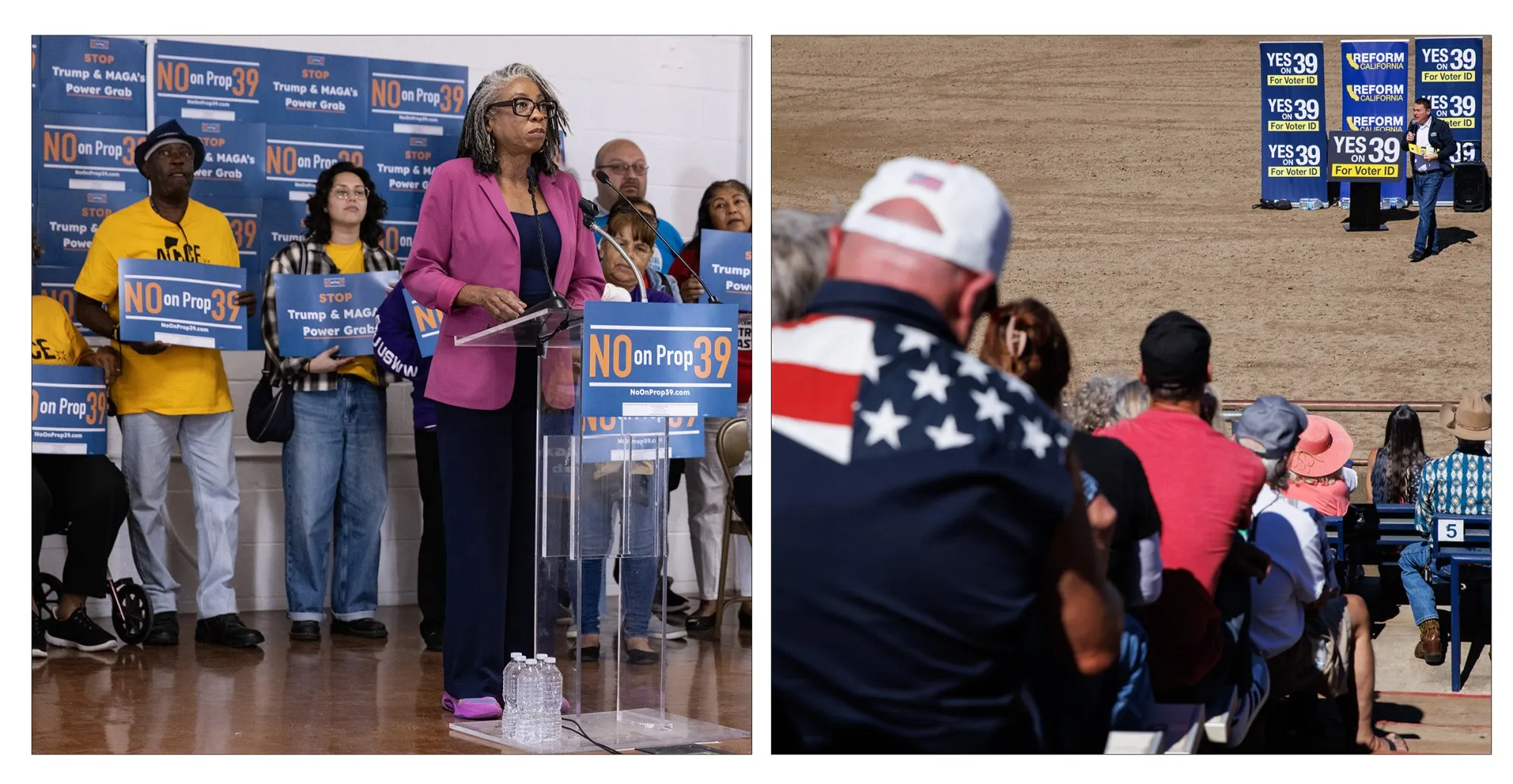
DeMaio, who is on a statewide tour urging “yes” votes, held rallies Saturday in Poway and Lakeside. He and other supporters argue Proposition 39 would add extra security and prevent noncitizens from voting.
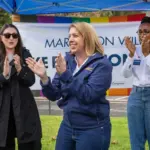
At a recent news conference in Barrio Logan, local elected Democrats urging “no” votes argued that California’s elections are already secure, that the ID-number requirement would expose voters to potential identity theft and that voter fraud by noncitizens is very rare.
Now as the race enters its final stage, both supporters and opponents are pointing to recent legal actions by the Trump administration as evidence of their claims.
On Oct. 15, the Trump administration alleged in a federal civil lawsuit that it had identified 20,000 likely noncitizens who are registered to vote in California. State and local election officials have argued in response that similar claims by the federal government in other states have fizzled out, and that a preliminary review of a small subset of those 20,000 voters found evidence that nearly 40% were born in the U.S.
Days after filing that civil suit, the U.S. Department of Justice brought criminal charges against 28 green-card holders in the state, including four in San Diego, who are suspected of unlawfully registering to vote or casting a ballot in past elections. Those defendants have pleaded not guilty.
DeMaio and other supporters of Proposition 39 argued that those legal actions bolstered their arguments. “If you want a common-sense, bipartisan approach to voter ID, Prop. 39 is the solution,” DeMaio told the Union-Tribune in a recent interview.
But opponents of Proposition 39 hope that voters will view the federal government’s recent legal actions as a last-ditch effort by an increasingly unpopular president to boost a measure that they argued will disenfranchise voters in a heavily blue state. In fact, some opponents of the measure may see the federal government’s legal actions as evidence to help bolster their claims that Proposition 39 is a “Trump-driven, MAGA-funded power grab” aimed at making voting harder, as it was described at the Barrio Logan news conference by David Trujillo, executive director of the American Civil Liberties Union’s California Action.
Thad Kousser, a political science professor at UC San Diego and the co-director of UCSD’s Center for Transparent and Trusted Elections, said that although he hadn’t conducted a survey on how voters might view Proposition 39 in light of the DOJ’s civil lawsuit and criminal charges, he believed most voters would view the issue along the nation’s usual partisan lines.
“Some people may take this as evidence that there might be lots of people who are ineligible to vote; others may take this as evidence that … this is all part of Donald Trump aiming to increase distrust in elections,” Kousser said. “And so I think voters may view this through either blue or red lenses.”
For their part, state and local elections officials insist elections are secure. California Secretary of State Shirley Weber, a former state lawmaker from San Diego, said concerns about voter fraud are not legitimate.
“I oppose Prop 39 because it is unnecessary,” Weber wrote in a recent candidate Q&A. “Californians already have to present valid identification to register to vote in the first place. Voter fraud is unbelievably rare and does not happen on a large scale. This measure will depress turnout by making it harder to exercise the franchise in order to solve a fake problem.”
The San Diego County Registrar’s Office said that California law already requires individuals registering to vote to affirm under penalty of perjury that they meet citizenship eligibility and all other requirements.
“Elections officials do not have authority to investigate citizenship status through federal databases,” the Registrar’s Office said in a statement. “Instead, the Registrar follows all procedures established by federal and state law and the statewide voter‑registration system, which includes identity matching, cross‑checks with state agencies, and required list‑maintenance safeguards.”
Kousser, who said he has no conflicts of interest when it comes to Proposition 39, said that California’s current signature requirement is already a form of identification and a strong safeguard against voter fraud. He said the signature on “every single (mail-in) ballot” is checked by election officials and compared to that voter’s signature on past registration or DMV documents. That need to forge a signature almost perfectly makes impersonation fraud very unlikely, he said.
Read more Flock out of San Diego? The upcoming election could be a factor.
Brittany Stonesifer, an attorney and a senior voting rights and redistricting program manager with Common Cause California, which opposes Proposition 39, said the threat of perjury when individuals register to vote is the strongest safeguard against non-citizens registering.
“In the very, very rare instances where someone does commit that felony, we see it in the news because they’re prosecuted,” Stonesifer said.
To that point, the 28 individuals charged by federal prosecutors last week were longtime lawful permanent residents, or green-card holders, who were allegedly caught when they applied to become naturalized U.S. citizens. The four San Diego County defendants each came to the U.S. as teenagers and have lived here for decades, according to the criminal complaints against them. But they now face almost certain deportation if convicted.
“A great way to get caught is by creating a paper trail,” Stonesifer said. “That’s why people don’t do it.”
DeMaio argued that those sorts of enforcement actions “will just continue to erode confidence and trust in our elections … unless we pass Prop 39 and start fixing the problem.”
Proposition 39 would add language to state law requiring that the secretary of state and county elections officials “use best efforts to verify citizenship attestations using government data, and shall annually report what percentage of each county’s voter rolls have been citizenship-verified.”
During the recent news conference in Barrio Logan, county Supervisor Monica Montgomery Steppe argued that Proposition 39 was “being sold to voters as election integrity,” but that it would actually “put new hurdles in front of” voters.
“It would create more opportunities for valid ballots to be rejected and it would make voting more difficult for people who may already have the hardest time getting to the polls,” Montgomery Steppe said. “We know from our history what happens when people who fear justice and equality decide who gets to vote and who doesn’t.”
DeMaio rejected that argument and contended that a four-digit identifying number would be more effective than a signature at verifying someone’s identity.
“Our four-digit approach basically creates a PIN for people who want to vote by mail that makes ballot processing less expensive, makes it faster to get the results,” DeMaio said. “It’s a lot easier to verify someone based on four digits versus their signature. There’s a higher risk that someone’s signature won’t match, whereas four digits is pretty easy.”
California’s nonpartisan Legislative Analyst’s Office estimated that “Proposition 39 would increase state and local government costs each year by tens of millions of dollars to low hundreds of millions of dollars.”
DeMaio called that estimate “absolutely absurd.” He argued that “when government politicians don’t want something, they try to come up with every excuse as to how bad it is, so it’s not a fair or accurate fiscal assessment.”
State finance records showed that as of the most recent reporting deadline on Oct. 22, donors supporting Proposition 39 had pledged more than $36 million to the cause, while those opposed had pledged about $33.5 million.
The largest contributions in support of Proposition 39 came from conservative Illinois billionaire Richard Uihlein, CEO of Uline Corporation, who has contributed a total of $17 million. Joe Gebbia, a White House official and the co-founder of Airbnb, gave another $8 million in support.
The California Democratic Party, with $6.5 million in contributions, has been the largest donor in opposition to the measure.
Statewide, support for Proposition 39 stood at about 48% as of last month, according to a SurveyUSA poll conducted for The San Diego Union-Tribune and ABC 10News. The poll, which had a credibility interval of 4.6 percentage points, found that about 40% of respondents said they opposed the measure and about 12% said they weren’t sure.
Read more Prop. 45 seeks to rewrite state environmental law. Here’s why San Diegans should care