






San Diego is delaying most impacts of a new state law that requires cities to allow high-rise housing near trolley stations and major bus stops — but questions persist about how many bus stops the new law will affect.
Read more Trump says Russia and Ukraine have agreed to his request for a 3-day ceasefire and a prisoner swap
Housing advocates successfully lobbied the City Council Thursday night to shift away from plans to limit the number of bus stops to four, opening up the possibility that the law, California Senate Bill 79, could apply to as many as 52 bus stops.
That could mean more high-density housing in several city neighborhoods, including the College Area, Hillcrest, North Park, City Heights, University Heights, Normal Heights, Rolando, Talmadge and downtown.
The change could also boost the number of new homes San Diego must allow near transit stops under SB 79, beyond the 367,000 city officials calculated when they thought only four bus stops were eligible.
The council voted unanimously Thursday to shift away from deciding how many bus stops the new law will affect, leaving that decision up to the county’s regional planning agency — the San Diego Association of Governments — to make in coming weeks.
The council also voted unanimously to delay the impact of SB 79 in many parts of the city, roughly 84% of the land that the new law applies to.
The delay would affect low-income areas with scant resources and other neighborhoods facing challenges like high wildfire risk, historic structures or vulnerability to sea-level rise.
“It gives the city maximum flexibility as this new state law takes effect,” Councilmember Jennifer Campbell said.
Councilmember Raul Campillo said the delays would allow the city to be more precise with where it allows high-rise housing — and get community feedback on those decisions.
“We’re going to get everyone to the table in these neighborhoods,” Campillo said.
The law, which will allow buildings as tall as 85 feet in areas zoned for single-family housing, will take effect July 1 only in areas with high incomes and strong amenities, where new housing is more easily absorbed.
The areas most affected by those imminent zoning changes appear to be parts of western Clairemont and eastern Pacific Beach along the Blue Line trolley extension that began running in 2021.
The impact of SB 79 will be delayed until sometime in 2027 for neighborhoods with challenges such as high wildfire risk.
City officials say they will spend roughly a year picking the best spots for high-density housing in those areas based on evacuation routes, flooding risk and other criteria.
Areas near transit and affected by projected sea-level rise are mostly limited to western Mission Valley. Areas affected by historic buildings are mostly in the city’s urban core. But areas affected by wildfire risk stretch across much of the city and will be perhaps the biggest challenge for the city’s implementation of SB 79
The law will be delayed even longer — until 2031 or 2032 — in low-income, low-resource areas.
City officials say they will spend the intervening years providing such neighborhoods with new infrastructure or amenities, or at least thoughtfully picking the best spots in those areas for dense housing projects.
Heidi Vonblum, the city’s planning director, said the delay will allow the city to help neighborhoods that have suffered from past city zoning practices, including zoning based on race or ethnicity.
“The city Planning Department is recommending that we take the additional time to do the thoughtful planning to be able to engage with a low-resource community that has experienced injustices from past zoning actions,” Vonblum told the council Thursday.
Councilmember Vivian Moreno, who represents many of the city’s lower-income areas in the South Bay, said a six-year delay seemed too long to her.
“In the development world, that seems like 200 years,” Moreno said.
The council also exempted from SB 79 areas that are close to a transit stop but violate the spirit of SB 79 because residents can’t walk to it easily because of barriers like canyons, freeways or a lack of sidewalks.
Council President Joe LaCava tried to limit the council’s actions on SB 79 to just those delays, but he couldn’t get enough votes because of objections over the bus stops.
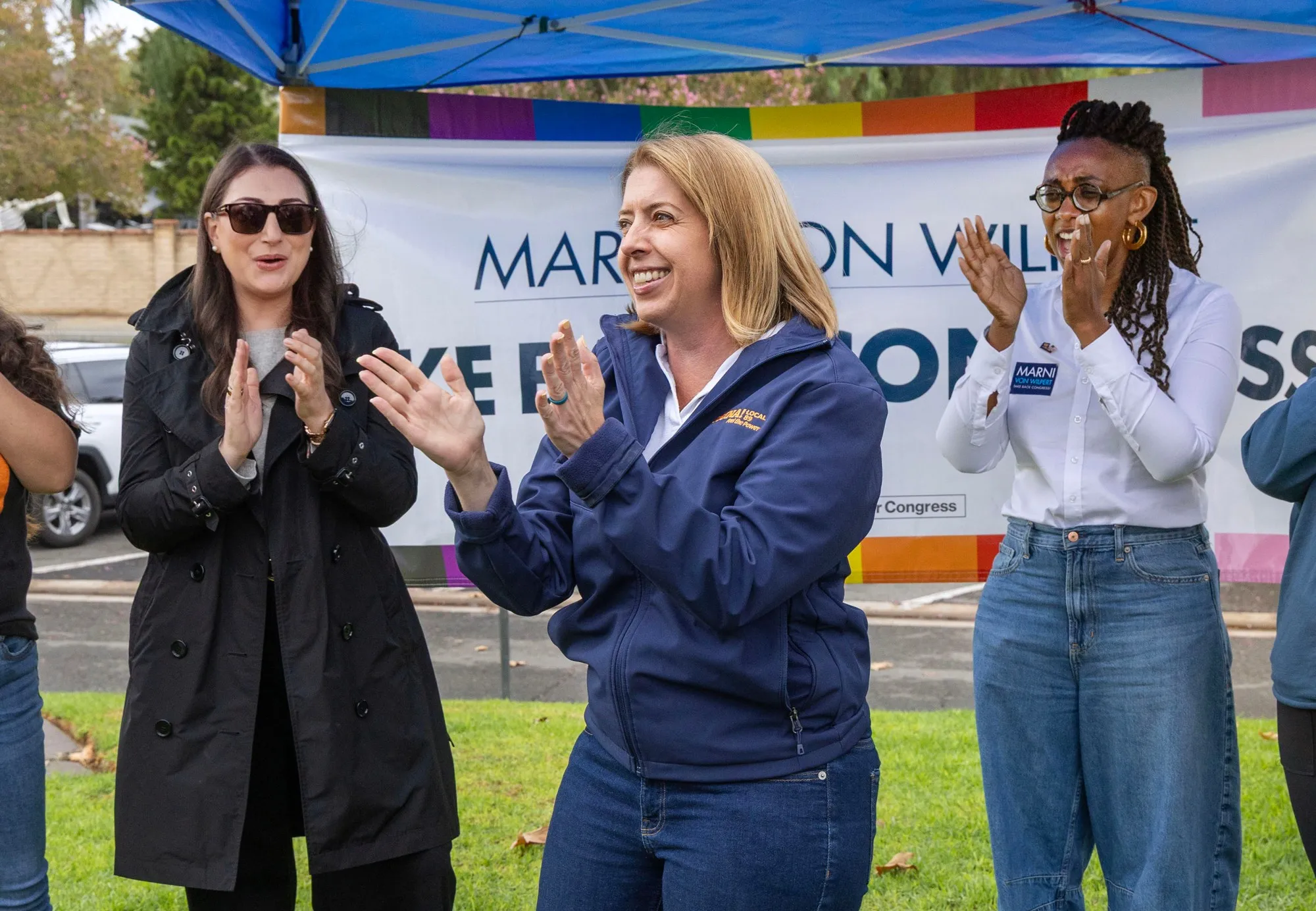
Because three of the council’s nine members were absent, the council was essentially deadlocked 3-3 on the bus stops. LaCava, Campbell and Campillo supported Vonblum’s plan for only four stops, while Moreno, Councilmember Stephen Whitburn and Councilmember Marni von Wilpert supported relying on SANDAG instead.
That deadlock prompted an unusually long recess of nearly 90 minutes that was followed by a 6-0 vote in favor of retreating on the bus stops.
Whitburn led the charge on the effort to include more bus stops, praising an analysis by the YIMBY Democrats of San Diego County that said Vonblum had misinterpreted state law when she limited SB 79 to four bus stops.
Whitburn said he believes all of the stops along four rapid bus routes that travel through his district — Rapid 215 and Routes 1, 7 and 10 — should be impacted by SB 79 and the upzoning it requires.
Those routes travel along El Cajon Boulevard, Park Boulevard and University Avenue.
“If there’s one thing San Diegans have been clear about it’s that the cost of living is too high and that the cost of housing needs to be moderated,” Whitburn said. “The way we can do that is by building more houses, particularly in the places that can accommodate more density along transit corridors. El Cajon Boulevard, University Avenue and Park Boulevard are perfect examples of where we should be building more housing.”
Whitburn said he plans to send a letter to SANDAG urging the planning agency to include all 52 bus stops served by rapid routes on its SB 79 maps.
The YIMBY Democrats of San Diego County said they also plan to lobby SANDAG, which has the ultimate authority under SB 79 to determine which transit stops are affected by the law.
“We will continue to push for the full, correct implementation of SB 79 — because San Diego’s housing crisis demands nothing less,” the group said in a Friday news release.
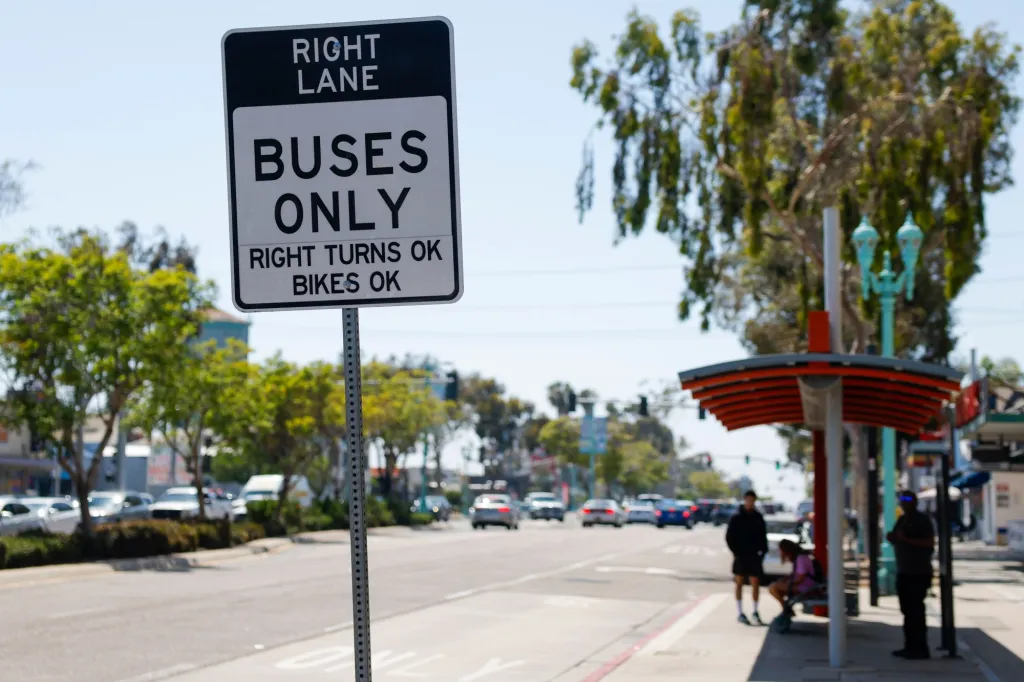
The crux of the issue is the definition of a dedicated bus lane, because stops next to such lanes are affected by SB 79.
Vonblum says only four stops in the city qualify — and that all other stops near bus lanes are ineligible because the lanes can also be used by turning cars and by bicycles.
The YIMBY Democrats said Vonblum’s analysis is incorrect and contrary to what the state vehicle code says on bus lanes. City Attorney Heather Ferbert has endorsed Vonblum’s position.
Vonblum said she believes SANDAG will agree with her that only four bus stops in the city are affected by SB 79.
But she was forced to remove from the ordinance approved Thursday any mention of eligible transit stops.
“There is no reference to specific stops, and there is full deference to the SANDAG maps,” she said. Those maps — which will be released sometime before July 1 — will determine the affected stops.
The four stops deemed eligible for SB 79 are the two on Park Boulevard and two transit plazas, one where Interstate 15 intersects with El Cajon Boulevard and another where I-15 intersects with University Avenue. Bus lanes there are physically separated from general traffic.
Many community leaders and local officials downplayed the impact of SB 79 on San Diego when it was approved last October because the city had already done significant upzoning near many of its trolley stops, especially in University City and Mission Valley.
The city also already offers an aggressive incentive to spur housing near transit called Complete Communities Housing Solutions, which allows developers to build significantly larger projects than a site’s zoning would otherwise allow as long as they include subsidized units.
But Vonblum said last month that SB 79 will still have a major impact on San Diego.
That’s partly because the Complete Communities program and some other incentives don’t apply in single-family areas — but SB 79 does.
In addition, many of San Diego’s trolley stops are in the South Bay and southeastern San Diego neighborhoods where the city has done significantly less upzoning in recent years — and where much of the land is zoned for single-family housing.
Moreno said San Diego was not the target of SB 79.
“SB 79 was created for cities that are anti-growth, which obviously does not represent the city of San Diego,” she said.
SB 79 allows larger buildings the closer the land is to a transit stop. On land within 200 feet of a stop, a project can include 140 units per acre and be up to 85 feet tall.
On land more than 200 feet away but within a quarter mile of a stop, the project can include 100 units per acre and be up to 65 feet tall. On land between a quarter-mile and a half-mile away from a stop, the project can include 80 units per acre and be up to 55 feet tall.
While the city has calculated SB 79 will require allowing 367,000 more housing units near transit stops, Vonblum said that number may come down marginally when the city calculates potential units developers could build near transit stops under Complete Communities.
She said last month that her staff has not finalized its calculations of that number.
The city also hasn’t released a calculation of how many new units would be required if SB 79 ends up affecting 52 bus stops instead of four.
Read more Trump is lifting restrictions on hunting in national parks, refuges and wilderness areas