






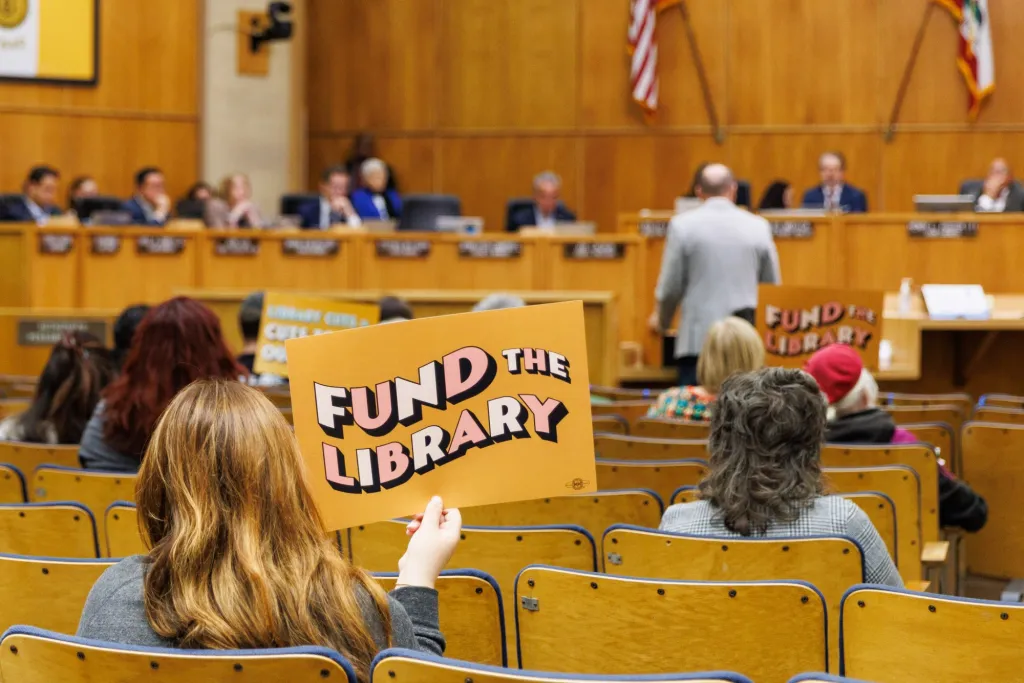
With the San Diego City Council slated to finalize a controversial new budget Tuesday after weeks of debate, questions remain about funding for libraries, recreation centers, bike lanes, flood prevention and other issues.
Read more Michael Smolens: Jim Desmond’s challenge
The council is expected to haggle over those priorities Tuesday, while also considering money for a Mission Valley pedestrian bridge, automated license plate readers and police staffing for sex crimes, graffiti and gangs.
The council’s vote will culminate one of the most contentious budget seasons in many years, with officials trying to close a $146 million gap just one year after making unpopular cuts to close a $250 million deficit.
And it’s possible negotiations will extend past Tuesday if the council can’t come to consensus, or if Mayor Todd Gloria uses his line-item veto power to reverse some of its last-minute decisions.
The council doesn’t have a lot of latitude Tuesday, because the city’s independent budget analyst says only $6.5 million remains unspent in a $2.2 billion annual budget — far less than 1%.
The council could create more wiggle room by adding new revenue like it did last spring when it voted to add paid parking in Balboa Park during final budget negotiations — but members say a repeat of such tactics is highly unlikely.
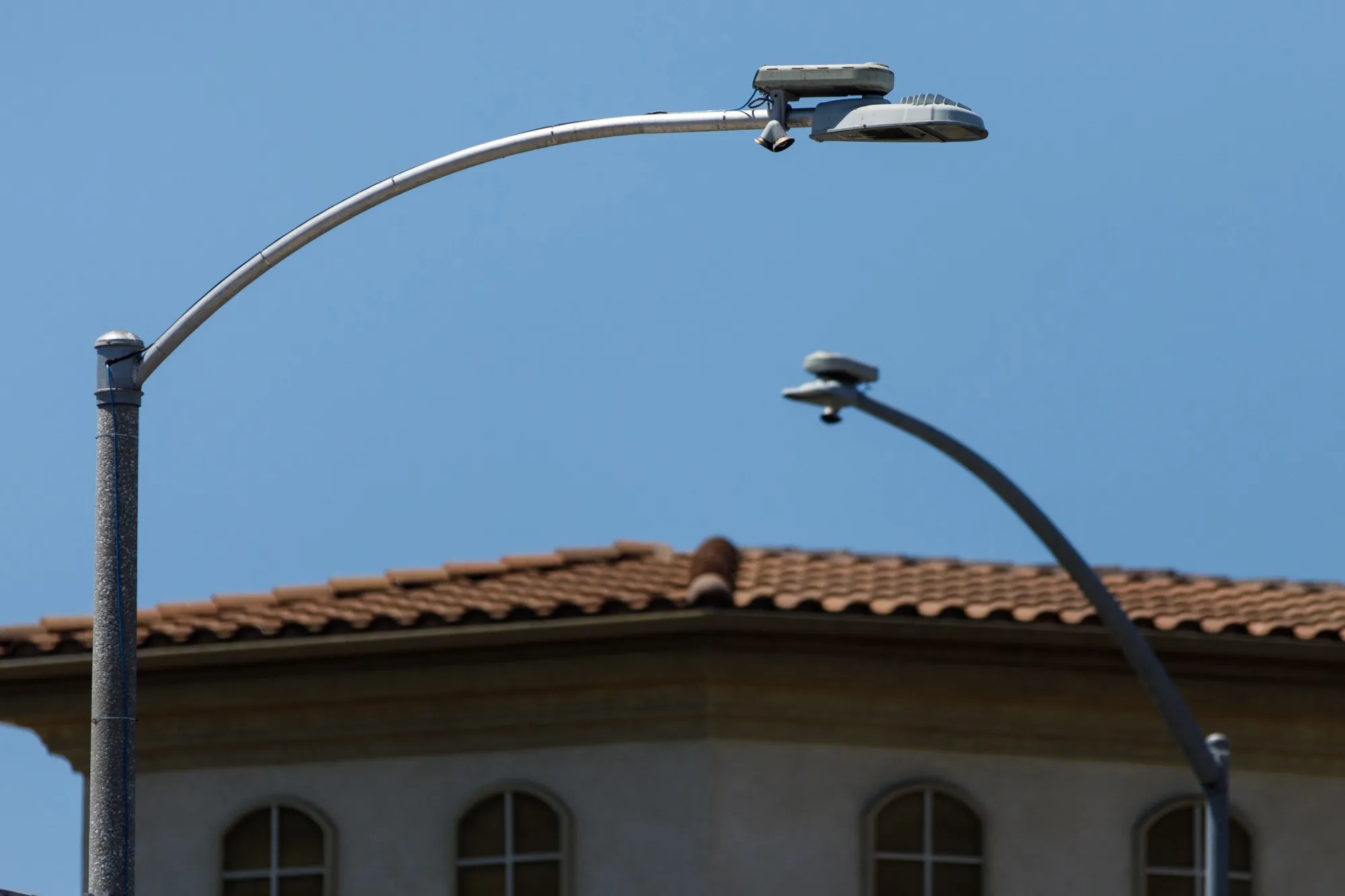
But they are expected to consider freeing up as much as $4 million by cutting middle-management jobs or canceling a law enforcement contract with Ubicquia for automated license plate readers.
Arts funding had been expected to be the most controversial issue Tuesday, but proposed cuts of $11.8 million were mostly reversed Friday with a deal redirecting $6 million in convention center expansion funding to arts and a $3 million philanthropic donation.
Other controversial issues during budget season — such as proposals to wipe out the popular December Nights holiday festival and cut neighborhood crime prevention programs — got reversed by the mayor last month.
Cuts expected to remain include a sharp reduction in zoning investigators, the elimination of a fee waiver encouraging sidewalk repairs and cuts to the city’s bomb squad.
The council is also not expected to reverse plans to slash management ranks by merging three city departments into other departments and to require many employees to take unpaid furloughs.
The independent budget analyst, following the lead of a quartet of council members, is recommending the council spend part of the $6.5 million reversing a proposal to eliminate the Office of Child and Youth Success.
Other recommended restorations include $750,000 for a program that helps small businesses, $900,000 to help council offices fund community events and $200,000 to restore a position devoted to promoting San Diego as a setting for movies and TV.
But the IBA didn’t include in its recommended compromise perhaps the most important proposal by the four council members, Kent Lee, Sean Elo-Rivera, Henry Foster and Vivian Moreno.
The group wants to fully restore proposed cuts to hours at libraries and recreation centers that the mayor only partially restored last month in his “May revise” budget proposal.
The IBA’s proposal includes the mayor’s proposed cuts to nine libraries that would save $1.3 million.
Under that proposal, six library branches would have their Saturday hours cut in half: La Jolla, Point Loma, downtown, Mira Mesa, Rancho Bernardo and Linda Vista. Three other branches would lose their Monday hours: North Park, University Heights and Allied Gardens.
The IBA also proposed sticking with the mayor’s proposal to save $1.65 million by cutting hours at 24 recreation centers.
They include Carmel Valley, La Jolla, Pacific Beach, Pacific Highlands Ranch, Cabrillo, North Clairemont, Ocean Beach, Canyonside, Carmel Mountain Ranch, Hilltop, Tierrasanta, Scripps Ranch, Mira Mesa, Hourglass, Rancho Bernardo, Robb Athletic Field, Nobel Athletic Fields, Standley, Allied Gardens, San Carlos and Serra Mesa.
Patrick Stewart, leader of the city’s library foundation, said Friday that cuts to libraries dramatically affect neighborhoods partly because libraries host so many cultural events.
“Cuts to the library and cuts to library hours are cuts to the arts,” he said.
Proposed cuts to the Mira Mesa library branch have drawn particular criticism because the branch is already expected to absorb patrons from two nearby branches slated to close for renovations: Scripps Ranch, which closed in late May, and Rancho Peñasquitos, which is slated to close in coming months.
Alan Dulgeroff, an advocate for rec centers, called the proposed cuts to them “seemingly arbitrary reductions.”
The IBA’s recommended restorations only eat up $2.8 million of the $6.5 million the IBA says is available, so there is enough money to reverse both the library and rec center cuts.
Read more UC San Diego betting big bucks new center for students and alumni will be a hit
But IBA officials warned the council against spending every available penny, stressing that the city is years behind on reserve contributions and faces large deficits in coming years thanks to a reduction in city trash fees in fiscal years 2028 and 2029.
Those reductions are part of a deal agreed to last month that ended a lawsuit challenging the size of the fees and a possible ballot measure that could have eliminated the fees in fiscal years 2028 and 2029.
“With these (lower) fees now locked in place, any unanticipated cost increases for waste collection, including labor costs, vehicle maintenance and acquisition or disposal fees, will require additional general fund resources,” IBA analyst Jordan More told the council Friday.
Charles Modica, who leads the IBA office, said overstretching on Tuesday could hurt the council’s credibility with the public.
“The decisions that are made on Tuesday will either strengthen or weaken the foundation for the conversation this city needs to have with its residents about the true cost of city services and the revenues that are actually needed to provide those services,” he said.
The mayor shaped the budget, and he prioritized firefighting, law enforcement, infrastructure projects and streets — which requires significant cuts almost everywhere else.
But even public safety is facing some cuts that could be controversial Tuesday.
Fire Chief Robert Logan is asking for $841,000 to bolster efforts to clear flood-control channels in advance of expected heavy rains next winter that some are calling a “super El Niño.”
Logan estimated Friday that rainfall next winter is expected to be somewhere between 150% and 200% of a normal year.
“When you look at a map for a super El Niño, it’s all red — all red is bad,” said Logan, who recently took over the city’s Office of Emergency Services as part of budget cuts. “I can control the plan, but I can’t control the infrastructure, so I’m asking for help.”
The labor union representing city police is also lobbying for a reversal of cuts that would eliminate four officer positions and two leadership positions.
“There are two critical roles we believe need to be restored in this budget: a sex crimes sergeant and a sergeant in the graffiti and emerging gangs unit,” said Jared Wilson, president of the city’s Police Officers Association.
Other key funding debates Tuesday are likely to include money for the city’s multimodal team, which helps plan bike lanes and pedestrian-friendly intersection features across the city.
The budget proposes to save $2.7 million by wiping out the team, but critics say it can be spared by shrinking the amount of roadway the city will repave with slurry seal next year by about 20 miles.
Reversing the proposed cut is supported by Circulate San Diego, the county bicycle coalition, BikeSD and Council President Joe LaCava.
“The small reduction in slurry-seal funding to me is well worth restoring this vital team that helps us meet our Vision Zero goals,” said LaCava, referring to a campaign that aims to reduce traffic deaths to zero.
LaCava also supports reversing a plan to delay construction of a new bridge crossing the San Diego River in western Mission Valley. Many local residents are lobbying the council to use developer impact fee funds to move forward with the bridge quickly.
The IBA’s proposal follows the lead of the council quartet in adjusting some of the mayor’s proposed cuts to homelessness funding — but sticking with the same amount of savings, $3.8 million.
Key differences include softening cuts to capacity at the Newton Street shelter, which would be funded by a complete closure of the Lighthouse interim shelter and a $400,000 cut to a family reunification program.
The IBA proposal would also shrink the mayor’s proposed cut to the Neil Good Day Center from $948,000 to $906,000 to give local nonprofits time to possibly take the center over and secure alternative funding.
The IBA’s proposal also reverses proposed personnel cuts to the city auditor and the IBA itself.
In addition, it doesn’t adjust proposals by the mayor to spend $1 million on a new assessment of city street quality and $500,000 on a study required to possibly start charging higher fees to the city’s private trash haulers.
Tuesday’s budget debate is slated to begin at 2 p.m. Tuesday in council chambers, 202 C St.
Read more Grossmont school district’s contracting, student services face new scrutiny