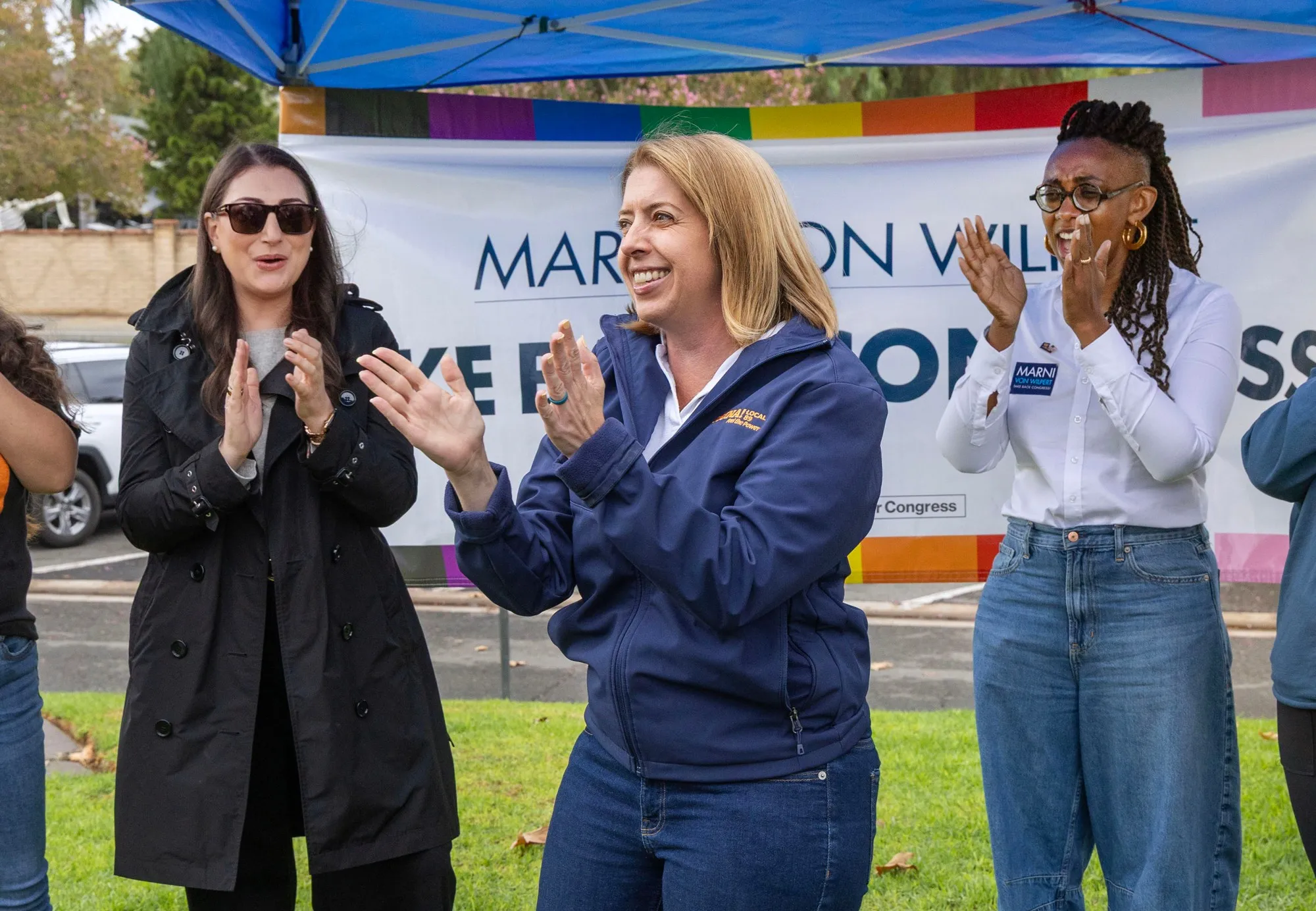







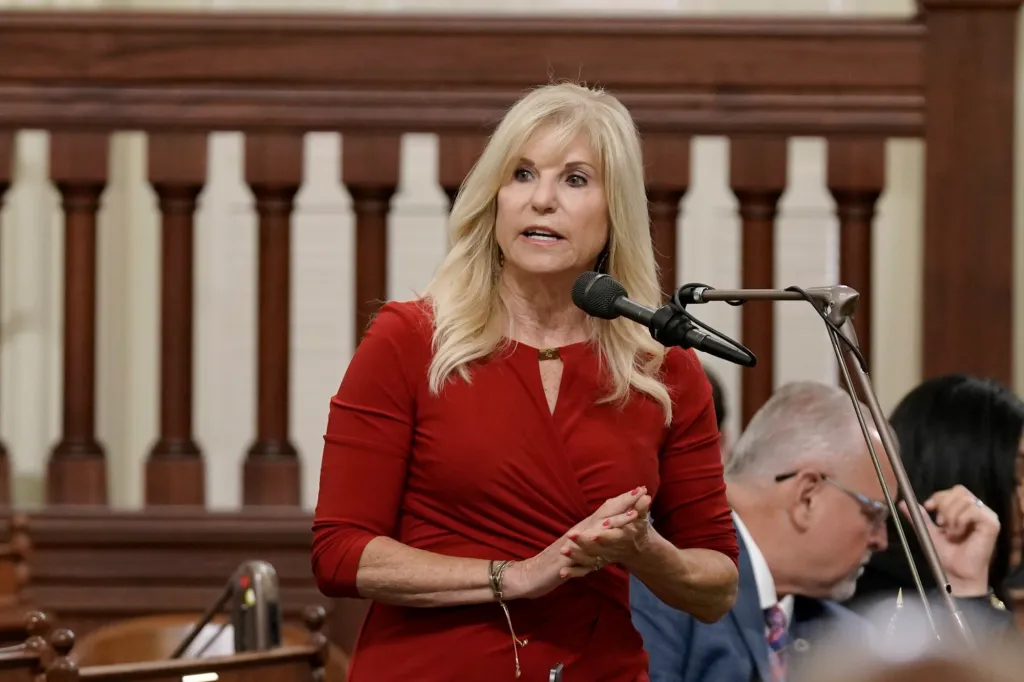
Laurie Davies, 64, a Republican and incumbent Assembly member, is running for re-election in California’s 74th District representing Oceanside, Vista and southern Orange County.
Read more Q&A: Meet David Alvarez, candidate for California State Assembly District 80
Originally from Wisconsin, Davies lives in Laguna Niguel, owns a wedding-planning business and is seeking her fourth term in the Assembly.
The San Diego Union-Tribune emailed a series of questions to Davies and other candidates to help inform voters about their positions, priorities and plans if elected.
Davies said she used AI as a “tool for refinement” in responding to the Union-Tribune’s questions.
1) Why are you running, and what makes you the best candidate? (150 words max)
I am running for re-election because I believe at this time in our country, people are looking for someone who wants to work across the aisle and deliver results. I have a proven track record of getting things done for the 74th District. I have gotten 29 bills signed into law and was invited to be a member of the bipartisan Problem Solvers Caucus because of my ability to leave politics at the door and focus on policy. Furthermore, my ability to work with both Democrats and Republicans inspired former Assembly Speaker Anthony Rendon (D-Los Angeles) to appoint me to the State Allocation Board, where I have been able to vote on and guide roughly $50 million in funding to our local schools for infrastructure improvement projects.
2) What are the top 3 issues facing this district? (150 words max)
I stick to the ABCs when it comes to my district. The first is affordability. People want to live in our state and raise their families. We need to make it cheaper to live here by doing things like suspending the state’s gas tax and increasing the renters tax credit. Next, people want someone who works in a bipartisan fashion. Up in Sacramento, I focus on policy, not party. If someone has a good idea that will help the 74th district, I support it. Lastly, I have been a steadfast fighter for our coastal region and doing all I can to help combat coastal erosion. That includes replenishing our sand on our beaches and being a steadfast opponent of any new offshore oil drilling off of our shores.
3) What are the first 3 things you would do in office if elected? (150 words max)
The first thing I would do is continue my push to guarantee California is on track to meet its affordable housing goals. On the Problem Solvers Caucus, I help co-chair the housing subcommittee, where I am committed to streamlining costly permitting and giving cities flexibility to approve projects in their jurisdictions. Next, I want to continue my work on helping victims of domestic abuse and human trafficking. This year, I’ve partnered with San Diego District Attorney Summer Stephan on AB 1656, which ensures human trafficking cases don’t get tossed out of court due to scheduling issues. Lastly, increasing access to healthcare and family services, especially for women, is a passionate issue for me. This legislative session, I’ve supported bills to ensure access to quality insurance for menopause treatment and have introduced legislation, AB 1746, to make it easier for women and families to get childcare.
4) What should California do to solve its shortage of affordable housing and curb homelessness? Which existing efforts do you believe are working, and which aren’t? (150 words max)
To solve California’s housing and homelessness crises, we must move beyond writing blank checks and prioritize firm accountability. For years, Sacramento has spent billions on homelessness with very little to show for it in our San Diego communities. I believe we cannot continue asking taxpayers for more funding without a complete and independent audit of every dollar previously allocated. We must ensure that state resources are being used effectively to get people off the streets and into stable environments. Every year I have been in the Legislature, I have also advocated for increased funding for the renters tax credit. Lastly, I want to make sure every type of housing project is counted for cities, which is why I introduced AB 1623 this year — so that cities and counties get credit towards the state Regional Housing Needs Assessment (RHNA) if they build student and staff housing on or near our local universities.
5) This district and its neighbors are vulnerable to climate change impacts like wildfires, rising seas and extreme heat, and to the health effects of climate-warming emissions. What should California do to improve climate resilience and reduce emissions and fire risk? (150 words max)
When we look at climate change, we need not look any further than what’s happening in cities like Oceanside or San Clemente. Our beaches are rapidly disappearing. My office has been able to work with the U.S. Army Corps of Engineers to ensure they delivered sand to San Clemente. Additionally, in 2023, I passed AB 882, so any city or nonprofit with a coastal resiliency grant could receive up to 25% of the funding up front to cut down on red tape. Lastly, to protect our shores from ecological disasters or oil spills, I have been the only State Assembly or Senate Republican urging the federal government not to expand offshore drilling. For me, it’s not just a no, it’s a hell no!
6) Laws enshrined in California’s Constitution that protect residents from tax increases have also painted local governments into a corner as they seek to fund basic services and have led to chronic underfunding of schools. What would you do about this? For instance, would you support changes to Proposition 13 to remove its protections for commercial properties? (150 words)
Read more Q&A: Meet LaShae Sharp-Collins, candidate for California State Assembly District 79
Protecting Proposition 13 is essential to maintaining affordability for California’s families and small businesses. Suggesting that we should “split the roll” by removing protections for commercial properties ignores the reality that these costs are never absorbed by corporations alone. More often than not, they are passed directly to Californians through higher prices for groceries, services and rent. In an affordability crisis, the last thing we should do is trigger a massive, indirect tax hike on every Californian. I am committed to finding innovative ways to fund services, but I do not support changing Proposition 13.
7) In light of those constraints, along with federal funding cuts, how should California balance its budget and fund basic services? Where would you seek new revenues or savings? (150 words)
California does not have a revenue problem; it has a spending and accountability problem. Our state budget has grown exponentially, yet we see diminishing returns in our schools and infrastructure. Just in April, the state Legislative Analyst’s Office reported that “General fund spending has grown from $146 billion in 2019-20 to $248 billion under Governor Gavin Newsom’s budget proposal for 2026-27.” Leaders in Sacramento have the power to spend money on the services Californians need but actively choose not to. Do we need to spend $19 million on a pro-California ad campaign to run in national TV markets? Of course not. We must prioritize auditing existing expenditures and streamlining bureaucratic waste.
8) Speaking of spending, Californians consistently rank the cost of living as a big concern. Recent jumps in the costs of fuel, food and other goods — combined with federal cuts to safety-net programs, new limits on certain federal loans and more — are further squeezing residents who were already struggling. What relief would you seek to offer, and how? (150 words max)
In the legislature, affordability has been one of my top priorities. I have routinely called for immediately suspending the state’s gas tax. And speaking of our roads, as the vice chair of the Transportation Committee, I opposed AB 1421, which would study ways to implement a “road-user charge” (RUC). That is the last thing Californians need added to their finances. Finally, I hear from constituents daily how expensive utility rates are. I am the first Republican in eight years from San Diego to have a spot on the Assembly Utilities & Energy Committee. I give our region a seat at the table. That’s why I am a co-author of AB 2124, which would require a nonpartisan, third-party review of any new legislation that imposes mandated programs on electrical or gas corporations. We need to know exactly how much a new state “mandate” will increase your rates by before it becomes law.
9) President Trump has made cracking down on immigration a cornerstone of his administration, ordering widespread arrests and detentions of immigrants nationwide and directing military resources to a new military zone along the U.S.-Mexico border. What impact have these actions had on this district? What are your goals on immigrants, immigration and the border, and how would you pursue them in the Legislature? What is your message to constituents who are immigrants? (150 words max)
While I believe there is merit in cracking down on illegal immigration of people who have committed serious crimes, I have also stood up to my own party and urged this administration to stop going after individuals who are trying to make a better life for themselves. I was one of six statewide Republicans to send a letter to Washington, D.C., urging them to reconsider their strategy and really focus on people who have committed dangerous and serious crimes. Go after cartel leaders, not the mom picking up her child from school. As was stated in our letter, “America needs a system that reflects both compassion and lawfulness — one that upholds sovereignty while recognizing the reality on the ground.”
10) Health care costs for many Californians are rising — some because of new federal eligibility requirements, some because of Gov. Gavin Newsom’s moves to limit Medi-Cal coverage for some immigrants. How would you rein in costs? Would you vote to reverse the governor’s cuts to immigrant health care coverage? (100 words max)
California’s budget deficit requires us to make tough choices, and my priority will always be protecting the stability of the safety net for our most vulnerable legal residents, seniors, and children. For this reason, I do not support reversing the governor’s moves to limit Medi-Cal eligibility. We cannot afford to expand subsidized benefits while our existing system is under immense financial pressure. Instead, we should focus on lowering premiums for all Californians by increasing transparency in medical billing, preventing anti-competitive healthcare mergers that drive up prices and cutting the administrative red tape that drives up insurance costs.
11) Among the many ballot measures being pursued by lawmakers and citizens for the November ballot are a handful that have drawn much attention and money. Should each of the below measures qualify for the November ballot, would you personally vote for measures that would do the following? (50 words max per measure)
— make ride-hail companies like Uber and Lyft liable for sexual assaults committed in cars?
Read more Q&A: Meet Andrew Lawson, candidate for California State Assembly District 79
Yes
— require voters to provide a government-issued ID each time they vote?
Yes
— levy a one-time 5% wealth tax on people with over $1 billion in assets?
No
— pass $10 billion in bonds to fund affordable housing development?
No