






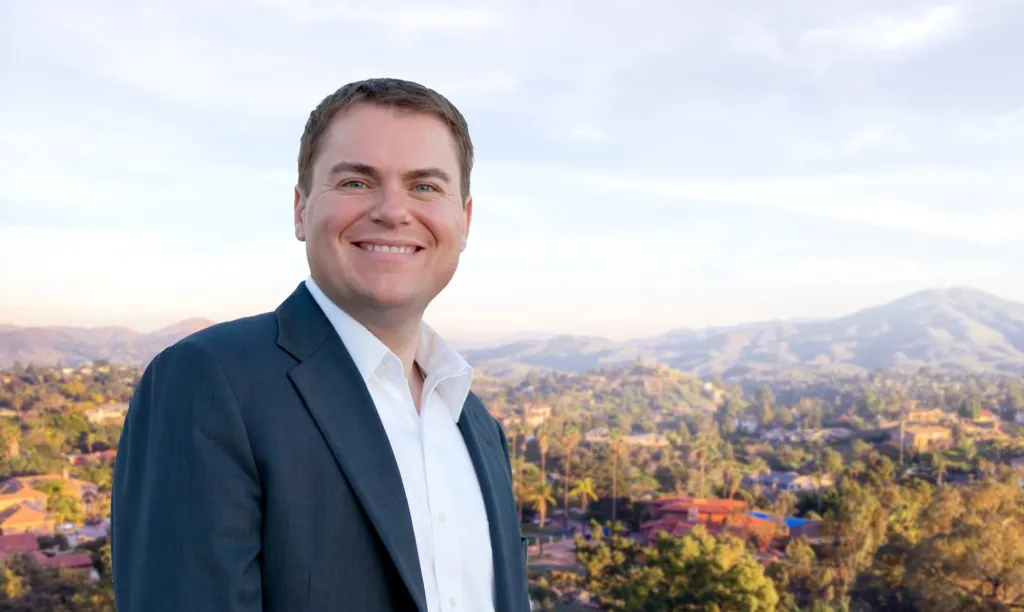
Carl DeMaio, 51, a Republican and incumbent Assembly member, is running for re-election to represent California’s 75th Assembly District representing Poway, Santee, Fallbrook and the San Diego County backcountry.
Read more Q&A: Meet Laurie Davies, candidate for California State Assembly District 74
A San Diego native, DeMaio now lives in Valley Center and is seeking his second term in the Assembly.
The San Diego Union-Tribune emailed a series of questions to DeMaio and other candidates to help inform voters about their positions, priorities and plans if elected.
DeMaio said he did not use any AI tools in responding to the Union-Tribune’s questions.
1) Why are you running, and what makes you the best candidate? (150 words max)
California is in bad shape with a cost-of-living crisis, jobs leaving the state and rampant waste and fraud in government. Politicians from both political parties have failed us — Democrats with their bad policies, and establishment Republicans who won’t fight for us. My motto is “give a voice to the voiceless” in a broken political system. I’m fighting to fix these problems before more of us are forced to make the painful decision of moving out of California.
2) What are the top 3 issues facing this district? (150 words max)
The cost-of-living crisis
Job losses due to insane regulations and mandates
Rampant waste and fraud in government
3) What are the first 3 things you would do in office if elected? (150 words max)
Fight to reduce cost of living by leading opposition to every new tax hike and every costly new regulation.
Enact and implement the California Voter ID initiative.
Shine a light on waste, fraud and abuse in every government program.
4) What should California do to solve its shortage of affordable housing and curb homelessness? Which existing efforts do you believe are working, and which aren’t? (150 words max)
Housing and homelessness are NOT the same issue. Housing costs are the result of insane regulations. Homelessness is the result of substance abuse and mental health problems. The media and politicians continue to mislead the public on these problems.
On housing costs, California politicians have made our state toxic to housing investment. According to RAND, a home that costs $250,000 to build in Texas costs $825,000 to build in California — not counting the land costs. That is a failure of state and local politicians who have enacted insane regulations and mandates. We need to cut red tape and benchmark our housing regulations to the average of other states — no more, no less.
On homelessness, we need to prioritize shelter beds and treatment. We have more than enough money to do that, but corrupt politicians have raided shelter and treatment funds to give rich developers subsidies to build welfare condos.
5) This district and its neighbors are vulnerable to climate change impacts like wildfires, rising seas and extreme heat, and to the health effects of climate-warming emissions. What should California do to improve climate resilience and reduce emissions and fire risk? (150 words max)
California politicians have utterly failed us on climate change. Their extreme policies have imposed massive costs on the middle class, destroyed jobs and in some cases have done more damage than benefit to the environment.
Let’s take the cost of gas and electricity as an example. California climate regulations have given us $6-a-gallon gas and electricity rates that are double the national average. But we now buy 55% of our oil from foreign countries with worse environmental and human rights records and have to import a third of our electricity from other states at a substantial cost and waste of electrons to transport the energy over long distances. Oh, and the expensive electricity we’re buying is powered by carbon-based sources like natural gas!
Instead of more high-cost mandates, my plan would embrace innovative technologies to make us climate resilient — without adding costs and destroying jobs.
6) Laws enshrined in California’s Constitution that protect residents from tax increases have also painted local governments into a corner as they seek to fund basic services and have led to chronic underfunding of schools. What would you do about this? For instance, would you support changes to Proposition 13 to remove its protections for commercial properties? (150 words)
This question is baloney. California families are not under-taxed; they are over-taxed. Local governments painted themselves into a corner with their wasteful spending and giveaways of our tax dollars to special interests on no-bid contracts to campaign contributors, gold-plated government pensions and corporate welfare. We have more than enough money to provide amazing schools to our kids, but the money is mismanaged. We don’t need tax hikes; we need accountability in government.
7) In light of those constraints, along with federal funding cuts, how should California balance its budget and fund basic services? Where would you seek new revenues or savings? (150 words)
Your newspaper needs to do some research, as the framing of this question is ill-informed. California state and local government has a budget deficit not because of federal policy changes or lack of revenues, but because of rampant wasteful spending.
Since Gavin Newsom took office in 2019, the state budget has grown 72% — versus an inflation rate of 20% during the same period. Our state population has declined, so you can’t say we have more people to serve, either.
During Newsom’s time in office, the state government workforce mushroomed 20% at an average cost of $177,000 per state employee.
Read more Q&A: Meet David Alvarez, candidate for California State Assembly District 80
Local governments exhibit the same irresponsible spending spikes.
Politicians caused this problem — and it is not hard to fix. Just go back to baseline budget levels from a few years ago.
8) Speaking of spending, Californians consistently rank the cost of living as a big concern. Recent jumps in the costs of fuel, food and other goods — combined with federal cuts to safety-net programs, new limits on certain federal loans and more — are further squeezing residents who were already struggling. What relief would you seek to offer, and how? (150 words max)
I authored the California Cost of Living Reduction Act to immediately reduce costs by suspending taxes and fees and slashing red tape and regulations to drive down costs.
First, the measure forces politicians to share in the pain anytime a major household item (like a gallon of gas or electricity) costs an average of 10% or more in our state versus the national average. Politicians won’t reform costly policies until they pay the price by losing tax and fee revenues.
Second, every state government agency that has any regulation on that item would be forced to benchmark it to the lowest cost regulation in other states. If the cheaper approach is good enough in other states, then it is good enough for California.
Third, any new regulation would have to be made cost-neutral going forward. If you want to add a regulation, you’ve got to cut a regulation.
9) President Trump has made cracking down on immigration a cornerstone of his administration, ordering widespread arrests and detentions of immigrants nationwide and directing military resources to a new military zone along the U.S.-Mexico border. What impact have these actions had on this district? What are your goals on immigrants, immigration and the border, and how would you pursue them in the Legislature? What is your message to constituents who are immigrants? (150 words max)
Securing the border has been great for my district, our region and our country. Now that federal policy has been fixed, we need to fix state policies by repealing the sanctuary state law that keeps criminals on our streets and eliminating taxpayer handouts to illegal immigrants that just incentivizes more illegal immigration at the expense of needy citizens.
To the legal immigrants of my district, I say THANK YOU for following our rules and coming into our country through the legal vetting process we have. America has always welcomed legal immigrants who just want a better life — not lawbreakers or people seeking welfare at the expense of our struggling taxpayers.
10) Health care costs for many Californians are rising — some because of new federal eligibility requirements, some because of Gov. Gavin Newsom’s moves to limit Medi-Cal coverage for some immigrants. How would you rein in costs? Would you vote to reverse the governor’s cuts to immigrant health care coverage? (100 words max)
California’s healthcare costs are high not because of federal policy changes but because of out-of-control regulations and mandates imposed by inept politicians.
According to the Transparency Foundation’s “Cost of California” report, the cost of the average emergency room visit in California is $3,238 — versus $682 in Maryland. The cost of an ambulance ride is $2,407 in California versus $661.50 in North Carolina.
I authored the California Cost of Living Reduction Act to immediately reduce costs by suspending taxes and fees and slashing red tape and regulations to drive down costs. Healthcare would be a great sector to implement this game-changing law first.
11) Among the many ballot measures being pursued by lawmakers and citizens for the November ballot are a handful that have drawn much attention and money. Should each of the below measures qualify for the November ballot, would you personally vote for measures that would do the following? (50 words max per measure)
— make ride-hail companies like Uber and Lyft liable for sexual assaults committed in cars?
TBD, while I support safeguards on riders, this measure has flaws that we need to address — hopefully before it goes on the ballot.
— require voters to provide a government-issued ID each time they vote?
Yes, I authored this initiative and led the signature drive to force it onto the ballot.
— levy a one-time 5% wealth tax on people with over $1 billion in assets?
No, we don’t need any tax hikes in California. Plus this measure isn’t a billionaires tax, it is an everybody tax — read the fine print.
— pass $10 billion in bonds to fund affordable housing development?
No, forcing taxpayers to borrow billions we don’t have only allows fraudsters to grift off these funds. Let’s cut regulations to make housing affordable instead.
Read more Q&A: Meet LaShae Sharp-Collins, candidate for California State Assembly District 79