







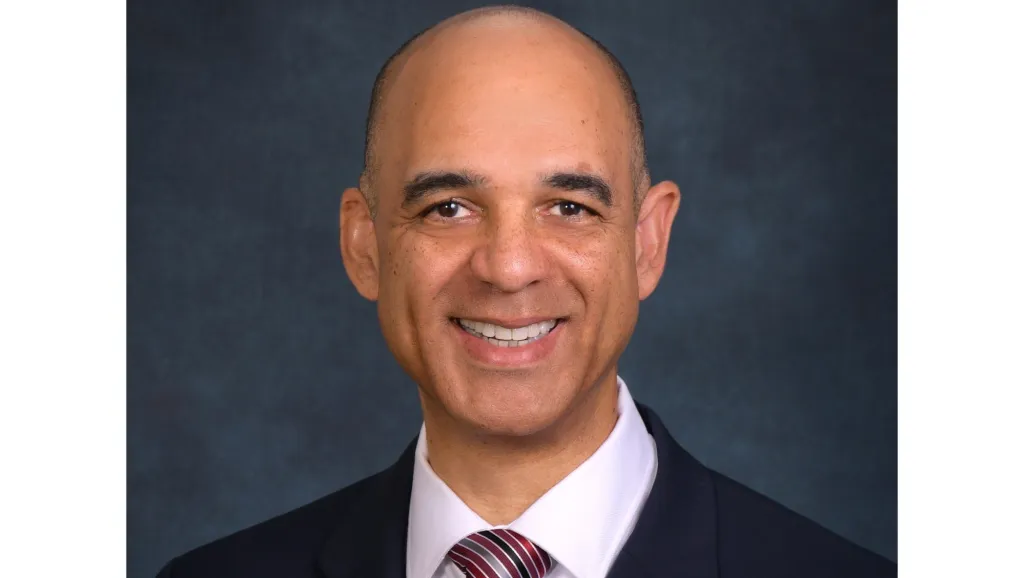
Gerald Boursiquot, 58, a Democrat, computer science professor and Lyft driver, is running for California’s 75th Assembly District representing Poway, Santee, Fallbrook and the San Diego County backcountry.
Read more Q&A: Meet Carl DeMaio, candidate for California State Assembly District 75
A native of Spring Valley, New York, Boursiquot now lives in Fallbrook.
The San Diego Union-Tribune emailed a series of questions to Boursiquot and other candidates to help inform voters about their positions, priorities and plans if elected.
Boursiquot said he used AI tools to edit his responses to the Union-Tribune’s questions.
1) Why are you running, and what makes you the best candidate? (150 words max)
Unlike my opponent, I will work with anyone who believes in democracy, the rule of law, accountability to constituents and helping working people. My opponent refuses to work with Democrats and has passed no legislation or brought any money to the district.
I have 22 years of military service guided by Air Force core values: “Integrity first, service before self and excellence in all that you do.” I was never given the choice of whom to work with; I had to work with everyone and delivered results. Instead of excuses and complaining about corruption, I will deliver for AD-75. Those guilty of corruption should be prosecuted, but we must still serve people now. This is what I will bring to Sacramento.
2) What are the top 3 issues facing this district? (150 words max)
There are many top issues, but one overarching issue affects everyone in the state: a lack of faith in government. People need to believe that their government can deliver for them. Elected officials need to work harder to let their constituents know they are fighting for them. Then I would say that housing/homelessness, the cost of living and a lack of good-paying jobs in North and East County are key issues. There is more I could say, but that is for another day.
3) What are the first 3 things you would do in office if elected? (150 words max)
Of course I would first get to know my fellow legislators to determine who I can work with and who I can’t. Find out their key issues and determine who I can approach to prioritize discussions on working-class economics, strategies to lower the cost of living, homelessness and creating a skilled workforce for the future.
4) What should California do to solve its shortage of affordable housing and curb homelessness? Which existing efforts do you believe are working, and which aren’t? (150 words max)
California should speed up housing supply by legalizing more apartments near jobs and transit, streamlining permits and using public land for affordable homes. It should pair that with deeper rental help, more vouchers and faster supportive housing for people with disabilities, veterans and seniors.
The strongest efforts are homelessness prevention pilots, expansions of Project Roomkey/Homekey and veteran-focused programs. I believe in housing first, but where it has failed is the lack of sufficient tracking of clients’ progress in counseling, mental health, probation or healthcare. This is the 21st century; that problem could be solved with an app on the client’s phone. A Housing First pilot in AD-75, involving roughly 200 homes and 15-20 case workers might cost about $10 million to implement. If we can help these individuals become productive, it’s a win‑win.
5) This district and its neighbors are vulnerable to climate change impacts like wildfires, rising seas and extreme heat, as well as the health effects of climate-warming emissions. What should California do to improve climate resilience and reduce emissions and fire risk? (150 words max)
California needs to invest in wildfire resilience, heat preparedness and clean energy all at the same time. We should teach our constituents how to harden their homes and create defensible space. We must use ember-resistant materials and strategies (straw bale homes, stone walls, stone roofing), fuel breaks, safer evacuation routes and utility undergrounding where feasible, while also expanding tree canopy, cooling centers and wildfire-smoke protections for schools and vulnerable residents.
California should speed up the electrification of vehicles and other technologies like hydrogen fuel cell technology. Improve building and industry standards with clean-power and pollution standards. It should also fund local resilience districts and cross-jurisdiction projects so coastal, inland and fire-prone communities can plan together.
6) Laws enshrined in California’s Constitution that protect residents from tax increases have also painted local governments into a corner as they seek to fund basic services and have led to chronic underfunding of schools. What would you do about this? For instance, would you support changes to Proposition 13 to remove its protections for commercial properties? (150 words)
California should modernize Proposition 13 by creating a “split roll” that removes special protections for commercial and industrial property, while preserving residential protections for homeowners, especially seniors. This would restore billions in local revenue to fund schools, public safety and other essential services without back‑loading costs onto ordinary families. I would support a change to the California Constitution. With this amendment we would work in phases on higher assessments for large commercial properties, exempting small businesses and requiring revenue to be earmarked for schools and local governments.
At the same time, California should couple any property‑tax reform with strong renter protections and targeted homeowner‑relief programs to keep the system fair and politically durable. I would also want to declare housing a human right and support the adoption of ACA 10 and SCA 9, proposed constitutional amendments to guarantee a right to housing.
Read more Q&A: Meet Laurie Davies, candidate for California State Assembly District 74
7) In light of those constraints, along with federal funding cuts, how should California balance its budget and fund basic services? Where would you seek new revenues or savings? (150 words)
California should safeguard health, food, housing and education services. We are currently facing federal cuts that will affect CalFresh and Medi-Cal, as well as child care.
To generate new revenue, close high-end tax loopholes, review business tax preferences and finally end unnecessary corporate subsidies. For savings, I’d focus on lower-priority or ineffective programs, procurement and administration, not frontline benefits. The state should also use reserves carefully and avoid deep cuts to Medi-Cal and other safety-net programs that would cost more later if people lose coverage or become unhoused.
8) Speaking of spending, Californians consistently rank the cost of living as a big concern. Recent jumps in the costs of fuel, food and other goods — combined with federal cuts to safety-net programs, new limits on certain federal loans and more — are further squeezing residents who were already struggling. What relief would you seek to offer, and how? (150 words max)
I would focus on the basic things that hit monthly budgets the hardest: food, energy, transit, child care and rent. California can expand targeted utility rebates or bill credits for low- and middle-income households, bolster food banks and school meal programs and protect Medi-Cal and CalFresh so federal cuts do not push more families into crisis. Speed up housing production, reduce utility and permitting bottlenecks and use targeted competitive policies where markets are concentrated.
For funding, I’d prioritize closing high-end tax loopholes, trimming low-value spending and using reserves for temporary relief rather than across-the-board cuts. We need to make life more affordable for AD-75 and all Californians. It’s much cheaper to keep people in their homes and prevent them from becoming homeless in the first place. Once they are on the streets, it costs much more to address the need.
9) President Trump has made cracking down on immigration a cornerstone of his administration, ordering widespread arrests and detentions of immigrants nationwide and directing military resources to a new military zone along the U.S.-Mexico border. What impact have these actions had on this district? What are your goals on immigrants, immigration and the border, and how would you pursue them in the Legislature? What is your message to constituents who are immigrants? (150 words max
AD-75 touches the border of Mexico and is roughly 56 to 60 miles long, depending on the exact points used for the eastern edge of Otay Mesa extending to Jacumba Hot Springs. Trump’s actions have created fear in our communities, increased family separation and workplace disruption. It affects local schools, medical clinics and the courts. We need to protect due process and ensure ICE obeys California law. They must wear body cameras, identify themselves when asked, remove masks, wear name badges, obtain judicial warrants and inform the accused of the reason and charges leading to their arrest. In addition, we need to ensure humane treatment of prisoners in state-run detention facilities. As far as doxxing is concerned, I feel that public exposure wouldn’t be a problem if ICE agents obey the law.
10) Health care costs for many Californians are rising — some because of new federal eligibility requirements, some because of Gov. Gavin Newsom’s moves to limit Medi-Cal coverage for some immigrants. How would you rein in costs? Would you vote to reverse the governor’s cuts to immigrant health care coverage? (100 words max)
We can curb costs by negotiating lower drug prices, expanding primary and preventative care and cutting administrative waste. I would also oppose policies that prioritize profit over public health. I would vote to restore Medi-Cal for income-eligible residents, because preventive care is cheaper than untreated illness. Avoiding the ER would save a lot of money. If possible, the state should pair that with federal advocacy, stronger reimbursement controls and broader affordability reforms so costs fall for everyone, not just the healthiest Californians.
11) Among the many ballot measures being pursued by lawmakers and citizens for the November ballot are a handful that have drawn much attention and money. Should each of the below measures qualify for the November ballot, would you personally vote for measures that would do the following? (50 words max per measure)
— make ride-hail companies like Uber and Lyft liable for sexual assaults committed in cars?
This affects me personally because I drive for Lyft. I would support greater accountability. If Uber or Lyft drivers are sexually assaulting women, they should be held accountable. Should the companies be held accountable? Sure, especially if they have a weak vetting process that may enable violence. I would support stronger background checks and improved in-car surveillance technology that protects the driver and the passenger.
— require voters to provide a government-issued ID each time they vote?
I agree with Democrats. That risks disenfranchising eligible voters, especially seniors, low-income residents, students and people who lack easy access to ID. However, if the measure passes, I would offer the following conditions:
- Ensure everyone receives a free and easy-to-obtain an ID.
- Ensure that everyone who gets a voter ID is automatically registered to vote, so that it does not disenfranchise eligible voters, including seniors, low-income people, students and voters without ready access to ID.
- It should provide protections like: automatic registration updates, robust mail voting access and strong verification that do not create new barriers.
- Use DMV records.
— levy a one-time 5% wealth tax on people with over $1 billion in assets?
Yes. Very large fortunes should contribute more to urgent public needs like housing, schools and health care. This is a step in the right direction, and corporations, billionaires and billionaire foundations have had a free pass for far too long. We need to cut working-class taxes and give working people a break for once in this nation’s history. I am 58 years old, and for my entire life, I have not seen a concerted effort to pass policies that support working people or the impoverished without some sort of corporate or billionaire giveaway.
— pass $10 billion in bonds to fund affordable housing development?
I’d support bond funding only after maximizing existing tools: low-cost public financing, tax-exempt private bonds, philanthropic capital and property-tax incentives, plus streamlining approvals to cut costs. Bonds can help if paired with reforms that stretch dollars and target deeply affordable units. I’d also invest in community land trusts, shared-equity cooperatives and LIHTC with local fees to build more affordably without more debt.
Read more Q&A: Meet David Alvarez, candidate for California State Assembly District 80