





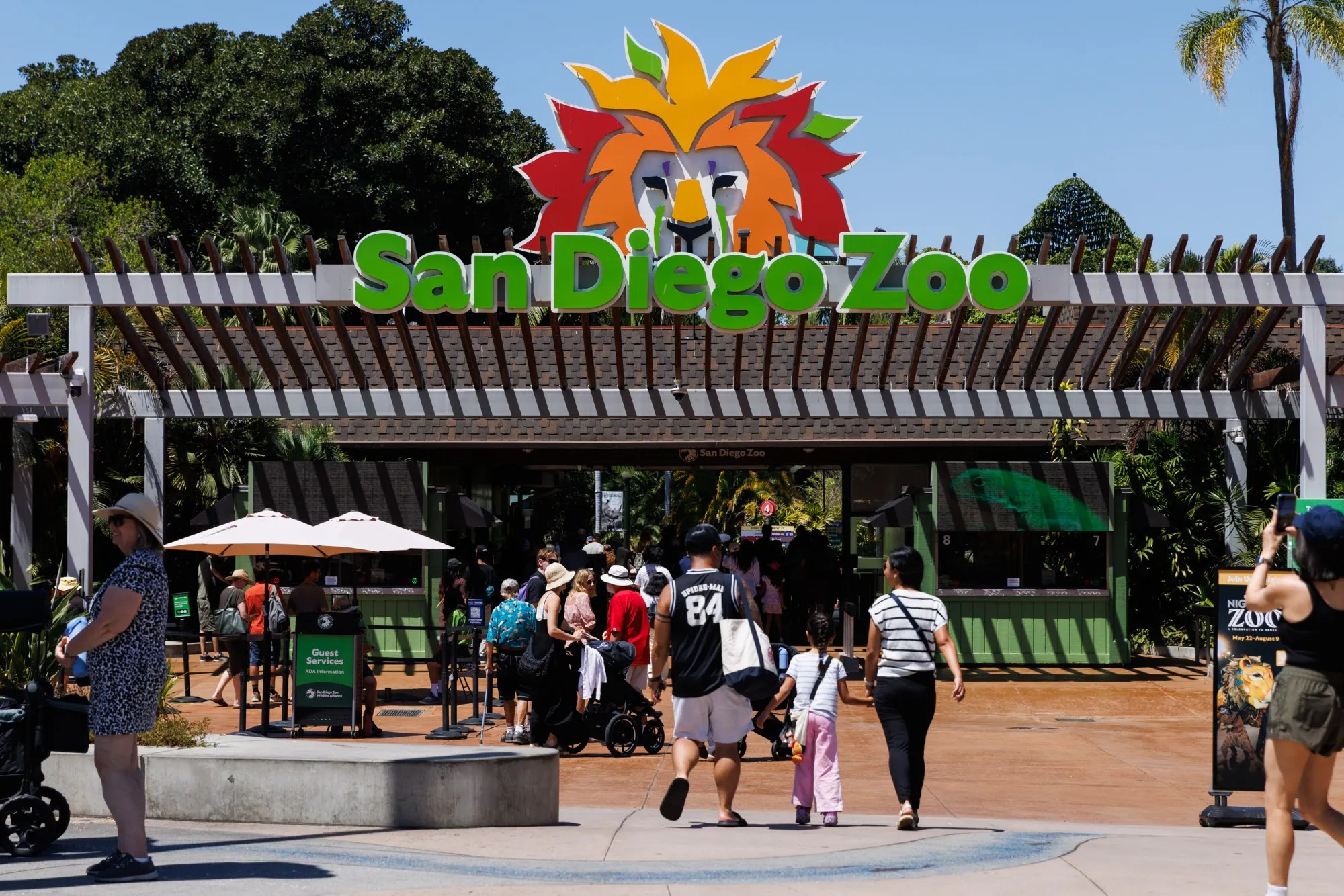
Two months after San Diego decided to end paid parking in Balboa Park come Jan. 1, zoo officials are still mulling whether to follow suit — a decision that could have big consequences for city finances and nearby museums.
Read more Explosions are heard near a US base in northern Iraq as US-Iran fighting escalates
The zoo must stop charging city residents the current $8 resident parking fee in its lots starting in January, because the zoo’s new city lease prohibits charging city residents anything if parking is free elsewhere in Balboa Park.
But the zoo could continue to charge tourists and locals living outside the city the current $16 nonresident rate or some other amount, and it would split those millions of dollars in revenue evenly with the cash-strapped city.
One possible drawback of such a move would be flooding the park’s nearby Central Mesa with the cars of zoo visitors savvy enough to know they can park for free a few hundred yards away in other Balboa Park lots.
“If the zoo continues charging for parking after the city ends paid parking, it’s likely that zoo visitors will shift into the park’s free lots, reducing availability for people visiting the museums, Spanish Village, clubs or simply planning to enjoy the park itself,” said Judy Gradwohl, chief executive of the San Diego Natural History Museum.
Gradwohl said Thursday that she hopes the zoo will choose to eliminate paid parking.
“We’re hopeful they’ll weigh their impact on the rest of the park and choose to keep the entire park free and available — the most equitable outcome for everyone who uses it,” she said. “We’re proud neighbors of the zoo and hope to work with them on a solution that serves the whole park community.”
For those organizations, the zoo continuing to charge for parking wouldn’t be as problematic as paid parking throughout the park, which museums and other nonprofits have aggressively fought since it was first proposed last fall.
But it wouldn’t mark the return to free parking everywhere in the park that they have sought — a return to the way things were for many decades until last winter.
A zoo spokesperson said this week that zoo officials are still analyzing the situation.
“At this time, we are still assessing our parking program beyond Jan. 1 while continuing to comply with our existing lease agreement,” said the spokesperson, Meghan Breen.
When the city decided in May to end paid parking elsewhere in the park starting in January, zoo officials said something similar.
“We are aware of the announced rollback of paid parking in Balboa Park and are working closely with our partners to assess next steps, and timelines moving forward,” Breen said May 20.
The city’s decision came as a surprise to many, because it was made as an 11th-hour addition to a complex deal related to the city’s new trash fee focused on single-family homes.
City officials had been trying to find a way to get the Lincoln Club Business League to abandon its push for a November ballot measure that if successful could have repealed the fees for two years.
In the final deal, which also settled a related lawsuit, city officials agreed to lower the trash fees and to eliminate paid parking in Balboa Park starting Jan. 1.
The deal did not require an end to paid parking at the zoo. But it does affect it.
That’s because a 52-year extension of the zoo’s city lease, which the City Council approved in March, requires the zoo to charge city residents whatever they are charged for parking elsewhere in Balboa Park.
Read more DNA expert ties slain 14-year-old Celeste Rivas Hernandez to blood stains found in D4vd’s garage
Because that amount will drop to zero on Jan. 1, the zoo must stop charging city residents at that time. But the lease allows the zoo to charge other visitors.
Zoo officials have repeatedly declined to reveal how much revenue their paid parking program is generating — so it’s difficult to know how much money is at stake. During lease negotiations, city officials continually used an estimate of $6 million per year.
The lease extension guarantees the city half that amount — $3 million — as long as the city continues to charge elsewhere in the park.
The city is giving up that guaranteed $3 million per year from the zoo by ending paid parking elsewhere in the park — but its lease still requires the zoo to split its parking revenue evenly with the city.
In the scenario where the zoo had to pay the city a guaranteed $3 million, the zoo didn’t have to start splitting revenue with the city until the total revenue generated by the zoo from parking surpassed $6 million.
City revenue reports show that city officials underestimated how much revenue paid parking elsewhere in the park would generate, so the $6 million amount could be too low. The zoo’s annual attendance is estimated at 4 million visitors.
But because fees from city residents were part of the $6 million estimate and the zoo won’t be able to keep charging them, that dollar estimate could be too high.
In addition, that estimate didn’t account for many savvy zoo visitors — including those coached by travel guides and websites — parking for free elsewhere in the park, instead of paying to park at the zoo.
And zoo officials have previously discussed extending free parking to all San Diego County residents.
The city lease also allows the zoo to deduct up to $700,000 each year from parking revenue to cover its expenses to operate the program.
The lease extension does not require the zoo to reveal its parking revenue until March 2027, but the revenue must be revealed annually each March after that.
Some community leaders have suggested zoo officials don’t want to decide whether to continue with paid parking until they have seen how much revenue they can generate during a full summer.
A spokesperson for Mayor Todd Gloria said Thursday that the zoo hasn’t approached the city to discuss the future of the zoo’s parking.
“The mayor’s office has not had further discussions with the San Diego Zoo regarding parking since the city’s announcement that paid parking in Balboa Park would wind down by Dec. 31, 2026,” said the spokesperson, Benny Cartwright. “The revenue share agreement between the city and the zoo remains in effect as long as the zoo continues to charge for parking.”
If parking becomes a problem elsewhere in the park because the zoo continues to charge, the lease extension gives the city the option of demanding the zoo make changes.
“In the event the City Council determines that the imposition of such fees significantly and adversely affects the parking and traffic situation in Balboa Park, the Zoological Society agrees to take whatever action is necessary including the reduction or elimination of such fees to alleviate such problems,” the lease says.
While the clause is light on specifics, it could help the city — and its museums — negotiate changes.
Read more Giant metal roosters spread autism acceptance in Maine after town zoning spat