




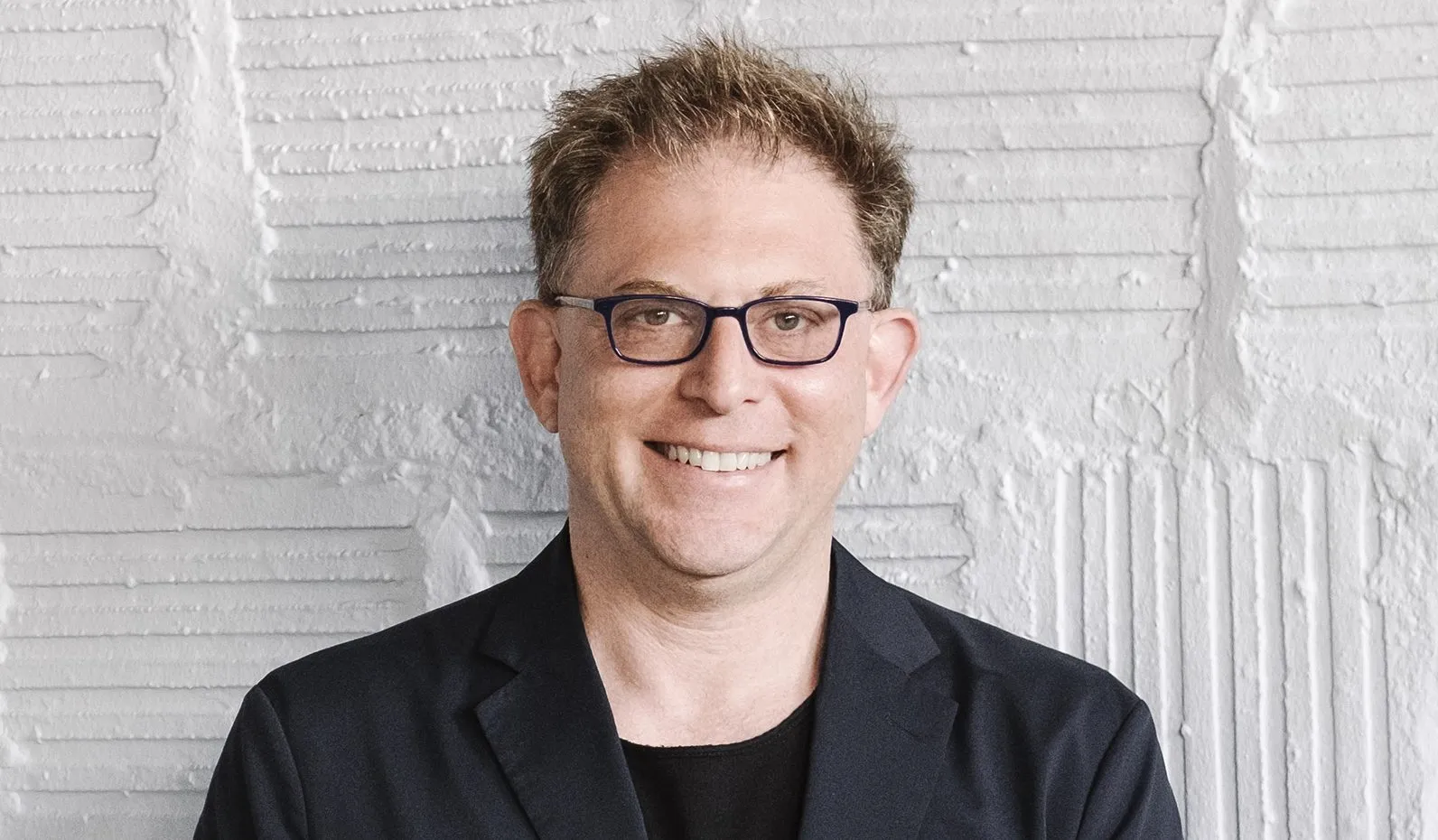
Brett Littman, a museum leader, curator, writer and consultant with more than 30 years of experience at New York cultural institutions, has been appointed the new Director and Chief Executive Officer of Museum of Contemporary Art San Diego.
Read more Kushner has hourslong meeting with Netanyahu on Gaza a day after talking with Hamas
Littman, 57, replaces Kathryn Kanjo, who left the La Jolla museum in January after 15 years to lead the UC Irvine Langson Orange County Museum of Art in Costa Mesa. Littman will start his new role in October and will become MCASD’s fifth director since it opened in 1941.
Over the past three decades in New York, Littman established a track record for expanding boards, operating budgets and philanthropy as director of the Isamu Noguchi Foundation and Garden Museum; executive director of The Drawing Center; deputy director of MoMA PS1; co-director of Dieu Donné Papermill; and associate director of UrbanGlass.
Most recently, he ran his own consulting firm where he advised museums, foundations, artists, estates and cultural organizations on institutional strategy, governance, collections, fundraising, digital initiatives and public engagement.
Littman said stepping into his new role at MCASD marks a full-circle moment in his life and career. When he was studying philosophy at UC San Diego in the late 1980s and early ’90s, he frequently visited the museum, then named the La Jolla Museum of Contemporary Art, and discovered a passion for contemporary art.
“My connection to San Diego is deeply personal,” Littman said in a statement. “The exhibitions and public programs at the museum were foundational to my understanding of contemporary art when I was a student at UCSD and, in many ways, led to my eventual career in the field. The opportunity to return to an institution that shaped my own intellectual and professional growth is incredibly meaningful.”
MCASD Board of Trustees President Maryanne Pfister said Littman was selected following a six-month national search.
“Brett is a visionary museum leader whose experience spans some of the country’s most respected contemporary art institutions,” Pfister said in a statement. “His ability to balance artistic ambition with organizational leadership, combined with his past personal connection to San Diego, makes him exceptionally well-positioned to guide the museum into its next era.”
Littman is joining the museum at a time that he calls “post-transformation.” In 2022, the La Jolla property at 700 Prospect St. reopened after a four-year, $105 million renovation and expansion. In 2024, MCASD sold its satellite gallery in downtown San Diego to UCSD and consolidated all of its operations in La Jolla.
While MCASD does have significant construction loan debt, and the nonprofit arts world has been buffeted by the loss of government and foundation grants, Littman said in a phone interview last week that he’s optimistic about the museum’s future.
“I feel very confident we’re in a good position,” he said. “They’re not in a growth moment, they’re in post-renovation. For a year, or a year and a half, we’ll need to shore up donations, recruit new board members and broaden the scope of the philanthropy. I view San Diego as a really wonderful opportunity.”
Littman will arrive at MCASD on the heels of “Giants: Art from the Dean Collection of Swizz Beatz and Alicia Keys,” a tremendously successful touring exhibition of works by Black contemporary artists that closed Aug. 9. Littman saw the original “Giants” show at Brooklyn Museum and said it looked even better in La Jolla.
‘Giants’ art exhibition a colossal success for MCASD in La Jolla
“It was a very powerful and good show,” Littman said of the La Jolla exhibit. “I’m particularly interested in having the museum do a post-mortem. It points to a lot of things we can do in the future. It was a real blockbuster, and it brought a very diverse and different audience to the museum. They took a different approach, interviewing local artists and highlighting people’s connection to the audience. I’ve done that in every single place I’ve worked. With ‘Giants,’ I’m so happy to come in after that. The blockbusters of the future are there to be found.”
Littman was born and raised in Brooklyn, where his parents, both public school teachers, filled the house with the music of Simon & Garfunkel, Charles Mingus and John Coltrane and his dad had his own photography darkroom. Littman said he regularly went on school field trips to New York City’s museums, but his interests at the time were math and science. When he enrolled at UCSD in 1986, he was studying pre-med at Revelle College.
Read more Trump dwarfs his predecessors in the number of ultra-rich in his second White House, report shows
But after taking several required humanities courses under UCSD teachers Robert Pippin, Jerome Rothenberg and Ray Armantrout, and meeting composer Iannis Xenakis and experimental poet Jackson Mac Low, Littman decided to change his major to philosophy.
At the same, time, he was visiting the museum in La Jolla two to three times a month to tour exhibits of work by artists like Jennifer Bartlett, Ann Hamilton, David Hammons and Robert Irwin. He also attended art lectures there, including a photography talk by Edward Ruscha that he said “blew my mind,” and an intriguing lecture by conceptual artist Hans Haacke, who Littman said had a “radical approach to institutional critique and how contemporary art affects the world.”
After college, Littman and his then-girlfriend moved to Texas, where he produced a couple of films and wrote poetry and chapbooks. Then he returned to New York in 1993 and started his professional career at the Brooklyn Center for the Performing Arts, where worked as a grant writer in the development department.
From there, he moved to UrbanGlass, a glass-blowing school run by poet, artist and curator John Perreault, who Littman said “showed me what contemporary art could be.” After that, each job gradually expanded his responsibilities in museum, budget and philanthropic management.
As deputy director of the experimental contemporary art space MOMA PS1 from 2003 to 2007, Littman worked with artists on commissions. As executive director of The Drawing Center museum in SoHo, he learned about the art process and the visualization of thinking. And as director of the Isamu Noguchi Museum Foundation and Garden Museum from 2018 to 2023, he learned about architecture, design, landscape architecture and how to define what constitutes sculpture.
Over the years, he also curated more than 40 exhibitions spanning contemporary art, architecture, design, craft, literature, music and science.
In 2023, Littman launched Shakkei Consulting (shakkei means “borrowed landscape” in Japanese). Freed up from the daily responsibilities of museum management, he was able to travel internationally offering services to museums, estates, companies and foundations.
He worked with Urban Art Projects (UAP), a fabrication company that creates large-scale sculptures around the world, to refine their business plan and philanthropy model. For owners of the AI app Artlist, he interviewed 30 museum directors on their thoughts about the future of AI in the arts. And he worked with the tiny Tuscan town of Peccioli in Italy, which has turned a hillside garbage dump into a profitable engine for social change.
Through all of his experiences, Littman said he’s learned the building blocks for what makes a healthy nonprofit arts institution, and he plans to apply those skills at MCASD.
“The institutions that are in a stronger position are now ones that have diversified their revenue,” he said. “Their board, staff and the community are aligned around an idea. There is built trust with their donors. And the institutions are in a strong position and have made themselves useful to their community at large.”
Littman said he and his wife are now packing up their home in New York and planning to move here in September. Once they’re settled, Littman said he plans to begin networking for new donors and board members, including mining his deep connections at UCSD.
“There’s a lot of interesting people in San Diego and a lot of people of significant net worth. People who can be brought into the dialogue,” he said. “MCASD will be a place they’ll be interested in if we engage in dialogue and explain why we’re important. The museum will be the interpreter of the future of Southern California. It’s a very dynamic and very interesting place.”
Read more Supreme Court again rebuffs Trump’s push to toss out $5 million verdict in E. Jean Carroll case