




Mary Ehrhardt gets “almost a little teary-eyed” when she drives by her kids’ old Imperial Beach school these days.
Read more Michael Smolens: Taxpayer association tries to get its mojo back on endorsements
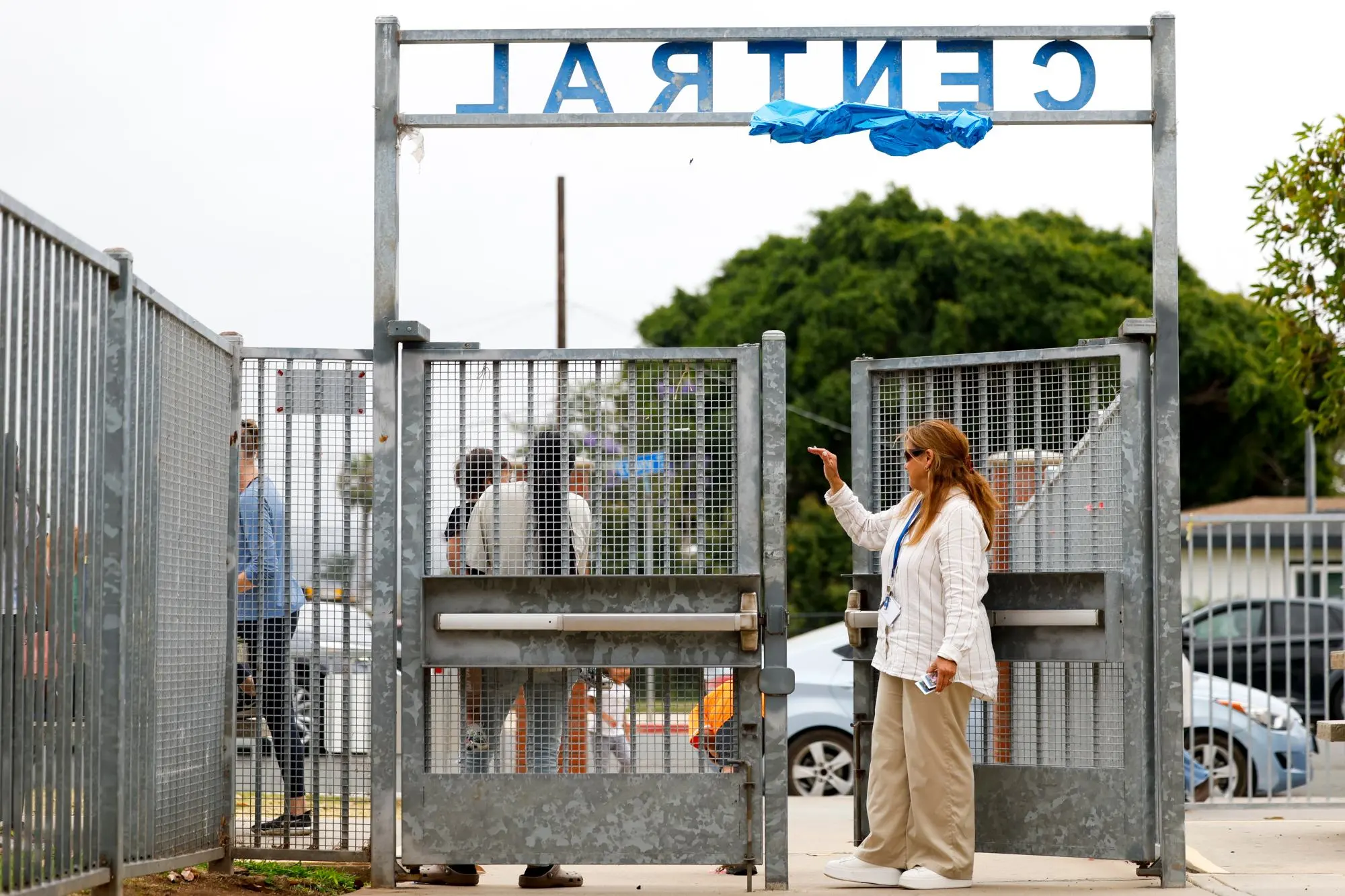
Inside the gates of Central Elementary, the buildings were tidy, with painted handprints from students past adorning the walls. But the school closed its doors for the last time this year, the latest victim of declining school enrollment in San Diego County.
“It’s got this kind of eerie feeling,” says Ehrhardt, whose two sons — Tyler, a fifth-grader, and Teddy, a third-grader — now attend Emory Academy. “The playground is empty, the soccer field is empty and the classrooms are empty.”
Now the district is trying to prevent other schools from closing.
Enrollment declines are creating financial turmoil for schools statewide, a product of California’s declining population, worsened by immigration restrictions, and its high cost of living.
In the South Bay Union School District, with its ongoing sewage crisis and a binational community rocked by border crackdowns, the issue is especially acute.
Most school districts’ funding is determined by their average daily attendance. When schools lose students to absences or families leaving the district entirely, that money is lost with them.
South Bay Union, where most students are socioeconomically disadvantaged and nearly half are English learners, has lost more than a third of its student population in under a decade, a far steeper drop than countywide. In 2017, the district had 5,569 students enrolled. By last year, it had 3,647.
That has prompted a plan to close some schools in an effort to stabilize those that remain — an unpopular move, but one that some critics say is often the best response to budgetary crises brought on by dwindling numbers of students.
Last year, the South Bay school board voted in May to close Central Elementary, potentially followed by another two schools if necessary.
In December, the district decided to move forward with that plan, shuttering Sunnyslope Elementary in 2029 and then Berry Elementary in 2032, if it comes to it. The hope is that distributing students from each closed school among others will stabilize enrollment elsewhere.
But the plan has brought consternation in the community. At a meeting last year where trustees considered their options, students’ signs reflected their priorities. “I’m fighting for Sunnyslope to stay open,” said one. “Every student deserves a school in their neighborhood,” said another.
The decision has also brought a sense of whiplash, for Berry in particular.
The school was recently designated a community school — indicating its focus on serving the broader community with resources to help the whole child — and is set to receive a $250,000 grant from the state to support that work.
The funding could, in theory, help Berry gain and retain students. But to Joseph Prosapio, who stepped down recently as school principal, it also sends mixed messages: The school is worth investing in, but the district also wants to shut it down.
“There’s a lot of people that are really confused by that decision-making paradigm,” he said.
‘The most difficult decision’
Jose Espinoza, the superintendent of South Bay, sees the district’s chosen course of action as not a school-closure plan but a stabilization plan.
“We’re really focused on stabilizing our district financially, and we have been doing a really good job,” he said.
He’s hopeful the district can keep both Berry and Sunnyslope open. But the problem of dwindling students is real; as of Thursday, the district had 277 fewer students than in June.
Espinoza’s goal is to avoid state intervention, but he thinks the district is headed that way. He draws parallels to Plumas Unified, a rural Northern California district now under state receivership, for some commonalities: falling enrollment, deficit spending, growing labor costs.
For California school districts, state receivership is set up as an alternative to bankruptcy. In exchange for an emergency loan from the state, a district might face monitoring from a trustee, or an appointed administrator could overrule local control to order big changes to its operations.
“What we don’t want to happen is what’s happening in Plumas,” he said.
But much of the cost savings from closing a school takes a while to materialize, said Marguerite Roza, a Georgetown University professor and director of the Edunomics Lab there. That’s because the biggest savings come from staff attrition over time, even if nobody is let go.
Roza worries that with incremental school closures like the ones South Bay could face, some of the same students could be affected over time — first with their old school closing, then their new one. “I’d rather they just did one big closure and (be) done with it,” she said.
If districts aren’t interested in closing schools, they have other options.
“Do we want to spread (staff) across a lot of buildings, or do we want to shore up schools where we do have more students and make sure that they have all the services they deserve?” Roza said.
California’s school auditing agency, the Fiscal Crisis and Management Assistance Team, offers districts guidelines for when to close a school. It advises using a two-year process, setting criteria to judge which school to close and holding firm on that and being careful not to overstate the cost savings from a closure.
But FCMAT won’t say definitively whether a district should close a school, said Mike Fine, its CEO.
“Closing a school is probably the most difficult decision a school board makes,” Fine said. “It’s just super emotional. Schools are the center of every neighborhood, right?”
And financial stability need not always win out, said Troy Flint, a spokesperson for the California School Boards Association. School boards must always consider their “North Star” — giving children a good education.
“There’s always a tension between financial constraints and what you can provide the students, even in more favorable financial times,” he said. “But especially when you’re having to make decisions that reduce service to schools and students, you have to consider the trade-offs.”
Schools can stay open with fewer students, Roza acknowledged — but that too comes with trade-offs.
“You’re not going to have an art teacher; art’s going to be in homeroom class. Second and third grade is going to be combined. And we’re not going to have even a dedicated P.E. teacher.”
Keeping a school open affects every school in the district, Roza said. The money that is being used to keep an under-enrolled school open is money that is not being spent by other schools.
“That’s when you start cutting stuff across all of the schools — fewer field trips and assemblies,” she said.
‘A celebration of people’
School closures aren’t generally met with celebration, and the reaction from the South Bay community has been no exception. Public meetings where plans were finalized grew emotional and crowded, with parents, students and teachers opening up about what their schools meant to them.
Read more Tropical Storm Moke forms on track to bring heavy rain and winds to Hawaii
But at Central earlier this year, as its final days wound down, school leaders tried to strike a celebratory note.
Near the end of the school year, as Central prepared to close its doors for good, school leaders hosted a celebration. Long-ago alumnae shared their experiences. Longtime staff were honored. Politicians made appearances. Some of the youngest students performed a dance.
“While this is a time of transition, today is first and foremost a celebration of people, of memories and of legacy that will live on beyond these walls,” said Principal Edgardo Salazar.
After the adults gave their talks, the students were treated to a carnival, an annual tradition at the school. Kids played games and ate cotton candy. And Maureen McElroy — Ms. Mo to her students — was honored.
McElroy spent 38 years as a speech language pathologist at Central. In her early years, she recalls an era of explosive growth, with barely enough portable classrooms to accommodate everybody — and then a long, inexorable decline.
The portables were all removed. The crowd at the end-of-year carnival looked sparse.
“It shrunk and shrunk and shrunk,” she said. “A 74-year-old school that’s been here, the home, the educational home of this neighborhood, is no longer going to exist.”
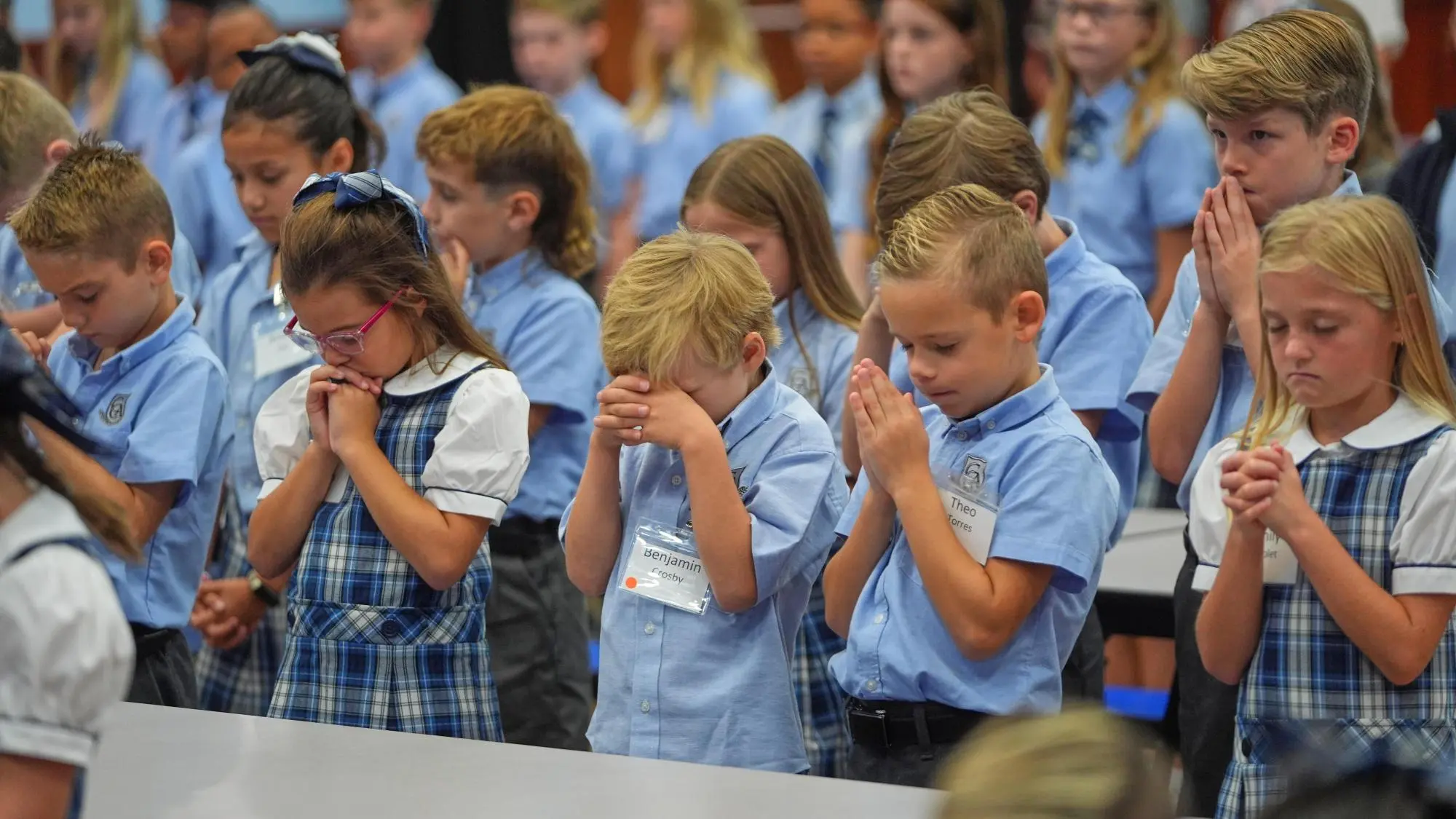
Today, many of the children who honored Ms. Mo at the May carnival at Central are enrolled in nearby Emory Academy.
There, teachers and students have begun the new school year with get-to-know-you activities and handwritten notes to welcome their new arrivals.
It’s the product of conscious planning, says Rebecca Nelson, the principal of what’s formally known as Emory Academy of Global Leadership and Empowerment.
“We talk about transitions,” she said. “How are you doing? How is the change happening?”
Her school isn’t at risk of closure like some others. But as she considers what might be possible if the boost from new students yields more funding, she’s aiming for new initiatives — like a “lunch league,” for kids to get involved in sports during school hours.
Gabriela De La Torre has taught sixth grade at Emory for about three years but taught fifth and sixth grade at Central for 10 years before that. She wants to honor the disruption some of her new students have faced.
“I don’t want to pretend that it didn’t happen,” she said. “Yes, you will always be a Central sea lion, but you are also now an Emory eagle.”
Students have welcomed new arrivals, too, among them Ehrhardt’s 10-year-old son, Tyler, who has already made a new friend in Logan Corral.
Soon after school began, the two boys met sitting in the same row. Now they pair up for most projects and play four-square together during recess.
“We just ended up being friends,” Logan says.
Tyler admits he had been nervous about the start of the school year. But he’s glad to be making friends, and he’s excited about four-square.
He also has some advice for other kids starting at new schools: “Feel welcome, ‘cause you are.”
Planning for what’s next
Around San Diego County, a wide range of districts — from the relatively mammoth San Diego Unified School District to Grossmont Union High School District in the eastern suburbs — are also looking into how to deal with their falling enrollment.
Closer to South Bay, other districts such as Chula Vista Union Elementary, which includes some of the fastest-growing areas of South County, haven’t faced such steep enrollment declines. Espinoza said his own district often loses students to those neighboring districts.
In San Diego Unified, district leaders are taking the unusual step of building workforce housing to help its staff keep their own families in the district. Now, in South Bay, because Central has closed, district leaders are considering something similar.
Espinoza said the district is considering leasing out the property for a few years at first, but in the long term, they’re looking to convert it into workforce housing.
Berry could potentially become the site of staff housing, too, he said, should it close in 2032.
If it does, that could mean another new school for Stephanie Rodriguez’s youngest child. But she’s not sure she’ll keep her two youngest at Berry anyway, she explained Wednesday, sitting outside the school.
Roman, 6, just began second grade at Berry, and Romina, 5, just started kindergarten.
Central was a two-minute walk from their home. Berry is a six-minute drive, situated just a few blocks from the Tijuana River, near a well-known hot spot where air pollution from the sewage crisis can be especially bad.
Rodriguez had heard rumblings that Central might close for years, but she didn’t believe it until it was happening. She didn’t realize it was closed because the district was losing too many students — but she notes that soon it might lose hers, too.
Some of her friends have moved away to places like Arizona for relief from California’s high cost of living. Because of the sewage crisis, she’s thinking about doing the same.
As she spoke, she looked toward the children on the playground, trying to see if Romina were among them.
“Imagine them playing outside, and then the air sometimes — it’s not a good quality,” she said.
Read more Rescued beluga whales from shuttered Marineland arrive safely at SeaWorld San Diego