






A San Diego federal judge on Tuesday ordered the immediate return of the father of a former U.S. Marine who was arrested last year and later deported following a family visit to Camp Pendleton.
Read more Trump pushes 2030 census to exclude immigrants, not ask about race
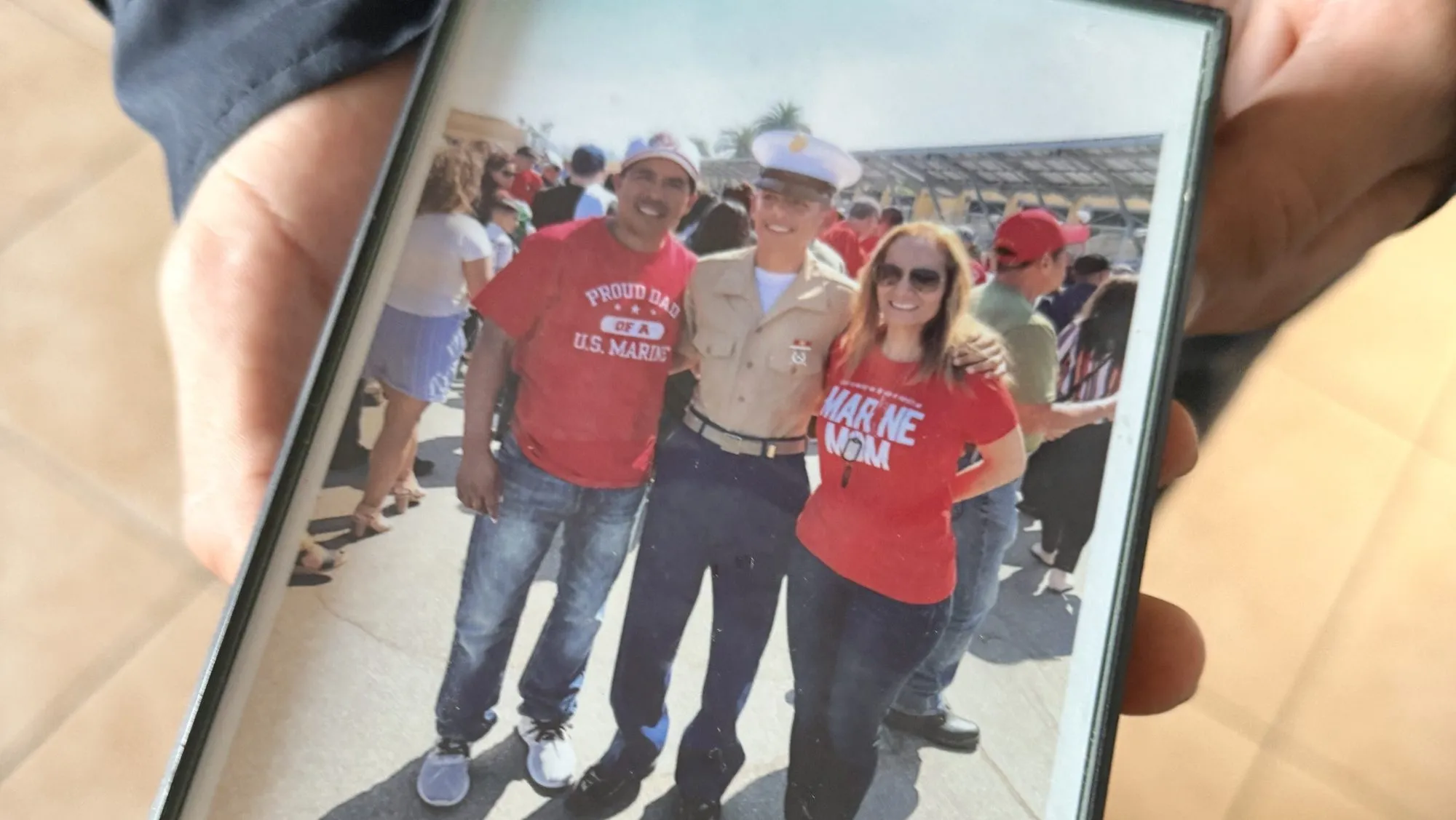
Esteban Ríos, 57, an Oceanside resident for decades, was detained in September with his wife while visiting their daughter, who was pregnant at the time and lived on the base with her active-duty Marine husband.
At the time of their arrest, the couple had work permits due to their pending U nonimmigrant status cases, granted to victims of certain crimes, according to the court order.
In October, Ríos was deported to Mexico, and his wife was later released from the Otay Mesa Detention Center due to her U visa deferred action status.
U.S. District Judge Janis Sammartino ruled in a court order filed Tuesday that Ríos must be restored to his previous immigration status “and be entitled to all the rights and benefits afforded to him pursuant to his deferred action as if his October 2025 removal never occurred.”
Neither the U.S. Department of Homeland Security, U.S. Immigration and Customs Enforcement, nor the U.S. Department of Justice responded to a request for comment on Wednesday.
Ríos filed a habeas corpus petition in late July, alleging that his deportation was “without justification or consideration of his individualized circumstances” and violated his due process rights. The court agreed, Sammartino wrote in her order.
Habeas petitions have been filed in large numbers across the country during the second Trump administration by immigrants seeking release from custody on due-process grounds. Judges in San Diego and elsewhere have often ruled that the Trump administration had held individuals too long without giving them a hearing, or had revoked their immigration parole without a valid reason.
Ríos and his wife were detained at the gate of Camp Pendleton despite having REAL ID-compliant identification documents, deferred action status and work authorization, the judge said.
Last year, Camp Pendleton announced a security initiative in coordination with ICE, U.S. Customs and Border Protection, and the Naval Criminal Investigative Service under which ICE agents would assist with identity verification and screening operations at certain points of entry, officials said at the time.
Ríos and his wife were both transferred to the federal building in downtown San Diego, where they were given ankle monitors and told to report to ICE for a check-in appointment in two weeks.
Read more Immigration activity is taking a toll on children’s health, doctors say
Sammartino wrote that the couple was reassured “multiple times” that they would not be detained or deported when they went to their appointment.
But that didn’t happen. Ríos was arrested, “taken to the basement of the federal building, told to put a mask on to avoid news cameras in the building, and deported to Mexico within twenty-four hours,” the order reads.
Ríos’ wife filed a U visa petition based on an attack she suffered years ago that Ríos witnessed, said his attorney, Monika Langarica, deputy legal director at the Center for Human Rights and Constitutional Law. The petition is still pending, and Ríos is a derivative of it, she said.
When Ríos was deported, DHS claimed in a post on X that he had been charged with domestic violence and aggravated assault with a deadly weapon in 2020. The agency also stated that he had been ordered to leave the U.S. in 2005.
In an October interview with the Union-Tribune, Ríos acknowledged that he had previously been deported and returned to the U.S. to be with his family. He said that he was accused of domestic violence around 1994 but that the charges were eventually dropped. He also denied any charges related to aggravated assault with a deadly weapon, claiming that he had been mistaken for someone else in the past and that the assault charge was likely a similar mistake.
Langarica said that the conditions surrounding Ríos’ deportation last fall were “completely unacceptable” and claimed that the federal government “fabricated criminal history” that her client does not have.
“The habeas petition should not have been necessary. The government could have corrected its actions,” she said. “We are happy that the judge got it right, and we intend to enforce his rights under it as soon as possible.”
Langarica said that Ríos is eager to get back together with his family and finally meet his youngest grandson, whose birth he missed because of his deportation.
“He is happy that there’s justice in this case and hopes that other families do not have to live through the suffering that his family experienced.”
Read more Racketeering conspiracy trial against Chinese tech giant Huawei begins in New York