








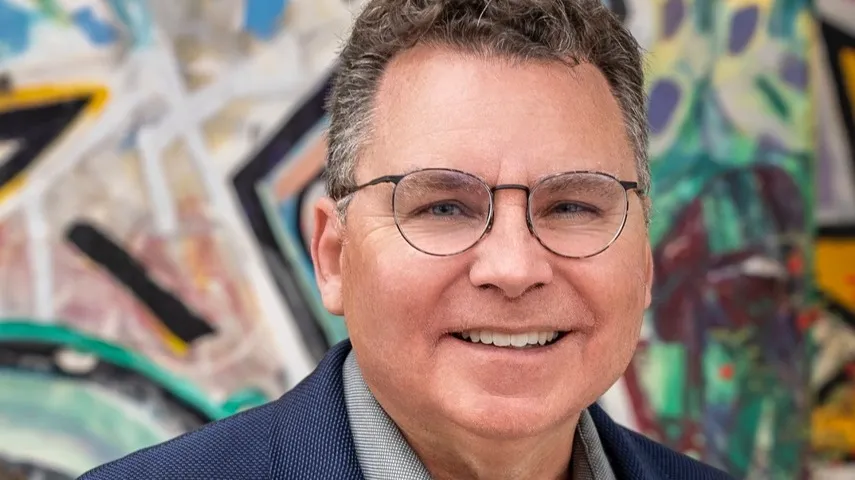
Richard Barrera, 59, the president of the San Diego Unified school board and a senior policy adviser for the state Department of Education, is running for California state superintendent of public instruction.
Read more Q&A: Meet Josh Newman, candidate for California state superintendent of public instruction
Originally from El Cajon, Barrera lives in San Diego and was first elected to the board of trustees of San Diego County’s largest school district in 2008. He is a Democrat; the job he is running for is considered nonpartisan.
The San Diego Union-Tribune emailed a series of questions to Barrera and other candidates to help inform voters about their positions, priorities and plans if elected.
Barrera said he did not use any AI tools in responding to the Union-Tribune’s questions.
1.) Why are you running, and what makes you the best candidate? (150 words max)
I am running because California needs a state education system that actually helps schools solve problems so that students can thrive. Districts are facing rising needs, difficulty keeping teachers and staff and uneven results, and the state can either add to that strain or help schools do their job well.
I have served on the San Diego Unified school board since 2008. During that time, we as San Diegans have expanded transitional kindergarten, grown bilingual education, strengthened mental health supports, created elected student board member positions and modernized campuses through voter-approved bonds. Today, San Diego Unified ranks No. 1 in both literacy and math on the “Nation’s Report Card.”
I also currently serve as senior policy adviser at the California Department of Education. That gives me experience both running a large local school system and helping translate state policy into something districts can actually use.
2.) What are the top 3 issues facing schools and students in San Diego County? (150 words max)
The first is keeping good teachers, counselors and school staff. High housing costs and competition for workers make that harder every year, and students feel it through turnover, larger classes and fewer supports.
The second is attendance and student well-being. Too many students are still missing too much school, and mental health needs show up every day in classrooms.
The third is making sure students graduate ready for what comes next. Families want strong academics, but they also want clear paths to college and careers, including career technical education, dual enrollment and counseling that helps students make a real plan. In San Diego, our students are prepared for success in college and career at rates a third higher than state averages.
These three issues are connected. Schools do better when they can keep strong staff, when students are showing up and when young people believe school is leading somewhere worthwhile.
3.) What are the first 3 things you would do in office if elected? (150 words max)
First, I would make the Department of Education more useful to districts by deploying teams to work in partnership with regional communities, focused on the problems schools most need help solving.
Second, I would expand statewide support for improving attendance, including earlier intervention, stronger family outreach and better tools for schools. I already lead this work at the California Department of Education and know what districts are asking for.
Third, I would focus on keeping teachers and school staff in the profession by strengthening training pipelines, and by helping districts follow our model in San Diego, where we are on track to provide thousands of affordable homes for our educators. Schools cannot improve if they cannot keep great educators in our communities.
4.) What experience do you have in the classroom and in other education roles, and how have your professional experiences prepared you for this role? (150 words max)
While I have taught courses at San Diego City College, my main experience is in school governance, labor leadership and state education leadership.
I have served on the San Diego Unified Board of Education for nearly 20 years, including multiple terms as board president, where I have worked on budgets, labor relationships, facilities, district policy and accountability for results.
I currently serve as senior policy adviser at the California Department of Education, helping districts carry out state priorities and solve problems in practice.
Earlier in my career, I was a labor organizer and later secretary-treasurer of the San Diego and Imperial Counties Labor Council. That background has taught me that school quality depends not just on policy, but on whether systems are well run and educators have the support they need.
5.) What input do you believe the state superintendent and department should have into classroom instruction in California schools? (150 words max)
The state should keep local control, but it should do a better job helping districts deliver strong instruction consistently. The superintendent’s role is not to micromanage lesson plans. It is to set clear standards, give districts useful guidance and help schools adopt approaches that work. In San Diego, we learned that improvement does not come from piling on new mandates. It comes from investing in educators, giving them time to work together and staying focused on what students need.
At the state level, I would push the California Department of Education to spend less time on paperwork and more time helping districts improve teaching and learning. The state also has to be firm about student rights. Access to programs and protections should not depend on where a student lives.
6.) How will you ensure access both to career and technical education and to higher education, including ensuring students who pursue career-oriented education now can attend college later in life? How will you ensure equitable opportunities for rural, suburban and urban students? (150 words max)
Students should graduate with options, and choosing a career pathway in high school should not close the door to college later. In San Diego, we expanded career pathways and college coursework because the real goal is for students to leave high school ready for college, a career or both. Statewide, I would strengthen career technical education tied to real credentials and apprenticeships, grow dual enrollment with community college courses where it makes sense and improve counseling so students understand how to keep their options open.
Read more Q&A: Meet Sonja Shaw, candidate for California state superintendent of public instruction
Equity also means rural and smaller districts cannot be left behind. The state can help by supporting regional partnerships among districts, community colleges and employers so students can access programs that one district could not build on its own. The superintendent should also make public where access is unequal and push resources where the gaps are greatest.
7.) In light of federal immigration crackdowns, funding cuts and rollbacks to civil rights protections and oversight, how can California better serve vulnerable student populations, including those who are immigrants, are LGBTQ+ and have disabilities? (150 words max)
California has to protect students in ways that are real at the school level. In San Diego Unified, we treat immigration enforcement as a student safety and trust issue. We train staff, protect student privacy and keep campuses focused on learning so families stay connected to schools. That should be the statewide standard.
For LGBTQ+ students, the state should insist on safe school climates and enforce nondiscrimination protections consistently. For students with disabilities, the law is clear: Services are not optional, and districts need both oversight and support to deliver them.
When the federal government threatens to withhold funding from our schools unless we abandon protections for students, I will challenge unlawful actions and make sure districts do not retreat out of fear. The state’s job is to make sure students are safe, included and able to learn.
8.) What role should technology play in the classroom? Where do you stand on screens in school, cell phone bans and the use of generative AI? Please be specific. (150 words max)
While we have made sure that students in San Diego have equitable access to technology that helps learning, we must approach any new technology by first focusing on protecting student safety and mental health. San Diego Unified has established phone-free school days because constant phone use hurts attention, classroom culture and student well-being. Clear rules also make it easier for teachers to teach and for students to focus.
For laptops and tablets, schools should be intentional. In early grades, time for reading, writing and direct interaction should be protected, with limited screen use. In later grades, devices can help, but they should not replace good teaching.
On generative AI, the state should set clear rules on student privacy, data security and transparency. Educators should help decide whether these tools belong in classrooms, and districts should use them only when safety guardrails are established and the tools clearly improve learning.
9.) School districts across San Diego County are struggling to improve attendance and reverse declines in enrollment. What should the state superintendent and department do to help? (150 words max)
Attendance is one of the fastest ways to improve learning, because students cannot benefit from instruction if they are not in school. At the California Department of Education, I lead a statewide working group that developed practical attendance guidance for districts and county offices. As superintendent, I would expand that work so schools have stronger tools for early intervention, family outreach, and student support.
Enrollment decline also requires earlier and more honest planning. The department should help districts build multi-year plans, avoid repeated emergency cuts and make changes in ways that protect high-need students.
Districts also need help winning families back. In San Diego, we have seen schools recover when districts invest in facilities and programs families want.
I also support moving from daily attendance-based funding to enrollment-based funding. Right now, districts lose money when attendance falls, which makes it harder to invest in the very strategies that bring students back.
10.) Independent reports have raised concerns about confusion and conflicts over who is ultimately accountable for education in California. In part to remedy this, Gov. Gavin Newsom has proposed reducing the power of the state superintendent by moving control of the Department of Education to within the governor’s office. Do you support this effort? Why or why not? How else can accountability at the state level be improved? (150 words max)
I do not support taking the Department of Education away from the elected superintendent. Californians choose the superintendent to provide independent statewide leadership on public education, and moving that authority into the governor’s office would weaken that accountability rather than strengthen it.
The real problem is not who announces the policy. It is whether the state is clear about responsibility and honest about results. Accountability would improve if California’s major education actors were aligned around a small set of public goals, if districts were given clearer expectations and if the public could see who is responsible for progress and where the system is falling short.
As the elected state superintendent, I will lead the effort to align state actors around a common set of goals, with transparent accountability. We do not need less democracy in education governance. We need clearer lines of responsibility and better follow-through.
11.) If the state superintendent role were changed before you took office, how would the changes affect your approach to the job? How would you continue to advocate for students? (150 words max)
If the role changed, my focus would stay the same: do everything possible to improve what students experience in school. I would use whatever authority remained, along with the public voice of the office, to push for clear priorities, honest reporting and stronger support for districts and families. If power were split across more agencies, I would work to make responsibility clearer, not let students get buried in bureaucratic confusion. I would keep bringing together educators, parents, students, county offices and state leaders around the basics: safer schools, better support for students and stronger results.
12.) What should the California Department of Education’s and the state superintendent’s role be in conducting oversight of districts and charter schools’ compliance with state laws? Do you think anything should change about the way the state conducts oversight?
The state’s job is to protect students, protect public funds and make sure districts and charter schools follow the law. That means clear expectations, prompt action when problems arise and support that helps schools fix problems before students are harmed.
For districts, the focus should be on issues that directly affect students, including civil rights, services for students with disabilities and financial stability.
For charter schools, public funding should come with clear obligations: honest reporting, lawful enrollment practices and full compliance with student protections.
When schools are not meeting those obligations, the state and authorizers should act quickly. What should change is that the state spends too much time on paperwork and not enough on early intervention and practical help.
Read more Q&A: Meet Rick Shea, candidate for San Diego County Board of Education in District 5