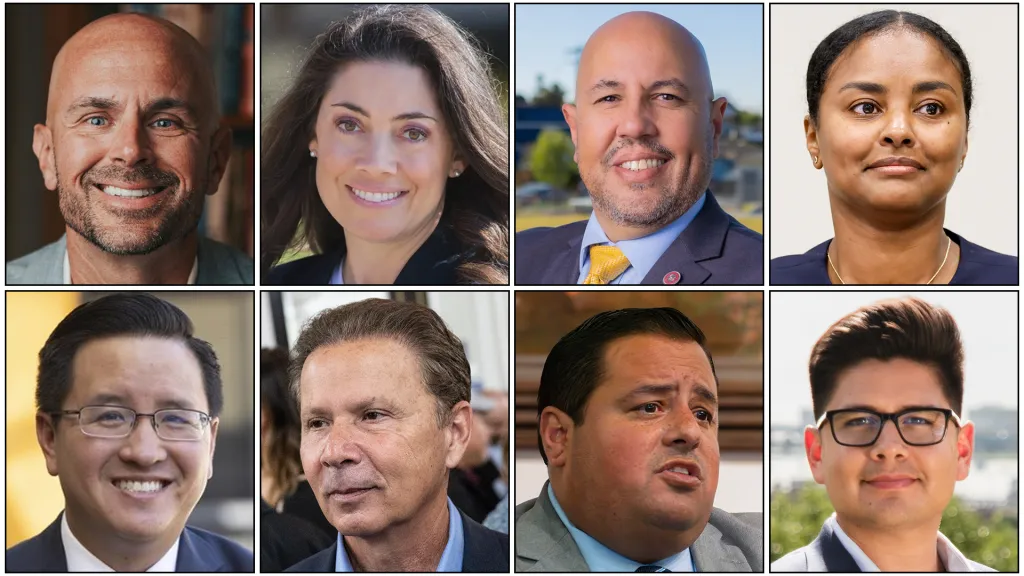





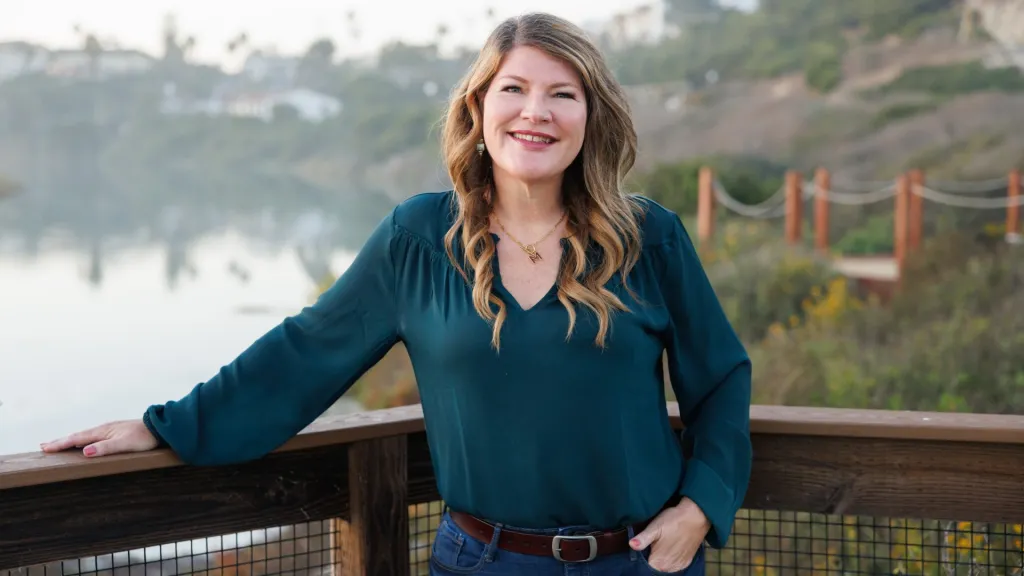
Tasha Boerner, 53, a Democrat and incumbent state Assembly member, is running for re-election to California’s 77th Assembly District representing San Diego County’s coastal communities from Carlsbad to Coronado.
Read more Q&A: Meet Antonio Salguero, candidate for California State Assembly District 78
Originally from Riverside, Boerner lives in Encinitas and is seeking her fifth term in the Assembly.
The San Diego Union-Tribune emailed a series of questions to Boerner and other candidates to help inform voters about their positions, priorities and plans if elected.
Boerner said she did not use any AI tools in responding to the Union-Tribune’s questions.
1) Why are you running, and what makes you the best candidate? (150 words max)
California is still where the future is being written. We are the largest economy in the United States, and San Diego is one of the most vibrant and dynamic regions in California. I go to work every day energized to improve the lives of the people I serve and to help shape the future of our communities, our state and our world. I want to ensure that the next generation of San Diegans has the same opportunities to change the world that previous generations have had. That’s why I’m focused on improving affordability, combating the climate crisis, investing in our public schools, creating good jobs and helping businesses thrive. My passion for our communities, experience and commitment to service make me the best candidate to serve in the State Assembly.
2) What are the top 3 issues facing this district? (150 words max)
- The cost of living. San Diego County shouldn’t be unaffordable for middle-class families. People are being squeezed with high prices for housing, transportation, groceries, insurance and utilities. That’s why I have requested audits and authored legislation to make utility companies improve transparency and reduce rates over the long term. I authored the Starter Home Revitalization Act to make homeownership more attainable for the average Californian, and I authored legislation aimed at providing more affordable home internet service.
- Public education. As a mom, there’s nothing more important than our children’s education. I will continue to advocate for funding for local schools from pre-K all the way through college, job training and universities. I serve on the Assembly’s Committee on Higher Education, and in that role, I am working to help train the next generation of talent through career technical education, applied degrees and university education.
- Our environment. The Trump administration has restarted new oil drilling off California’s coast, and anyone who remembers the large-scale oil spills of the 1960s or most recently in 2021 knows the problems they cause: irreparable damage to wildlife, ecosystems, fisheries and businesses. The climate crisis is already affecting our communities through coastal erosion, winter storms, wildfires and longer droughts. In 2020 I authored legislation to save San Onofre State Beach (Trestles) in perpetuity. In response to a tragic bluff collapse in Leucadia, I worked with Scripps Institution of Oceanography to develop an early warning notification system for bluff collapses to keep people safer at our beaches and protect our tourism economy. I am committed to transitioning to renewable energy and ensuring cleaner air and water for future generations.
3) What are the first 3 things you would do in office if elected? (150 words max)
Because I currently serve in office, I think it is most useful to list three things I’ve done. This term I introduced three bills that have become law:
- I wrote AB 87 to ensure that developers don’t exploit density bonus rules by building hotel projects while claiming exemptions for expanding our housing supply. This will help keep density bonus benefits tied to genuine residential housing, especially affordable housing.
- I wrote AB 1017 to require utility companies to disclose important data when requesting rate increases from the CA Public Utilities Commission. The goal is to give regulators and ratepayer advocates a better basis for scrutinizing utility rate increases.
- I wrote AB 1286 to improve our ethics rules and slow the revolving door between our regulatory agencies, lobbyists and private corporations. The law requires officials to disclose accepted future job arrangements on their Form 700, so conflicts of interest are easier to detect.
4) What should California do to solve its shortage of affordable housing and curb homelessness? Which existing efforts do you believe are working, and which aren’t? (150 words max)
California has to build more housing — apartments, starter homes, shelter beds, supportive housing and multifamily housing — while respecting the character of existing communities. I authored AB 803, the Starter Home Revitalization Act, which was signed into law, to make it easier to build smaller, affordable-by-design homes for first-time homebuyers on mid-range density lots. I also authored AB 87, now signed into law, to ensure density bonus rules are used for real residential housing and affordable housing, not hotel projects. I also wrote AB 812 to allow cities to set aside deed-restricted affordable housing for artists to grow and sustain the creative economy.
On homelessness, what works is moving people indoors quickly, then connecting them to permanent housing, mental health care, substance-use treatment and wraparound services. What is not working is treating homelessness as only a housing problem or only a public safety problem. It is a complex problem that requires sustained attention to all the causes, and our investments need accountability, urgency and local flexibility.
5) This district and its neighbors are vulnerable to climate change impacts like wildfires, rising seas and extreme heat, and to the health effects of climate-warming emissions. What should California do to improve climate resilience and reduce emissions and fire risk? (150 words max)
The climate crisis affects every Californian from the coast to the desert, but the effects are different depending on where you live. My focus is on crafting smart, effective legislation that combats the climate crisis and protects residents. In my first term in the Legislature, I was proud to author legislation to protect San Onofre State Park and Trestles Beach in perpetuity, finally ending a decades-long fight. As the chair of the Select Committee on Sea Level Rise & the California Economy, I also created the first-in-the-nation pilot to predict bluff collapses to keep residents and visitors safe on our beaches. I have advocated for strong clean-air policies, wildfire prevention and mitigation funding, addressing the Tijuana River sewage crisis and new investments in climate resilience infrastructure. Above all, we need to invest in clean, renewable energy production sources.
6) Laws enshrined in California’s Constitution that protect residents from tax increases have also painted local governments into a corner as they seek to fund basic services and have led to chronic underfunding of schools. What would you do about this? For instance, would you support changes to Proposition 13 to remove its protections for commercial properties? (150 words)
Read more One person dead in Bonsall pickup fire
I am open to new revenue sources for our schools, but I want to make sure taxes don’t fall disproportionately on working families. I’m leery of proposals to change Proposition 13 or systematically raise taxes on Californians. Families in San Diego County are already being squeezed by the high cost of living. I am focused on making sure existing dollars are being spent effectively and that corporations benefiting from our public education system are paying their fair share. I will continue supporting stable funding for schools and basic services while looking first for smarter budgeting and accountability.
7) In light of those constraints, along with federal funding cuts, how should California balance its budget and fund basic services? Where would you seek new revenues or savings? (150 words)
California should balance its budget the same way families do: protect essentials, make hard choices and demand value for every dollar spent. Federal cuts make it harder to accomplish our goals and deliver on our priorities. They also make accountability more important. I would look first for savings through audits, better oversight and consolidating duplicative programs. For new revenues, I would focus on targeted, fair approaches that do not worsen the affordability crisis for working families already struggling to stay in our region.
8) Speaking of spending, Californians consistently rank the cost of living as a big concern. Recent jumps in the costs of fuel, food and other goods — combined with federal cuts to safety-net programs, new limits on certain federal loans and more — are further squeezing residents who were already struggling. What relief would you seek to offer, and how? (150 words max)
We need to attack affordability from every angle. That means protecting safety-net programs, lowering housing, utility, health care, education and transportation costs and making sure relief reaches people who need help. Recent legislation I introduced is focused on reducing the cost of utilities, which are particularly high in San Diego County, as well as reducing the costs of housing and home internet service. I am going to continue to look for ways to relieve the financial pressure San Diegans are feeling.
9) President Trump has made cracking down on immigration a cornerstone of his administration, ordering widespread arrests and detentions of immigrants nationwide and directing military resources to a new military zone along the U.S.-Mexico border. What impact have these actions had on this district? What are your goals on immigrants, immigration and the border, and how would you pursue them in the Legislature? What is your message to constituents who are immigrants? (150 words max)
The Trump administration’s immigration policies are making people feel less safe in their own communities and undermining the foundation of our nation’s promise to the world: that we will be a safe haven for people fleeing violence, persecution and fear. We should have immigration laws and a process for coming to this country, but we should not be tearing apart families and persecuting law-abiding people trying to make a better life here. My message to constituents is to take care of each other and to let our immigrant friends and neighbors know that they are valued and important members of our community.
10) Health care costs for many Californians are rising — some because of new federal eligibility requirements, some because of Gov. Gavin Newsom’s moves to limit Medi-Cal coverage for some immigrants. How would you rein in costs? Would you vote to reverse the governor’s cuts to immigrant health care coverage? (100 words max)
Health insurance saves money for people and for the state. When people lose health insurance, they lose access to care and their costs for care rise. Our hospitals and health clinics end up providing emergency care for people with otherwise treatable conditions in non-emergency settings, costing the taxpayers more than health insurance would. We must help people get insured and stay insured. I introduced AB 2201, the Protecting Medi-Cal Coverage for Californians Act, to streamline Medi-Cal eligibility and reduce wrongful terminations. We should also expand prevention, primary care and mental health treatment, because it makes good moral and fiscal sense.
11) Among the many ballot measures being pursued by lawmakers and citizens for the November ballot are a handful that have drawn much attention and money. Should each of the below measures qualify for the November ballot, would you personally vote for measures that would do the following? (50 words max per measure)
— make ride-hail companies like Uber and Lyft liable for sexual assaults committed in cars?
— require voters to provide a government-issued ID each time they vote?
— levy a one-time 5% wealth tax on people with over $1 billion in assets?
— pass $10 billion in bonds to fund affordable housing development?
I am going to carefully evaluate the measures on my ballot, and I encourage every San Diegan to make their voice heard and vote!
Read more Chula Vista patrol car struck by suspected DUI driver