





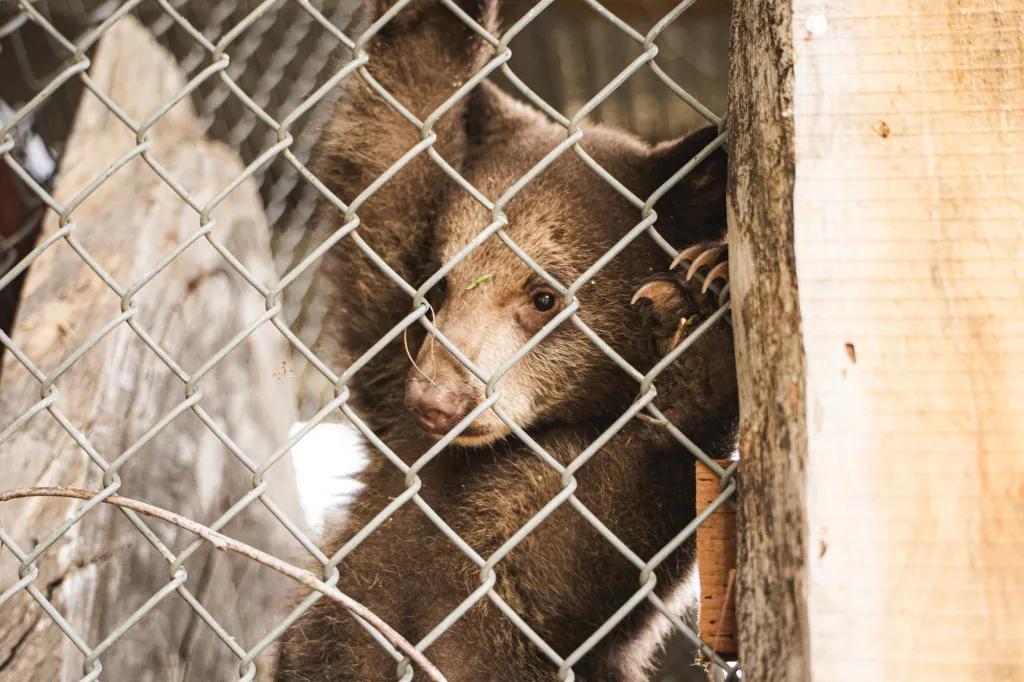
A pair of orphaned black bear cubs brought to the San Diego Humane Society have been moved to an outdoor habitat, marking a milestone in their rehabilitation.
Read more Border Patrol in San Diego arrests 2 Mexican fugitives accused of violent crimes
The specialized den for the brother cubs — who arrived at the Ramona Wildlife Center on March 15 — is filled with live-edge wood and plants that mimic a bear’s natural environment, officials said. The 4-month-old bears have also moved on from being spoon-fed formula to eating gruel and solid food.
“Moving outside is a big step,” said Autumn Welch, the organization’s wildlife operations manager. “The cubs are gaining confidence, exploring and learning the skills they’ll need to survive on their own.”
Two months ago, the cubs were brought to the center after they were found living with their mother in a Monrovia neighborhood. The elder bear had been involved in at least two public safety incidents in the last year and was euthanized by the California Department of Fish and Wildlife officers.
It resulted in demonstrations and public uproar in L.A. County, objecting to the killing of the mother.
Over the last two months, the Ramona Wildlife Center has been rehabilitating the cubs with hopes of moving them to an even larger habitat as they grow.
Read more San Diego police launches internal affairs investigation after Gaslamp Quarter melee
To keep the animals from familiarizing themselves too much with people, officials said they are limiting their human contact. When interactions are necessary for feeding, staff have been wearing bear masks and furs covered with natural scents.
Officials said their work is largely succeeding, as the bears are beginning to exhibit more natural behaviors common for bears in the wild.
“They love fruit and leaves from native plants,” organization spokesperson Nina Thompson said. “They eat three times a day and are increasingly feeding on their own as they grow stronger and more independent.”
The San Diego Humane Society Project Wildlife team said their goal is to continue the specialized care until the bears are fully acclimated to the wild and old enough to be released.
Read more Woman fatally hit by car while walking in La Mesa shopping center driveway