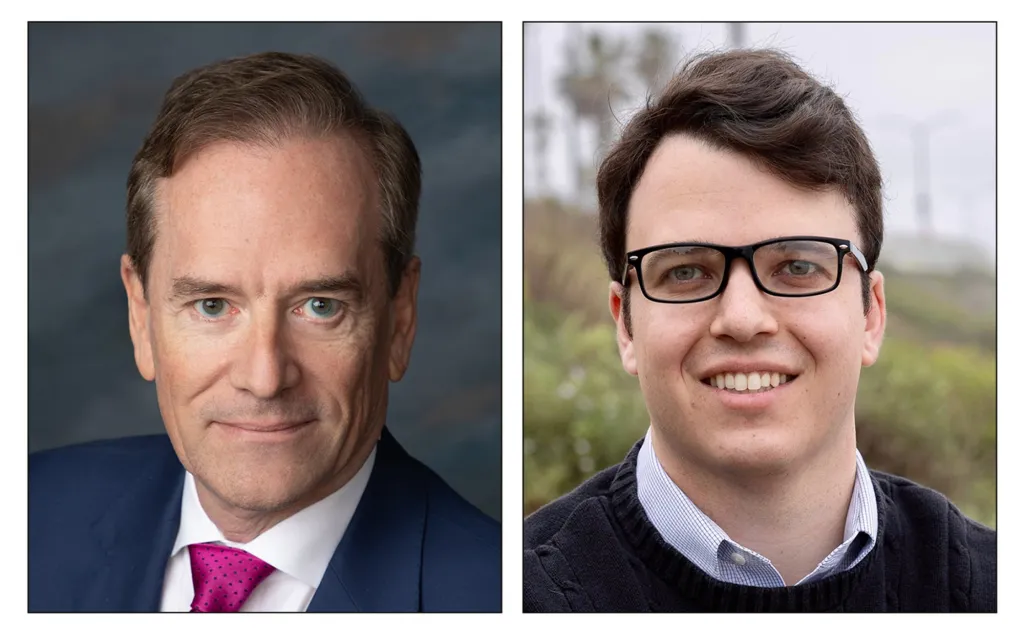









By the time California’s next superintendent of public instruction takes office early next year, the job could look very different. Until then, though, the 10 people running insist they’re committed to whatever it may look like — as they compete to make it past a crowded June 2 primary.
Read more 3 young people arrested in series of random shootings across Austin that left 4 injured
The race to become the next state superintendent features lawmakers past and present, union leaders, trustees on school boards and community college boards and others.
But among the likely frontrunners is a fixture of San Diego public schools — San Diego Unified board president Richard Barrera, known as a close ally of labor unions and a long-time fixture on the board of the state’s second-largest school district.
The other school board leader in the race is Sonja Shaw, the right-leaning president of the Chino Valley Unified board in San Bernardino County. Other leading candidates include a trio of current and former Democratic state lawmakers: Assemblymember Al Muratsuchi, former Assembly Speaker Anthony Rendon and former Sen. Josh Newman.
Those five candidates have raised the most money, state campaign disclosures show. Also running are community college trustee and union leader Nichelle Henderson, teacher and union leader Frank Lara, test-prep executive Gus Mattammal, teacher Ainye Long and school superintendent Wendy Castaneda Leal.
The race has proven as open as it is crowded. Early last month, weeks before primary ballots went out, a survey by the Public Policy Institute of California found no candidate was drawing more than 10% of voters’ support.
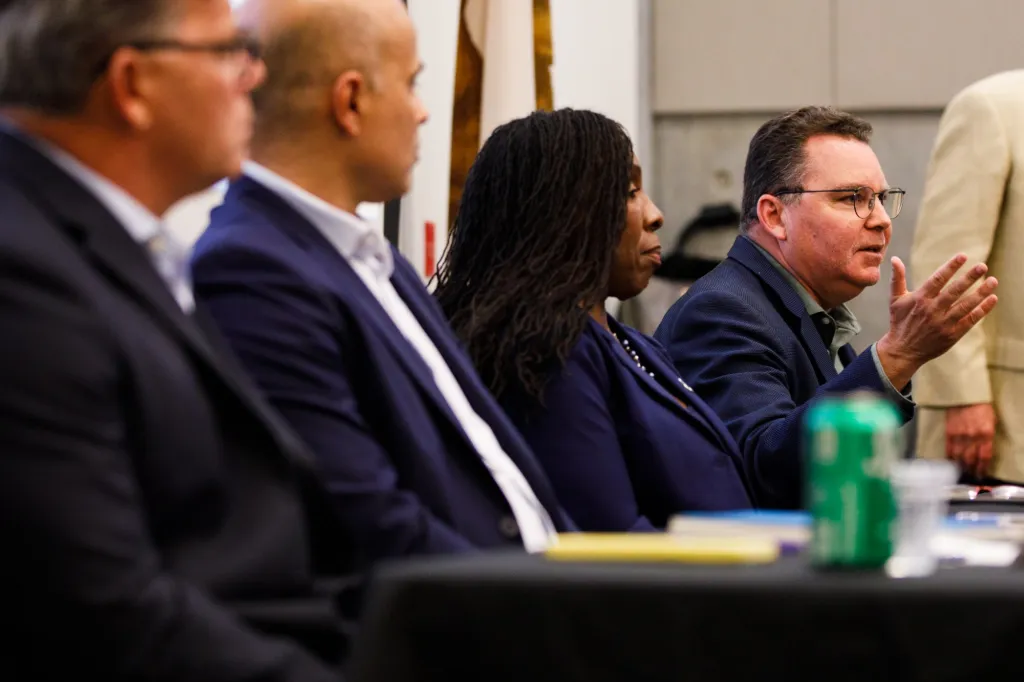
The San Diego Union-Tribune sought interviews with all 10 candidates and separately asked all of them a series of written questions about their policy positions, priorities and plans. They expressed a range of perspectives on issues like curriculum, oversight and absenteeism.
But they were unanimous in their opposition to major changes the governor has pitched to overhaul the role of the state superintendent, and to consolidate control of the state Department of Education within the governor’s office — stripping the elected job of much of its power.
“The worst part of this proposal is that it’s just taking away the rights of voters to make decisions,” Barrera said in a recent interview, reiterating a sentiment other candidates also shared. “It’s fundamentally undemocratic.”
Labor splits its support
The state superintendent race has invariably reflected the political power of educator unions.
Barrera secured one of the biggest endorsements earlier this year from the California Teachers Association, the state’s largest teachers union, with more than 300,000 members. Already, an independent expenditure committee backed by it has spent more than $3 million supporting him.
The San Diego Unified trustee was also endorsed by the state’s current superintendent, Tony Thurmond — also his current boss. Barrera is a senior policy adviser for the state Department of Education.
With his 18 years on San Diego Unified’s union-friendly board, Barrera’s local labor ties run deep. More than a decade ago, he also headed the San Diego and Imperial Counties Labor Council, the powerful umbrella group that represents the region’s unions.
Yet he hasn’t locked up all labor support. Muratsuchi snagged endorsements from the California Federation of Teachers — the state’s second largest teachers union, with more than 100,000 members — and the California School Employees Association.
Earlier this year, San Diego Unified’s deal on a contract with its teachers union caused consternation over possible cuts it was feared to have caused to non-teaching staff. (Layoffs were ultimately avoided.) The classified unions held a rally ahead of a March school board meeting — a rally Muratsuchi came down from Sacramento to join. The Assembly member denied that his appearance had anything to do with Barrera.
When he talks to students, Muratsuchi says, he hears about their social and emotional challenges, their fears around immigration enforcement, their desire for school to prepare them for college and careers and their concerns about social media and screen time.
He argues he has the field’s strongest record of delivering on public education, especially funding. The state’s local control funding formula, passed in his first term, steers more money to schools with more low-income, English-learner and foster students. “I want to continue to focus on closing these achievement gaps that are ultimately a reflection of opportunity gaps that our students face,” he said in an interview.
LGBTQ+ debates and Trump
Still, among most of the leading candidates, the state superintendent race has been fought on the margins, with distinctions drawn more on experience than policies. Candidates have been more likely to “yes-and” an opponent in a forum than they have been to fight. The exception is Shaw, who is endorsed by the California Republican Party and has made a name for herself with anti-transgender rhetoric and policies.
In Chino Valley, Shaw led the school board in banning Pride flags in classrooms and requiring schools to notify parents if they believe a student may be transgender. In response to a Union-Tribune questionnaire, she said one of the three top issues for California schools was the possibility of cisgender girls sharing locker rooms with transgender girls.
Shaw often points to her daughters, who are student athletes, to argue that transgender girls should not be allowed to play sports with cisgender girls. In an interview, she said her children had not competed against any transgender opponents but feels it’s only a matter of time.
“The ideology is legislated and embedded into the curriculum,” she said, tying it to low reading scores. She said the reason more California students aren’t reading at grade level is that schools aren’t focused on the “right things,” and she called her campaign a “movement” of parents, taxpayers and “people who have never really paid any attention to this.”
Other candidates have criticized her and expressed their support for LGBTQ+ students — Rendon perhaps most pointedly. At a forum last month, he said that, should he fail to advance past the primary, he would campaign for any of the others — Henderson, Barrera, Newman or Muratsuchi — to keep Shaw out of office.
Read more Arrest made in connection with small fires in Kearny Mesa and Birdland
In an interview, Rendon said he was prompted to run by President Donald Trump’s gutting of the U.S. Department of Education, a move he called “surreal” and “existential.” He thinks having served as Assembly speaker during Trump’s first term makes him best suited for the superintendent job. “We took him on very aggressively,” he said.
A performance push
Superintendent candidates have also focused on raising student achievement and combating absenteeism.
In recent test cycles, California has fallen in state rankings on the NAEP, known as the Nation’s Report Card. Several states in the South have shot upward on the list — a surge widely attributed to a focus on the science of reading, a body of research associated with literacy instruction focused on small letter sounds.
Meanwhile, since COVID-19 began to wane, concerns have persisted in schools about insufficient score recovery and absenteeism. Statewide, attendance has improved each year but remains slightly below pre-pandemic levels, according to the Legislative Analyst’s Office. Enrollment is down 7.8% from the 2016-17 school year.
Of all the education data the state tracks, Barrera believes the college and career indicator is the most important indicator on its education dashboard. It’s a metric he says they’ve focused on in San Diego Unified.
“Whether we’re trying to improve literacy and math, whether we’re trying to improve college and career readiness, whether we’re trying to improve student wellness, reduce chronic absenteeism — the way that I will approach the job is very much the way that you see improvement happen at the level of an individual school,” he said.
Newman thinks California is failing students due to a lack of systemic alignment and wants to focus on achievement in K-3 reading and math, civic education, career technical education and workforce preparedness. To him, the state agency has become too compliance-focused and passive, and not helpful enough to districts. “What we really need is a Department of Education that’s proactive, collaborative and supportive,” he said.
Gus Mattammal, the director of the Silicon Valley tutoring and test-prep company Advantage Testing, also criticizes the department, saying he’s most qualified to fix a system where he says low-income students in particular “are languishing.” He frequently stresses his plan to visit and shame districts that don’t require the science of reading to be taught.
Henderson wants to make standardized testing less high-stakes, in part by tracking metrics that show students’ mastery beforehand. “Reform the test so that it gives a really accurate depiction of where students are,” she said.
Castaneda Leal wants to get “back to the basics” of how math and reading are taught, with less emphasis on technology. Long says policymakers must consider how their decisions will affect all 58 counties and should “care about every child.” And Lara believes school districts need stronger direction from the state but also better investment in staffing. “You can’t implement any curriculum if you don’t have a stable workforce,” he said.
A change of job?
The California state superintendent oversees the California Department of Education and sets its vision — but that could change before the next person takes office.
Gov. Gavin Newsom has proposed putting the state’s top education leader under control of the governor’s office, making the elected superintendent — a post enshrined in California’s Constitution — more of an advocate and independent evaluator of state programs. In his 2026-27 budget proposal, he pitched the change as a way to unify the state Board of Education and Department of Education.
Every candidate who responded to the Union-Tribune’s questionnaire said they oppose the effort. “It is all about reshuffling deck chairs in Sacramento, and really nothing about improving student outcomes,” said Barrera.
California is one of a minority of states where voters directly elect their schools chief. Top state education officials are chosen in various ways, but in most states they’re appointed, either by a state board or by the governor.
“In some states, they don’t have a lot of power or authority to enact things that they might want to do,” explained Megan Hopkins, an education professor at UC San Diego. Like all the candidates, Hopkins opposes the plan. She thinks an appointed leader serving at the behest of the governor would do what the governor wants.
After the governor made his proposal, two San Diego lawmakers — Assemblymembers Darshana Patel and David Alvarez — amended it to steer more power over the state education apparatus to the Legislature, letting it appoint several members of the State Board of Education and requiring legislative approval of the new education commissioner.
The updated package passed the Assembly Monday by a vote of 45-4. Among the four “no” votes was Muratsuchi.
“These amendments strengthen the potential for a successful transition by requiring a concrete plan, and ensure a respectful balance of power through legislative appointments to the SBE and legislative confirmation of the Commissioner,” Patel said in a statement.
“That said, this is by no means a finished product. We remain committed to continued outreach with the education community,” she added.
Alvarez said the amendments aim to help the state superintendent serve as the best possible advocate for education. “The role is of a public servant, one way or the other,” he said.
To Hopkins, a successful superintendent will set and implement an equity-minded vision for the department, equip staff with the resources to see it through and both understand and build on prior successes. She also expects California’s education leaders to take on much of the responsibility of enforcing civil rights laws in schools, due to federal uncertainty.
Read more Volunteers attack invasive weeds as 9-day San Diego River Days ends
“I do think the (superintendent) election is important in that way,” she said.