








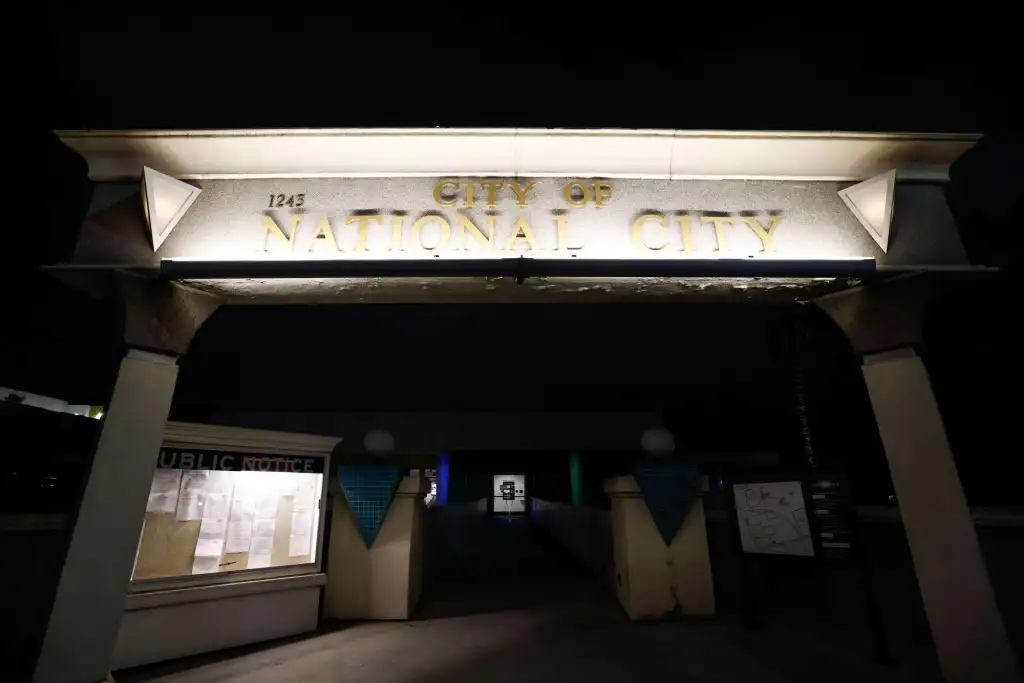
National City is poised to consider placing a business license tax reform measure before voters that would potentially generate roughly $7.5 million in new annual revenue as the city faces mounting budget challenges, a move nonetheless drawing significant opposition from the city’s business community.
Read more If the planet is unhealthy and out of balance, everything on it will be, too—including humans
The City Council is scheduled to hear the proposal, which would shift the city’s nearly 50-year-old tax structure to a gross receipts model, June 30.
The tax reform proposal, developed by consulting firm HdL Companies, would replace the city’s existing tiered flat-fee system with rates ranging from 0.1% to 0.3% of gross receipts for larger businesses, depending on industry category, and a $25 flat fee for small businesses. Revenue would flow into the general fund.
The city is facing serious fiscal pressure. A budget adopted this month carries a $12.7 million deficit, and the city’s unassigned fund balance — which stood at $23.4 million at the end of fiscal year 2025 — is projected to sit at approximately $500,000 by June 30, 2027. Personnel costs for police and fire, the city’s two largest expenditures, rose $7.2 million from the prior year due to negotiated labor agreements, pension liability increases and higher insurance premiums.
Without additional revenue, the city could be forced to cut services — including public safety, which accounts for more than 70% of National City’s general fund expenditures — according to the staff report, which also noted the city has brought in millions of dollars in state and federal matching funds to help maintain essential services.
Despite the city’s arguments, the proposal drew strong opposition earlier this month during a council meeting, with business owners, union representatives and trade association leaders packing the chamber.
Jennifer Ball, vice president of Ball Automotive Group and president of the Mile of Cars Association, called gross receipts an inadequate measure of financial health.
“A gross receipts tax is not an accurate measure of a business’s financial success,” she said. “Gross receipts reflect revenue, not profitability.”
Read more San Diego gas prices still high, but heading lower as July 4 weekend nears
Karen McManus, executive director of the National City Chamber of Commerce, warned that businesses could leave if a workable solution isn’t found.
“If a balanced solution cannot be found, some businesses may choose to invest elsewhere or leave National City altogether,” she said.
One voice of support during public comment came from Jeremy Day, president of the National City Firefighters union.
“The original budget that was proposed had a $16 million structural deficit. To put that in perspective, that is the entire fire department,” he said. “We must look at both sides of the ledger. We are doing our part in the city in reducing expenses and right-sizing services, but we also need the assistance of the public and businesses in order to properly fund the city.”
Karla Apalategui, president of the National City Municipal Employees, also backed the reform, arguing the “business license tax reform represents an opportunity to make large businesses pay their fair share based on their sales tax while having a very low impact on small businesses.”
Several speakers called on the council to form a business advisory group and give new City Manager Doug Schultz time to review the budget before proceeding.
Read more San Diego is shrinking late-night hours at 35 coastal parking lots to reduce crime