







On April 9, 2008, Vista resident Miranda Klassen, then 32, went into labor expecting what she and her husband, Bryce, hoped would be a joyful day.
Read more Police investigating after injured man dies
Everything went smoothly until Miranda suddenly suffered an amniotic fluid embolism, a pregnancy complication that occurs when amniotic fluid enters the mother’s bloodstream and triggers an allergic-like reaction.
“The first phase of AFE is cardio-respiratory collapse, where your heart and lungs stop,” Klassen explained. “If you live through that, the next phase is massive hemorrhaging. Your blood cannot coagulate and you bleed from every orifice.”
Fatality estimates for AFE in 2008 were reported as high as 80 percent among mothers and 65 percent among infants.
For women who survive, long-term effects can range from minimal to severe from lack of oxygen, organ damage, cardiac arrest, bleeding and emotional impacts.
Klassen credits her medical team at Scripps hospital for quick actions that saved her and her baby.
“I was fortunate my medical team had some awareness of AFE and that my body responded to the treatment,” she said.
They quickly delivered her son by Caesarean section. Today, at 18, he’s preparing to leave for college.
As for Klassen, doctors opened her airways, provided aggressive cardiac support through transfusions, and placed her in a medically-induced coma while machines assisted her breathing.
Afterward, she underwent therapy for physical and emotional effects, some of which continue today.
Wanting to understand what happened, she asked basic questions about AFE. Even specialists could provide few answers. She searched libraries and medical literature but found little information that would help understand the condition.
She learned that AFE occurs in approximately 1 of 40,000 pregnancies, has no known risk factors, cannot be detected through testing, and is not preventable. In 2008, few medical providers received training on the condition, and it was mentioned only briefly in some medical textbooks.
She also learned about women and infants who had died from AFE. Determined to learn more, she made contact with families.
“Women were dying in the 21st century during childbirth from a condition that’s been known [since 1926], and few people knew much about it,” she said.
“The only way I could reconcile that I survived when so many others didn’t is that I had to be part of a solution.”
Read more Supreme Court declines to halt $800-a-day fine for ex-Fox News reporter refusing to divulge sources
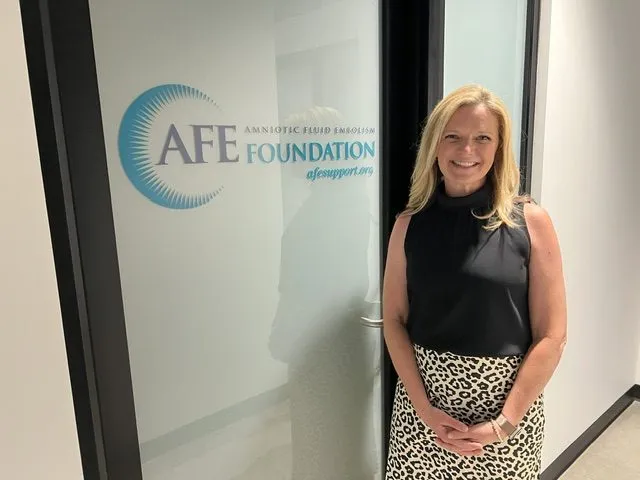
Three months after leaving the hospital, she founded the AFE Foundation (afesupport.org) in July 2008 to promote awareness, education, and research. She had no prior experience in medicine or science.
However, she was determined. While working full-time as a bank vice president, she spent the next seven years devoting evenings and weekends conferring with physicians, researchers and affected families.
In 2015, she left her 20-year, six-figure banking career to lead the foundation full time. She described the transition as “making minimum wage and loving every minute of it.”
Since then, the foundation has earned recognition as the world’s only organization dedicated to AFE. It maintains an AFE Registry and victim database, employs scientists and funds research conducted at a laboratory it maintains in Texas.
Klassen has presented at hundreds of conferences and working groups, co-authored 13 publications, and served on 11 boards of directors. She has also authored AFE content for inclusion in medical textbooks.
Her work has been recognized in the medical field, and in 2016 People magazine named her an “American Hero.”
Most importantly, since 2008 estimated fatality rates for mothers diagnosed with AFE and their infants have been reduced by over 25%.
“We had something to do with that through awareness in the medical profession,” she said
In addition to raising awareness, Klassen continues to meet and develop relationships with families and survivors.
“I bring information, comfort and a lot of validation of their experiences,” she said. “And I shed tears with them.”
Recalling being present when a mother died, Klassen said, “I cried. It was one of the most profound moments of my life.”
Her ultimate goal is AFE avoidance. She hopes the research sponsored by the foundation and others will ultimately develop reliable testing and prevention.
About this series
Goldsmith is a Union-Tribune contributing columnist.
We welcome reader suggestions of people who have done something extraordinary or otherwise educational, inspiring or interesting and who have not received much previous media. Please send suggestions to Jan Goldsmith at [email protected]
Read more A grand jury indicts Louisiana’s attorney general in a fight over changes to the local courts