






From Borrego Springs to Julian, the recent surge of short-term rentals in pockets of unincorporated San Diego County is not only reshaping the housing market, it’s reshaping a way of life.
Read more Carlsbad asks Coastal Commission to tighten land uses near Palomar airport
In the last five years, residents point to a concerning trend they say is pushing out long-time residents as property owners seek a greater return on their investments by converting single-family residential properties into money-generating engines for paying tourists. With few checks and balances.
While cities have their own rules for short-term rentals, the county is responsible for overseeing rentals in unincorporated areas and it has no specific regulations aside from the required occupancy tax and certification.
But locals are pushing back, searching for sensible regulations that preserve both their communities and their local economies. A local community group in Julian is leading the charge.
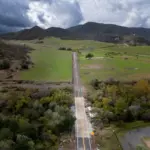
The historic mountain town is a popular destination for winter snow and apple pies.
Bill Everett has called the unincorporated community home for over 25 years. In recent years, he said a noticeable lack of housing has shifted the town’s character and squeezed out full-term residents.
“Everyone loves Julian, but I’m not sure they’re even aware that these changes are happening and the impact it’s having on the character of the community,” Everett said.
Short-term rentals have practically eliminated housing options while simultaneously increasing the cost of living for locals, he said.
That shift is what prompted the Julian Community Planning Group — of which Everett is vice chair — to ask the county for further regulations on short-term rentals.
Other municipalities have stricter requirements, such as public nuisance standards and fire code compliance.
Unincorporated areas lack their own local government, so local planning groups act as advisory panels that make recommendations to county officials.
“We understand that short-term rentals can bring visitors and income,” the group wrote in a letter to the Board of Supervisors earlier this year “This is not about ending tourism. It’s about balance. Rural communities need reasonable limits, clear rules about occupancy, someone local who can respond quickly when there is an issue and enforcement that will work with increased population.”
Julian residents have been highlighting the problem for more than five years, Everett said, and members of the town’s planning group have sent letters to the county requesting mitigating measures.
Their persistent advocacy is what brought attention to the issue in other tourism-based towns across the county, Borrego Springs Community Sponsor Group Chair John Peterson said.
Operators of short-term rentals in unincorporated areas of the county are required to pay a transient occupancy tax (TOT) of 8% of the total rent/fee. This applies to hotels, motels, individual rentals listed on sites like AirBnB or VRBO and other spaces rented out for 30 days or less.
Julian is missing out on a significant amount of tax revenue because owners of vacation rentals aren’t registering or filing their taxes, primarily because they are expected to self-report, Everett said.
Records show transient occupancy tax collection doubled in Julian over the past decade. During fiscal year 2015-2016, the county collected about $250,000 in total TOT revenue from Julian operators. By fiscal year 2025-2026, that number increased to about $533,000, showing a significant increase in short-term rentals in the mountain town.
Everett said it’s his guess that there are hundreds of operators that haven’t registered.
That created a lack of available and affordable housing and pushed out fourth- and fifth-generation Julian families, Everett said.
Julian has 161 registered and 42 unregistered short-term rentals, according to county tax records for fiscal year 2025-26. In 2023, the town had just 86 registered short-term rentals, records show.
The issue is not new to county officials, who said unregistered short-term rentals are costing the county around $10 million a year in unrealized revenue.
The county tax collector’s office began cracking down on unpaid transient occupancy taxes two years ago. County officials are still working to bring roughly 700 properties into compliance.
Read more Escondido Public Library’s $10+ million renovation finished, library getting ready to open
“We’ve been cheated out of revenue because the county isn’t bothering to collect it or do anything to increase enforcement,” Everett said. “I’m not seeing anything on the horizon that looks like change will happen anytime soon and I think it’s tragic.”
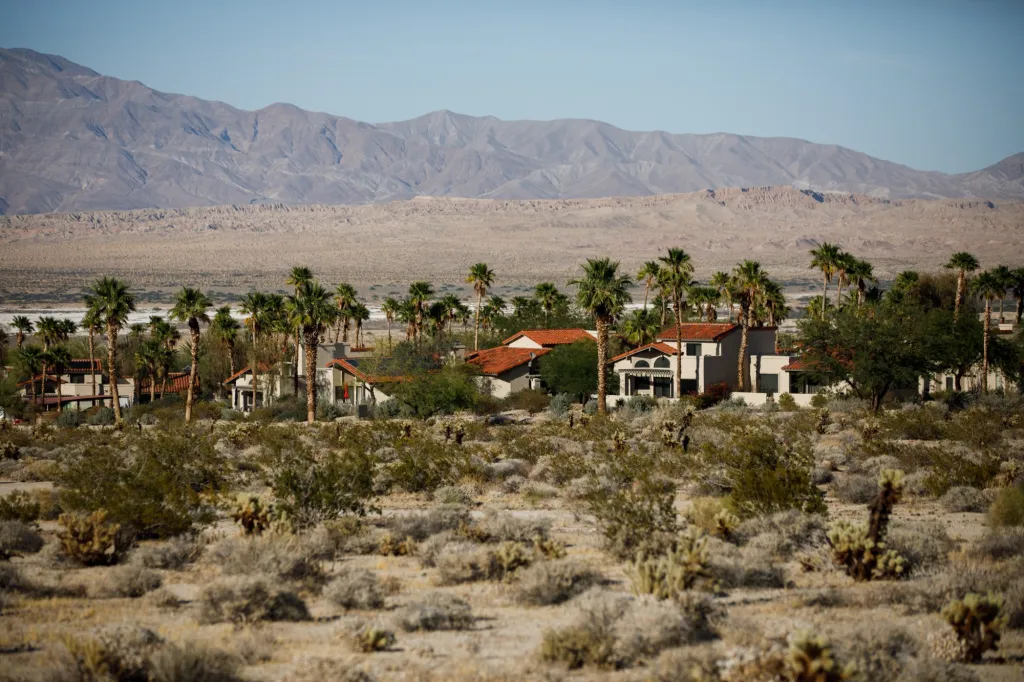
In Borrego Springs in Anza-Borrego Desert State Park, the long-term effects of unchecked short-term rentals have taken a heavy toll, particularly on full-time residents working essential jobs — such as teachers and firefighters.
Home to around 3,000 full-time residents, the tourist town had 151 registered and 31 unregistered short-term rentals, as of April tax records. That number is challenged by officials of the local sponsor group, who argue hundreds of additional short-term rentals have not filed for business licenses.
Annual records show the desert town has also seen a significant rise in short-term rentals in the last decade, according to tax records. In fiscal year 2015-2016, the county collected about $561,000 in transient occupancy taxes from Borrego Springs. By fiscal year 2025-2026, that number rose to about $800,000.
Victoria Baay is the principal of both Borrego Springs High School and Borrego Springs Middle School. She started working for the school district over 11 years ago and spent her first two years commuting to Borrego Springs from the Escondido area. Her family eventually purchased a home and became full-time Borrego Springs residents nearly a decade ago, a reality she said is now all but impossible for other families.
While a near-two-hour commute each way might shock outsiders, it has become a daily reality for many teachers and essential workers in town.
Many teachers in Borrego Springs commute from such cities as San Marcos, El Centro and Calexico, Baay said. Others have opted to stay on their friend’s couch during the week to avoid driving back and forth, she said.
“On one hand, short-term rentals are great for families as an extra source of income, but the struggle for renters is real,” Baay said. “When houses do go on the market, the majority of them were being turned into AirBnBs so our local families weren’t having a shot at buying them.”
With many unable to afford housing on a teacher’s salary, she said high turnover is an issue for their district.
As families continue to move away from Borrego Springs due to the lack of available housing, Baay said enrollment at their preschool has dropped to just eight students. In the last five years, the town has changed from an affordable place for young families to buy homes to one they are being priced out of, she said.
Gary Hayes lives in unincorporated El Cajon, about 100 yards from city limits. He said his longstanding dispute with a neighboring short-term rental is unique because his house is in “a no-man’s land,” neither within city limits or a small town.
His family shares an easement with a neighboring property that is operated as a short-term rental, primarily to host parties of 10 people or more.
He recounted instances where guests of the rental got into fights on the driveway, which is shared between the two properties.
“I’ve had my truck puked on and peed on, not by dogs, but by people,” Hayes said. “I’ve had people stumbling around in their underwear at like two in the morning in the driveway.”
While he isn’t against short-term rentals as a whole, Hayes said the county’s lack of oversight in unincorporated areas has made it difficult to have complaints addressed.
“We’re on the back burner,” he said.
If a short-term rental property is in an unincorporated area, noise and disturbance complaints are directed to the San Diego County Sheriff’s Office.
“By current San Diego county law, they’re actually considered transient,” Hayes said. “All the officers are going to do is ask them to quiet down, and as long as they don’t find anything else while they’re here, they’re just going to leave.”
A cap on occupancy is one solution Hayes proposed to ease disturbances. But he said accountability for short-term rental hosts is most important.
Members of the Julian planning group proposed “reasonable limits” on short-term rentals, including clear rules on occupancy, increased enforcement and “someone local who can respond quickly when there’s an issue.” In Borrego Springs, the planning group suggested a cap on short-term rentals according to a defined percentage of available housing.
County Supervisor Joel Anderson represents dozens of unincorporated communities in rural East County, including Julian. He said his office is actively surveying residents to further understand their stance on short-term rental regulations.
“County regulations/ordinances don’t just regulate one community; it must be the entire unincorporated area and respective communities,” Anderson said in a statement. “We have to balance the needs of all communities when considering proposals.”
Read more A creepy Easter bunny, a missing head, and an exploration of memory in this solo art exhibition