During roll call in the fourth grade, the substitute teacher stopped reading names, and JoAnn Fields and the rest of her classmates knew why.
Read more Apple files lawsuit accusing ChatGPT maker OpenAI of stealing trade secrets
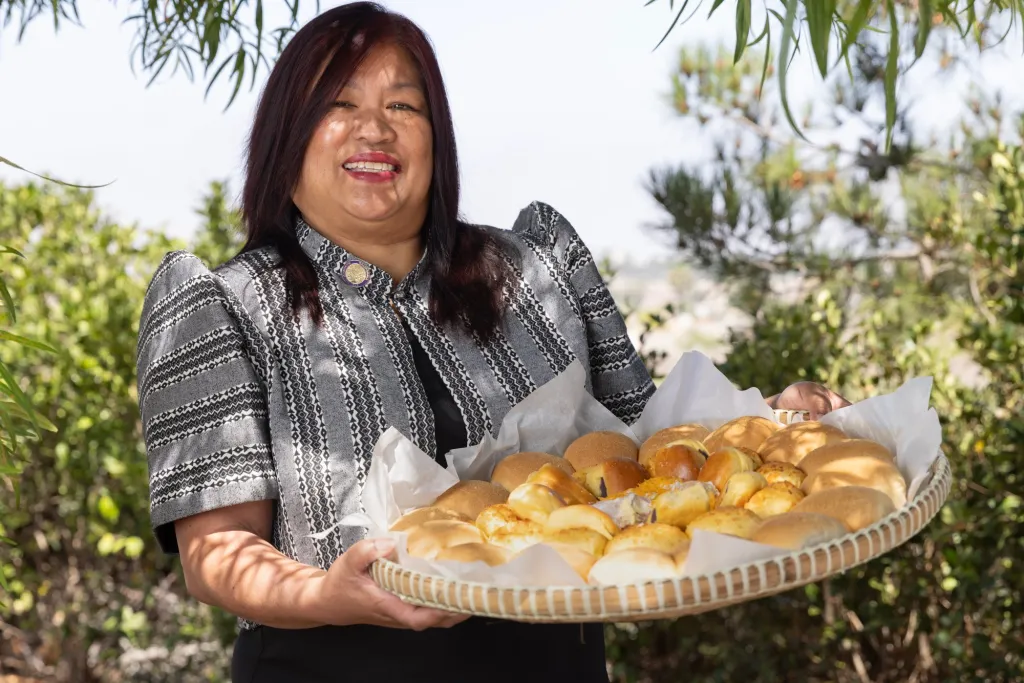
“The whole class knew it was because she couldn’t pronounce my name. Everyone in the class said in unison, ‘Marivic Lagula!’ And she turned around and said, ‘Well, it’s not my fault she doesn’t have a normal, American name.’ That made me angry,” said Fields, who began using her middle name, JoAnn. “I struggle with it at times because, damn it, I conformed. I conformed because I wanted to be a normal American. I didn’t think it was fair, but now, that’s why I want to create teachable moments and show that we are American, we helped build America. … I’m redirecting that energy into something positive.”
She founded the local Filipino American Friendship Festival in 2021, commemorating the signing of the Treaty of Manila in 1946, that established the independence of the Philippines. Presented by the API Initiative, an organization that promotes and advocates for Asian American, Native Hawaiian, and Pacific Islander communities, this year’s free festival is from 11 a.m. to 6 p.m. July 18 at NTC Park in Liberty Station in Point Loma. It features more than 100 vendors, food, cultural presentations, dance performances, singers, musicians, and a lumpia eating contest.
Fields, 54, is the government and public relations director for the API Initiative, and has previously worked for elected officials in various forms of government, and currently works as a consultant. She lives in Chula Vista, has four adult children and five grandchildren, and took some time to talk about her own desire to learn about her culture and history, and to share that history with her children, her friends, and with her broader community.
Tell us about this festival.
It is an opportunity to share our contributions in history. Many people do not realize that the Philippines was once a territory of the United States. We were colonized by the U.S., and on July 4, 1946, the Treaty of Manila was signed, and that signified when the United States relinquished sovereignty over the Philippines and we became our own self-governing country. As adults, when are you going to learn that? They’re definitely not teaching that in school, and the diplomatic initiative that came after that is Philippine American Friendship Day, so that gives us an opportunity to teach our history, and to keep a positive relationship in the community. We don’t want to lecture about this, we want to celebrate. If you know anything about the Filipino community, we like to party, we like to eat, we like to dance. Some of us like to karaoke; I say “some” because I’m an anomaly and I don’t sing karaoke, but everybody else I know does. This gives us a fun way to, again, share our history, our culture. It gives us an opportunity to remind folks that we’re neighbors — we eat together at restaurants, we might worship together at church, we can dance together.
I’m really involved in a lot of different community groups, and I’m full Filipino (and) I have kids that are mixed. They’re Filipino and African American, so what do I teach them when this is not being taught in school? I want to learn about my community, and I want my kids to learn that part of their culture, so that was part of the inspiration for this event. We need to celebrate ourselves. We don’t need to wait for a curriculum to be approved to teach people about the Treaty of Manila, I know it to be true. This friendship day, it’s a reminder that we are all San Diegans. I have a sincere belief we all want to live in a safe neighborhood, we want to be successful in school. If you hate, if there is racism, it’s because you don’t know the connection. If you don’t know what to be proud of, if you don’t know who your neighbors are, if you don’t know your kids’ classmates, how would you know? So, this event can contribute real unity in our community because we’re teaching and sharing our contributions. It’s promoting our visibility, promoting our contributions, so when something happens—good, bad, challenging, or indifferent—you won’t forget us because you’ve seen us at this festival.
What I love about Chula Vista…
I love the South Bay, I was raised in the South Bay. We’re by everything that I need. I have my markets that I’m close to; I love the ambiance when I drive to the water, or I stay at the Gaylord; the farmers’ market at Otay Ranch Mall. I really love how Chula Vista reflects the whole region and it’s a mix of Filipinos, African Americans, Latinos, Caucasian. It’s a mix of cultures and I love that about Chula Vista.
Why is it important to you to recognize and celebrate this day?
It’s important to me because it is the 80th anniversary. When we celebrate the signing, it shows me how resilient the Philippines is because the United States tried to govern us. Spain, for hundreds of years, tried to govern us. The Japanese were trying to come in and take over, and they all did not succeed. To me, that’s something to be proud of, but if you don’t know it happened, how would you know to celebrate that? It points to the history of us becoming a territory after the Spanish-American War in 1898. Everything is tied to this one event, and once we share this history, it makes sense why there was the Tydings-McDuffie Act of 1934 (which established Philippine independence to take effect on July 4, 1946, after a 10-year transitional period had taken place), why there were only 50 Filipinos allowed to migrate to the United States each year (according to Immigration History, a project of the Immigration and Ethnic History Society, changed the status of citizens of the Philippines to that of “aliens,” restricting immigration to the U.S. to 50 people per year). So, again, celebrating this is important because it signifies how resilient the Philippines and Filipinos are because so many people tried to govern us and take over.
What can people expect if they attend the festival this year?
We have a new addition this year because it is friendship and relationship building, so there are African American line dancers, salsa and bachata with a Latino dance group, we have a band that sings in different languages. This is what it looks like when we celebrate together, regardless if you’re Filipino or not. This is how we can live in harmony. We don’t have to speak the same language, we can dance together to the same beat, and I’m really excited about that part where we’re inviting the whole public to come celebrate with us.
What do you hope people in the Filipino community get from the experience?
To be proud. Be proud of your culture, be proud of your opportunity to use your voice. Growing up, my parents were really involved in the community and I was volunteered to attend meetings. I didn’t want to go to all those meetings, but guess what? Those are the relationships that helped build me up, but also got me into politics and being successful in it (working for elected officials in Congress, the state assembly, city council). I want people to feel confident that we can advocate for everything because, many times, we’re trying to be submissive, or not take a leadership role. You don’t have to be the chief nursing officer, but we do have one at Paradise Valley Hospital, Gemma Rama-Banaag, and I want to promote that. I want to promote that if you see it, you can be it. We can play professional tennis at Wimbledon, like Alex Eala. There’s a documentary about a family that was raised in National City; kids in the Redondo family were professional tennis players that played in Wimbledon (their story is the subject of a documentary, “Love All”). Walter Redondo is also an amazing artist and sells artwork from his gallery. I want kids to see that you don’t have to be a nurse or an engineer; you can be a creative and make it. My dad wanted me to be a nurse, but I didn’t want to. A lot of our kids go through that, so this is another teachable moment for our community, to see success in different careers.
What is the best advice you’ve ever received?
The best advice is from my mom and it’s simply to be happy. Don’t get mad at what didn’t happen, the goal is the pursuit of happiness—be happy, do what makes you happy. I think that’s the best advice because that’s what I do. I’m passionate about sharing our culture, our history. I’m passionate about advocacy, and that’s what makes me happy. So, I learned that from my mom.
What is one thing people would be surprised to find out about you?
I like a variety of music, and I really do enjoy gospel. She’s probably not your traditional gospel artist, but Koryn Hawthorne? I really love her music, I really identify with her lyrics.
Please describe your ideal San Diego weekend.
If I had a magic wand, I would have my grandkids, my family, all together. We would be having a barbecue at one of our parks around the port, and then a fire pit at night. I really like being by the water and I love being with my kids, and my grandkids, especially. When my kids were younger, I remember times when they would break out their ukuleles and just have jam sessions with their friends, and we would be over on Mission Bay at one of the fire pits by the Bali Hai, and just enjoy one another.
Read more Meta’s new AI image generation tool raises alarm in Hollywood and on Instagram