

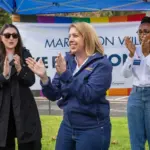



At her retirement party in February, after 35 years as a San Diego Superior Court judge, Joan Weber asked Tony Hicks to stand up. She shared with her guests how he inspired her and how she felt pride in the man he’d become.
Read more US military will be out of Iraq by end of September, Iraqi prime minister and Pentagon say
The two were unlikely friends. Thirty years ago, Weber had sentenced Hicks to a mandatory 25 years to life in prison after he was charged with murder at the age of 14 — the youngest person charged in California as an adult at that time.
But years later, Weber helped advocate for Hicks’ release on parole. While in prison, Hicks forged a path of redemption, working with the family of the man he killed to help educate students about accountability, compassion and forgiveness. The bond created between Hicks and the victim’s family was something she’d never seen before.
After Weber’s speech about Hicks at the retirement party, he asked to take a photo with her.
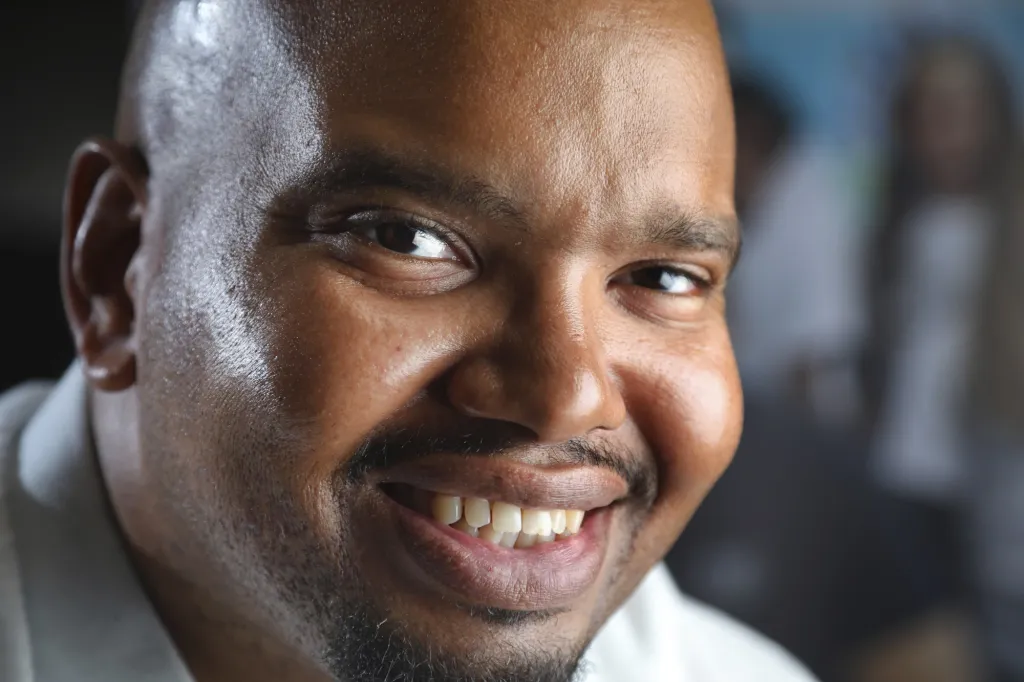
It’s an image that’s been hard for her to look at since Hicks died suddenly last week in New Orleans, while attending a restorative justice conference there. He was 45. The cause of death was not immediately known.
“It makes me so sad to think that he was taken from this world at 45 years of age, where he would have saved so many more lives,” Weber said.
“What he taught me is that you should never judge a person by the worst day in their life,” she added. “It’s an important thing for a judge to recognize that.”
From the moment Weber met Hicks in her courtroom, she knew he and his case would have a profound impact on her life.
On Jan. 21, 1995, Hicks, then an eighth-grader known as “Bone” to his fellow gang members, shot and killed a pizza delivery driver — 20-year-old San Diego State University student Tariq Khamisa — during an attempted robbery in North Park.
Hicks was 14 at the time and pleaded guilty at 15. At 16, he was sent to Folsom State Prison, where he would remain for 24 years.
In 2019 — the same year Hicks earned parole — state law was changed to prevent any one under 16 from being charged as an adult for any crime.
But Hicks’ release from prison was prompted by the forgiveness of Azim Khamisa — the father of the man he killed in 1995.
“When I found out that Tariq had been shot and killed, I had an out-of-body experience, because the pain was so excruciating,” Khamisa told The San Diego Union-Tribune last year. “And I believe I went into the loving embrace of God, and when the explosion subsided, I came back to my body with the wisdom that there are victims at both ends of the gun.”
Just nine months after Hicks was sentenced, Khamisa formed the Tariq Khamisa Foundation, a nonprofit that works to end youth violence through restorative workshops, trainings and extracurricular clubs. It was founded with Ples Felix, Hicks’ grandfather who largely raised him.
The foundation has connected with more than 600,000 young people across the country. While in prison, Hicks wrote a blog for it and shared his story with students through videos and answered their questions.
In November 2018, Hicks was granted release on parole. Khamisa and his daughter, Tasreen, spoke on behalf of Hicks, and he received letters of support from a former district attorney and Judge Joan Weber.
“I understand how much of a blessing it is to have ‘support’ in your life and I can speak directly to how the support I received, at times when I did not feel like I deserved it at all, kept me from slipping into the abyss of apathy and negativity that prison can be and from completely losing myself to my shame and anger or being swallowed up by my environment,” Hicks wrote on the foundation’s blog.
Khamisa says Hicks’ transformation was remarkable.
“The way he’s bounced back is in itself a miracle,” he said. “He was considerate, kind and a good person … and helped many young people not to go astray.”
Hicks was born on Sept. 22, 1980. His mother, Loeta Kizzee, was 15 at the time, and she raised him as a single mother in South Los Angeles. Gang violence was ever-present; three of his cousins were killed by gangland crossfire.
At 9, Hicks moved to San Diego to live with his grandfather, a Vietnam veteran. He was jumped into a gang at 13.
For Tasreen Khamisa, now the executive director of the Tariq Khamisa Foundation, it was difficult to forgive Hicks for her brother’s murder. Her father met Hicks in prison five years after the murder. It took 20 years for her to do so.
Still, she felt deep empathy for him, since he was so young. After first communicating by letter, they eventually met in prison, where he hugged her, lifting her off the ground.
They spoke that day for seven hours. “I definitely didn’t feel anything but warmth and comfort in his presence,” she said.
Over the years, they developed a friendship as she supported his release from prison.
“I felt like this was my soul brother,” she said. “My love and care for him has just grown over the years, and he truly is a part of our family.”
Tasreen says Hicks loved to read, plowing through five books a month while in prison and continuing as an avid reader post-release. He was a huge Trekkie — he loved “Star Trek” — and a Dodgers fan.
He was excited about the future, too, she says. After previously working as a plumber, Hicks had recently begun at the foundation as a community impact facilitator, a role that saw him lead trainings and participate in community engagement. He was also playing a role in the strategic plan for the nonprofit’s next three years.
Hicks found his passion and purpose helping children through the foundation, Azim Khamisa says. Today, he finds solace in believing his son Tariq and Hicks can both keep supporting its work — now from the other side.
Read more Trump will speak on elections in primetime address after pushing debunked conspiracies
“I know they are together,” he said. “They are walking hand in hand.”
Among Hicks’ survivors are his mother, grandfather and several siblings.