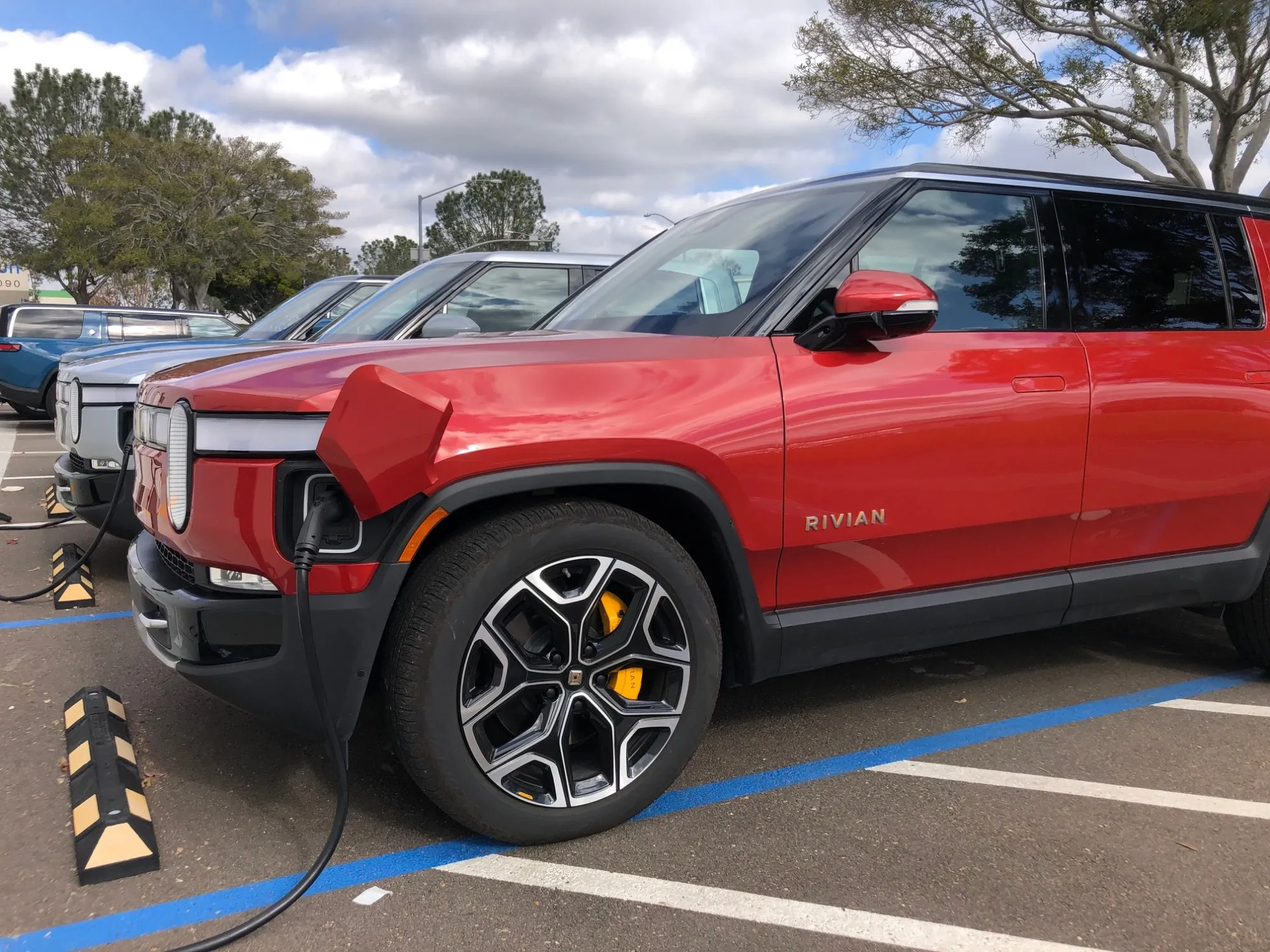





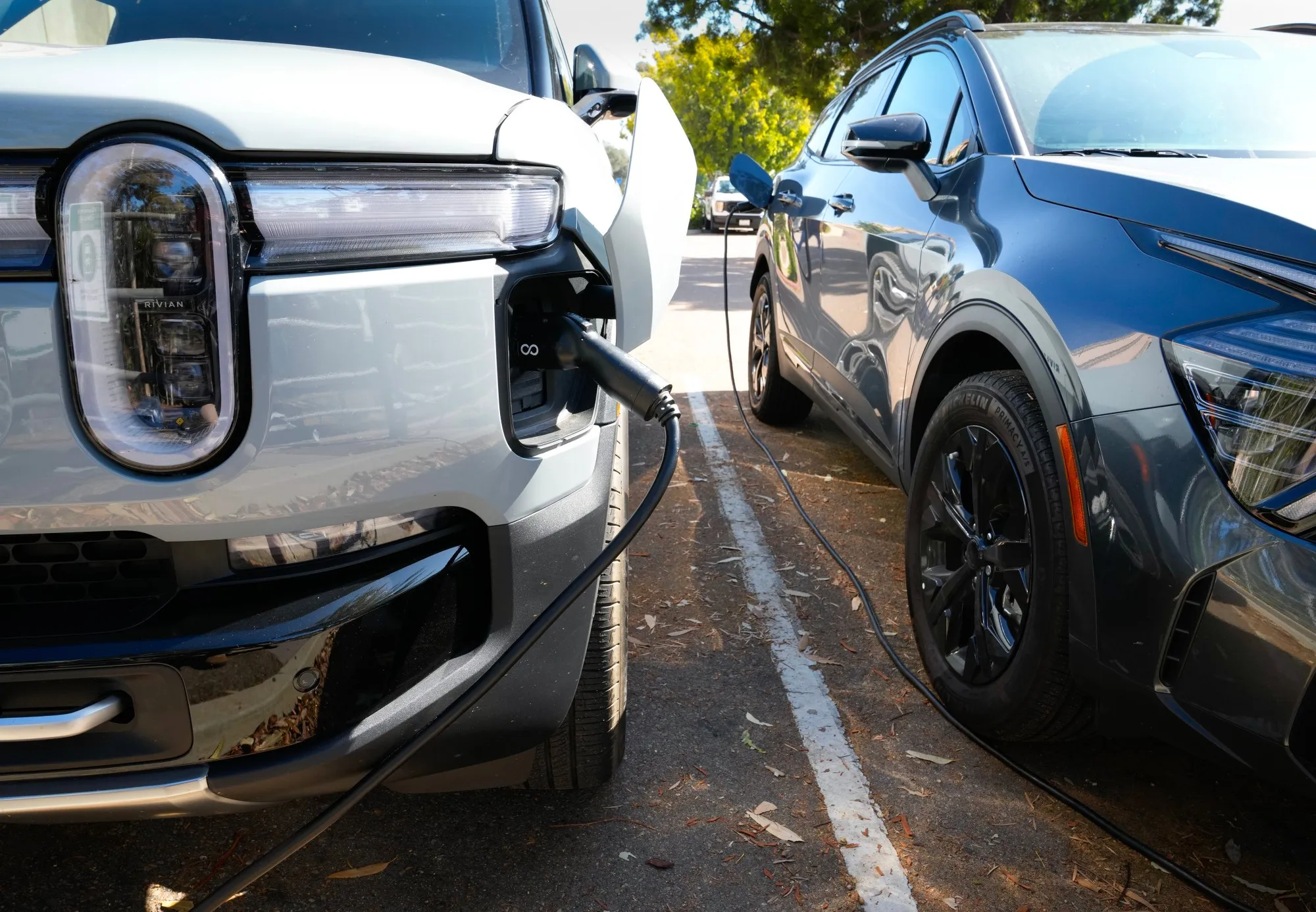
After taking a pummeling at the start of this year, sales of electric vehicles in California showed signs of life between April and June — with market share rising 3.3% in the second quarter, according to numbers released by the California Energy Commission.
Read more Prosecutors move to drop charge against California labor leader arrested during immigration protest
“We do see a slight recovery in zero-emissions vehicles, which is inspiring in one sense, but it’s very explainable and totally makes sense in another,” said Ivan Drury, senior manager of auto insights at Edmunds.com.
One big factor is the war in Iran, which began on Feb. 28 and has sent gasoline prices soaring. That’s led potential car buyers to take another look at EVs as an option to avoid expensive trips to the gas station.
The other is the after-effect of the elimination last fall of the $7,500 federal tax credit on the purchase or lease of an EV. Without the tax credit, sales of zero-emissions vehicles in California and across the country took a dive in the first quarter of this year.
The 3.3% increase between April and June may indicate that EV sales “hit a trough in Q1,” Drury said, and “was probably a pretty good indicator of how low it could get.”
Just one day after the energy commission released its figures, a separate showed similar results — a 4% increase in the market share zero-emissions registrations compared to the first quarter.
The data showed 80,168 zero-emission vehicles purchased between April and June. However, 87,306 registrations were racked up in the second quarter of 2025.
California policymakers, who have long promoted the growth of EVs and the goal of eliminating the sale of new gasoline-powered vehicles in the state by 2035, cheered the latest numbers.
“As federal actions threaten decades of progress, California is committed to protecting public health and delivering cleaner air across the state,” Lauren Sanchez, chair of the California Air Resources Board, said in a statement.
To help offset the elimination of the federal tax credit, Gov. Gavin Newsom earlier this month announced the MyFirstEV program, which will offer Californians $3,500 for first-time buyers of EVs that cost $50,000 or less. There’s also a rebate of $1,750 for first-time buyers who purchase a used electric vehicle with an MSRP of up to $25,000.
Enacted by Senate Bill 168, the rebate program earmarks $135.5 million in state funding for the rebate program in fiscal year 2026-27, which can be matched on a dollar-for-dollar basis by automakers who choose to participate.
So far, 13 carmakers have agreed to participate: Ford, General Motors, Honda, Hyundai, Kia, Lucid, Mitsubishi, Nissan, Rivian, Subaru, Tesla, Toyota and Volvo. Their involvement effectively means the MyFirstEV program promises to deliver $270 million in total funding.
Next month, Air Resources Board officials will provide details on the program, including when it will start and how the rebates will be distributed.
Read more Photos: Comic-Con Portraits Sunday
“While Donald Trump makes Americans pay the bill for his Iran war at the pump,” Newsom said in a statement, “California is giving families the freedom to choose a cheaper way forward by going electric.”
However, gasoline-powered vehicles accounted for 57.6% of new vehicle registrations during the first six months of this year, up from 54% through the first two quarters of 2025, according to the new car dealers association numbers that were compiled by Experian Automotive.
And while all-electric sales increased in the second quarter, the market for hybrid vehicles continues to go into overdrive. Hybrids without plugs accounted for 23.2% of the California market, while plug-in hybrids made up 2.5%.
“Californians are buying the vehicles that fit their budgets and the way they drive, and right now that means a lot of hybrids,” Jessie Dosanjh, owner of Stevens Creek Chevrolet in San Jose and chairman of the new car dealers association, said in a statement.
California officials define “zero-emissions” as all-electric vehicles, hydrogen fuel-cell vehicles or plug-in hybrids. Plug-ins qualify because they can be driven using only electricity — at least for short distances. But “traditional” hybrids without a plug cannot, so they do not count toward reaching the state’s zero-emissions vehicle mandate.
Toyota has made a concerted effort to sell hybrids, and the bear that out.
Some 51% of new Toyota registrations in San Diego County in the second quarter were traditional hybrids, according to Experian Automotive. Internal combustion engine sales accounted for 40%, while plug-ins made up 5% and battery-electrics 4%.
Taking all powertrains into account, auto sales across California slumped 7.7% compared to the first six months of 2025. In San Diego County, the numbers through the second quarter declined 8.9%.
“There’s a lot of stuff going on in our industry that would still be preventing people from buying vehicles,” Drury said.
One big hurdle is the rising cost of a new car and truck. A recent report from Edmunds showed the average transaction price for a new vehicle in the U.S. topped $48,000 last year. In California, it was $49,611. That’s $10,000 more, or 26.7% higher, than 2019.
On top of that, the current average for a car loan hovers around 7% — which adds thousands of dollars of costs over the life of the loan.
Elevated sticker prices appear to be helping the used car market, with statewide numbers ticking up 1% in the first half of this year. In San Diego County, registrations for used vehicles 3 years old and younger were up 7.2% through the first six months of this year.
Read more US walks out on France at UN meeting to protest ally’s criticism of America’s human rights record
“People are driving their cars longer nowadays,” Drury said.
2026, through June
- Tesla Model Y 4,131
- Toyota Tacoma 2,652
- Toyota Camry 2,326
- Toyota RAV 4 2,285
- Honda CR-V 2,253
- Honda Civic 2,199
- Toyota Corolla 1,691
- Ford F-Series 1,464
- Tesla Model 3 1,269
- Chevy Silverado 1,199
Source: New Car Dealers Association San Diego County/Experian Automotive