



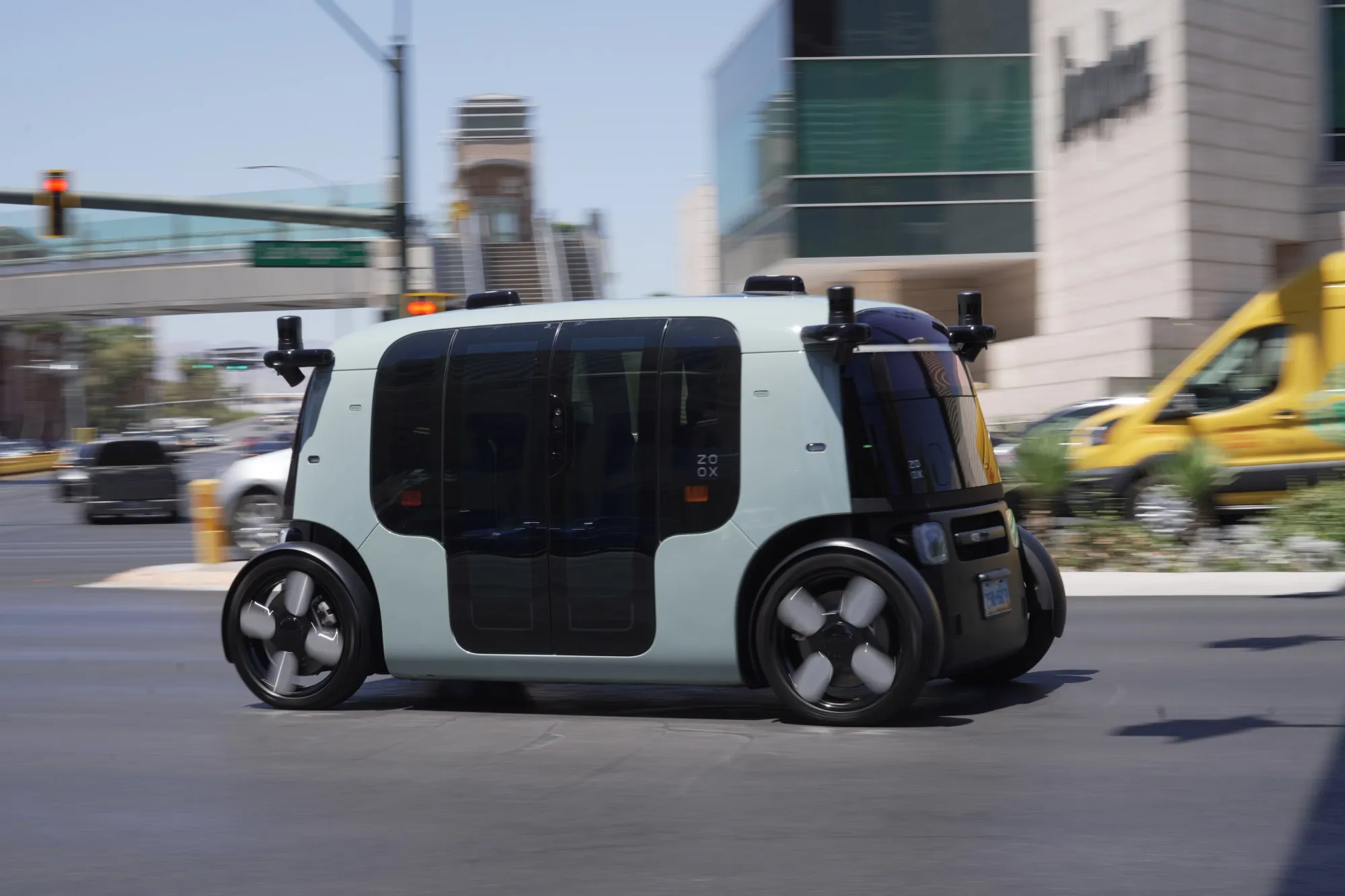
The race to get robotaxis on San Diego roads is ramping up.
Waymo announced that it will start picking up passengers on Tuesday. At the same time, Zoox — a wholly owned subsidiary of Amazon — announced that it will begin testing fleet operations in September. Meanwhile, Elon Musk’s golden Cybercabs have been seen quietly roaming San Diego streets.
Read more Days after Trump announces Venezuela oil deal, White House fills in some of the details
After over a year of testing its cars, Waymo will begin full service with a “few dozen” self-driving cars, according to Waymo spokeswoman Annie Smith.
The company will start by operating within 40 square miles, stretching from Pacific Beach south to Sunset Cliffs, southeast to Barrio Logan, and northeast to Normal Heights. The company is not yet serving the San Diego International Airport, as it is awaiting a permit from the city.
Waymo announced it would begin full service just days after the company told the U-T that it didn’t have a concrete start date. “Expansion will be gradual and guided by our safety framework,” Waymo posted on X.
But on the same day Zoox announced that it would start testing in San Diego, Waymo decided to press the pedal on full deployment.
Currently, Waymo is the undisputed leader in the robotaxi space. It serves passengers in over a dozen cities, including new deployments in San Diego, Tampa, Florida, and Denver. Waymo is also testing in 18 other cities, including Tokyo and London.
But the Alphabet-owned company has competition.
Tuesday, Amazon’s Zoox cabs shared ambitious plans with the U-T to deploy cars without steering wheels on San Diego roads.
“It’s not a car,” the company reminds users on its website.
The beetle-esque vehicle — with big wheels and antenna-like cameras — has a carriage-style interior with two benches that face each other. Zoox vehicles are “designed for riders, not drivers,” the company says.
But you won’t see the Zoox fleet crawling San Diego streets just yet.
First, Zoox’s test vehicles — retrofitted Toyota Highlanders equipped with cameras, lidar and radar — will begin mapping and data collection across downtown, central tourist areas, and select residential neighborhoods.
In the test fleet, human drivers will begin mapping Little Italy, the Gaslamp Quarter, Old Town, University Heights, Mission Valley, and Balboa, North Park and South Park neighborhoods, the company said.
Waymo in San Diego: Rules, cost and what it’s like inside a robotaxi
Founded in 2014, Zoox currently serves passengers in San Francisco and Las Vegas. But it took the company a long time to start full service — seven years, to be exact.
In 2019, Zoox began testing its vehicles in Vegas, but it didn’t begin full service until this month.
Now, the company is launching testing operations in Houston, Texas and San Diego. It didn’t share a timeline on when Zoox would begin picking up passengers, but the company did say that it’s testing its fleet in a handful of other cities, including Seattle, Austin, Miami, Atlanta, Los Angeles and Washington, D.C.
Read more Bond sell-off heats up as oil prices continue to rise
“San Diego has a concentrated coastal corridor with heavy highway reliance, providing us with key experience ahead of future freeway operations. Its thick marine fog layer also offers essential real-world perception validation for our sensor suite,” the company said in a statement to the U-T.
Tesla is also vying for space in the San Diego robotaxi scene.
Glimpses of gold-colored Tesla Cybercabs tooling around city streets in recent days have raised questions about whether the electric vehicle company is looking to expand its autonomous robotaxi service into San Diego.
Tesla officials have not responded to multiple emails from the Union-Tribune about any plans to start testing, mapping and gathering data for potential business in the city, nor did the company make comments about multiple reported sightings of the distinctive-looking vehicles spotted in neighborhoods such as East Village, Pacific Beach, Sorrento Valley and around San Diego International Airport.
Tesla rarely posts press releases. Instead Tesla posts emojis to signal company news. On Friday, the company hinted at an official deployment in Austin, Texas, by reposting a video of a Cybercab on X with the comment “Less than a week away.”
As for Tesla’s California plans — it’s still early days.
Testing and deployment of autonomous vehicles are regulated by state agencies:
The California Department of Motor Vehicles issues testing and deployment permits, sets rules for vehicle equipment and tracks collisions and traffic safety.
The California Public Utilities Commission licenses companies that use autonomous vehicles to transport members of the public and oversees robotaxi pilot programs.
Just a few weeks ago, the commission approved Waymo’s expansion permit, allowing the company to pick up passengers in San Diego. As for Zoox and Tesla — they were granted permission from the CPUC and DMV to test their fleets with a human behind the wheel.
The pending entry of these companies deploying autonomous vehicles in and around San Diego has encountered resistance in some quarters.
The Metropolitan Transit System’s board of directors in January voted 12-1 to approve a resolution opposing the expansion of Waymo robotaxis, citing concerns over potential job losses for cab drivers, safety issues, and robotaxis possibly blocking first responders.
“Autonomous vehicles don’t just change how people move. They literally replace people,” San Diego City Councilmember Sean Elo-Rivera said at the time. Elo-Rivera is also chair of the Taxi Advisory Committee.
The transit system’s CEO, Sharon Cooney, has raised a host of economic and safety concerns. Citing a December 2025 power outage in San Francisco that resulted in driverless Waymo vehicles blocking intersections, Cooney expressed concerns about autonomous vehicles blocking streets or trolley tracks and disrupting transit service if a similar event happened in San Diego.
But local jurisdictions do not have a say in how and when autonomous ride-hailing services roll out in California.
Read more ‘I’m still here’: Patients see early promising results from new pancreatic cancer pill