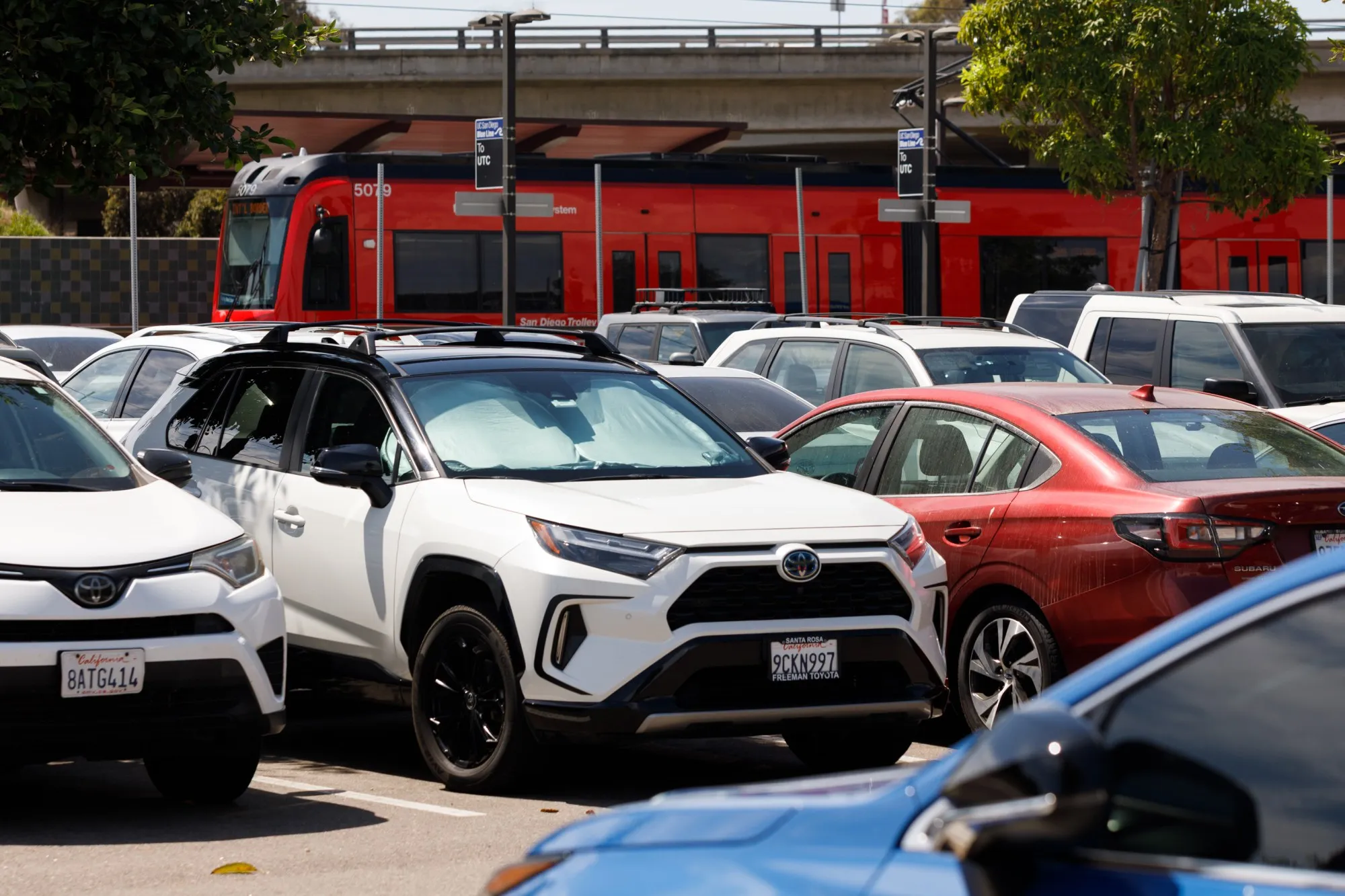








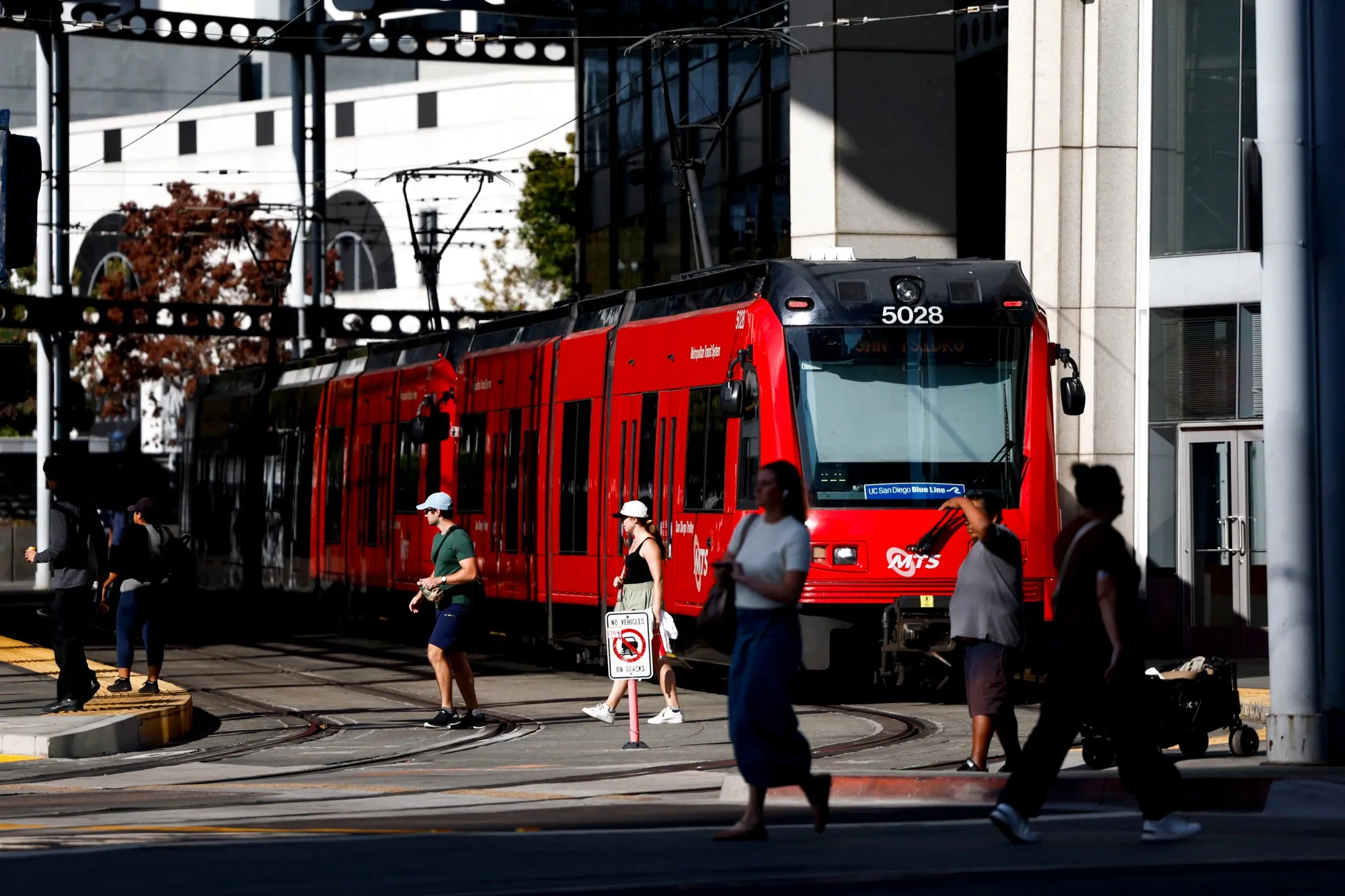
A looming budget crisis could force local transit officials to eliminate one-third of bus routes, reduce service on another one-third of routes and run the San Diego trolley’s four lines less frequently.
Read more El Capitan Reservoir boat ramp gets $2.5 million extension to improve recreational use year-round
Those cuts are part of a rough-draft scenario unveiled Thursday by Metropolitan Transit System officials to close annual budget deficits of $100 million to $150 million starting in fiscal year 2030.
The bleak scenario would be necessary despite fare increases scheduled to take effect Oct. 1. But it could be avoided if MTS gets some sort of state bailout or if local voters approve a sales tax hike devoted to transit in 2028.
The scenario would wipe out 33 of the 95 MTS bus routes, likely including the end of service to SeaWorld, Cabrillo National Monument, Tierrasanta and parts of Mission Hills.
Another 29 routes would experience notable service reductions. For example, Sunday service could be eliminated on a route or the frequency of service could be reduced from once every half an hour to once every hour.
All four trolley lines – blue, green, orange and copper – would also see reductions in service frequency, MTS officials said. Trains now typically run every 15 minutes on most routes.
About 36% of MTS riders would experience service frequency reductions, while another 21% would lose service entirely. But MTS officials said only about 3% would have no nearby transit alternative.
Such alternatives are defined by service within a quarter mile. But that alternative service might not be as frequent or direct.
The service cuts would be necessary because the plan calls for eliminating 300 operators and mechanics, either through layoffs or attrition.
A key source of the MTS budget crisis has been large pay raises the agency has given to employees in recent years.
Some critics say those raises are jeopardizing the future of mass transit in San Diego, but MTS Chief Executive Sharon Cooney said Thursday that the pay hikes were necessary.
“We really do need to pay wages that will allow people to work and live here in San Diego,” she told the MTS board.
Cooney said she remains hopeful the state will bail out MTS and other struggling transit agencies across California. Many agencies blame the pandemic for dramatically shifting commuting patterns.
Cooney said allowing devastating cuts to MTS service would be a mistake.
“This is a really strong transit-mobility network that cannot fail,” she said. “It will have serious implications for the economy here in San Diego if we do fail.”
The cuts would be even worse if MTS wasn’t planning to move $50 million earmarked for capital and construction projects to operations, which would shrink the projected deficit in fiscal 2030 from $141 million to $91 million.
Read more Scene: SUMMERFEST 2026
In crafting the scenario, MTS officials said they prioritized the core network of frequently used bus and trolley lines. The scenario envisions more transfers and fewer long, direct rides.
Members of the MTS board asked for more details on the specific routes that would be affected, but MTS officials said those won’t be ready until this fall.
“This is not a proposed plan at this point,” said Brent Boyd, MTS director of scheduling and planning. “This is really just an estimation of the scale of what we’re looking at — kind of a snapshot of the possibilities.”
Boyd said the exact routes and the specific reductions proposed will come soon.
“We’ll be bringing back much more detailed plans in November or December — much more fleshed out,” he said.
The more detailed proposal will be presented to the public in January at workshops and then possibly approved by the board next spring, he said.
Any service cuts would have to be analyzed under federal Title VI to ensure they don’t burden low-income or minority populations more than is allowed.
Members of the public can provide input on possible cuts at the MTS transit shop website.
Last summer, MTS began analyzing what might need to be cut because of the looming deficits. This is the result of that effort, which MTS calls a “comprehensive operational analysis.”
The effort also examines a scenario where MTS gets a windfall of ongoing revenue, either from the state or from a local sales tax hike. Officials are exploring placing a half-cent sales tax on the 2028 ballot to raise $300 million per year for transit.
The hike would apply only to neighborhoods served by MTS, not the North County Transit District, which generally serves neighborhoods north of state Route 56.
The news comes with MTS riders already bracing for a fare hike on Oct. 1
It’s the first fare increase in 17 years for monthly passes on local buses and the trolley. The cost of a pass will jump from $72 to $85 on Oct. 1 and then to $95 in fall 2027 — up nearly 31%.
And it will be the first increase in seven years for one-way fares, which will rise from $2.50 to $3 on Oct. 1 and then to $3.25 in fall 2027. That’s a 30% hike, far steeper than the last increase in 2019 from $2.25 to $2.50.
The hikes won’t apply to anyone enrolled in government assistance programs: CalFresh, CalWORKs or Medi-Cal. For details, visit ridepronto.com.
Read more Driver sentenced to prison for fatal DUI crash in Bonsall