






On Sept. 17, we celebrate Constitution Day. Our United States Constitution has significantly influenced many other constitutions around the world, particularly in its concepts ofseparation of powers, checks and balances, and enumerated rights.
Read more His game stops cancer from looming in the minds of kids as a ‘big, scary monster’
Our Constitution is the oldest written national constitution still in use in the world. It is relatively short, containing about 4,500 words. Although we have amended the document 27 times, we the people of the United States have never found it necessary to call for a second Constitutional Convention in all the years since.
Imagine the Constitutional Convention. The doors and windows of Independence Hall in Philadelphia are closed, protecting the men from the curiosity of those passing by outside. Not a breath of air stirs through the room. Flies buzz in lazy circles. The temperature is 87 and the humidity is high. Sweat beads on faces.
All around, pairs of men sit at small tables. Some write. The soft scratches of their quill pens disturb neither the concentration of those who sit and think nor those who chat with their neighbors. All stop what they’re doing and turn toward the front of the room as the president of the convention stands. George Washington (1732-1799) begins to speak. “Gentlemen, let us continue with our discussion. Dr. Franklin, I believe you have the floor.”
If only we could have been there to experience that critical milestone in the creation of our nation. The Constitutional Convention began on May 25, 1787. It seems so static when we read about it. In fact, it was alive with passionate debate as the delegates hammered out the details of our future.
When the delegates to the Constitution met to debate what form of government the United States should have, there were no contemporary democracies in Europe from which they could draw inspiration. Of particular interest was the Iroquois Confederacy of Native American Nations, which wielded significant influence. Their Great Law of Peace united six nations under a federal structure while each maintained internal autonomy. The Iroquois laws included the separation of civil and military authority, checks and balances between different branches of government, a bicameral legislature with upper and lower houses, and a process for removing leaders from government. All these elements found their way into our Constitution in some form.
Central government versus states’ rights; small states versus large states; slaveholding states versus free states; how to handle public debt, tax collection, trade, and law and order;relationships with foreign governments and with Native Americans — all these controversies had to be addressed. The result was a model of cooperative statesmanship and creative compromise.
Fifty-five men attended the Constitutional Convention, representing Connecticut, Delaware, Georgia, Maryland, Massachusetts, New Hampshire, New Jersey, New York, North Carolina, Pennsylvania, South Carolina, and Virginia. Rhode Island chose not to send delegates.
Read more Critics question decision not to criminally charge San Diego police officer who fatally shot teen
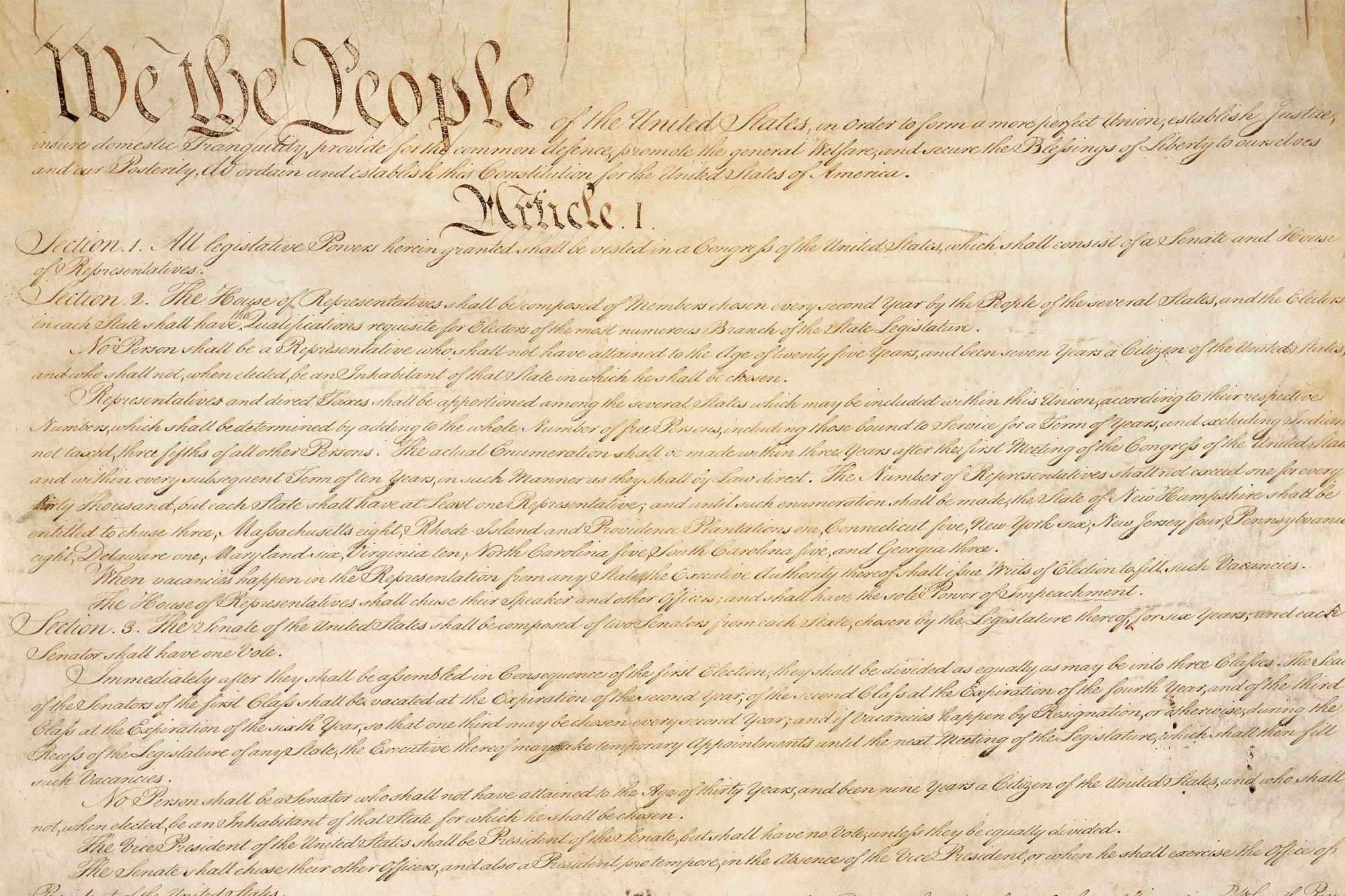
On Sept. 17, 1787, after 116 days swathed in Philadelphia heat, 39 of the men in attendance signed our Constitution. Washington, as president of the convention, signed first. Then came the representatives of the various states. They understood the importance of what they had wrought, forging a document that begins with this ringing statement of purpose: “We the people of the United States, in order to form a more perfect Union, establish justice, insure domestic tranquility, provide for the common defense, promote the general welfare, and secure the blessings of liberty to ourselves and our posterity, do ordain and establish this Constitution for the United States of America.”
On Dec. 7, 1787, Delaware became the first state to ratify the Constitution. On June 21, 1788, New Hampshire became the ninth. The Constitution was now the law of the land.
As Benjamin Franklin exited the Constitutional Convention, he was asked what sort of government the delegates had created. His answer: “A republic, if you can keep it.”
Over time, the engrossed parchment on which the Constitution is inscribed has lived in several different places. In 1952, an armored personal vehicle, escorted by two light tanks among the military guard, carried our Constitution from the Library of Congress to the National Archives, where it remains in a shrine in the rotunda, alongside the Bill of Rights and the Declaration of Independence.
***
On Thursday, Sept.17, 11 a.m. to noon, I’ll be presenting “We the People, 1776-2026” at the Rancho Santa Fe Library.
On Friday, Sept. 18, 2 to 3 p.m., at North University Community Library and on Saturday, Sept. 19, 2:30 to 3:30 p.m. at the Mission Hills-Hillcrest Library, I’ll be performing“Talk Like a Pirate.”
Please send your questions and comments about language to [email protected]; website: verbivore.com
Read more Federal appeals court steers San Diego insurance dispute to California Supreme Court