

Adriana Cuellar loves canyons. When her twins were still infants years ago, she’d secure them in their double stroller and walk around Playas de Tijuana, making her way through all of the manmade damage that was evident, but she also saw the potential of the land. That kind of perspective has resulted in the recent collaboration and completion of a new children’s book.
Read more Jones’ supervisor run shakes up San Marcos city elections
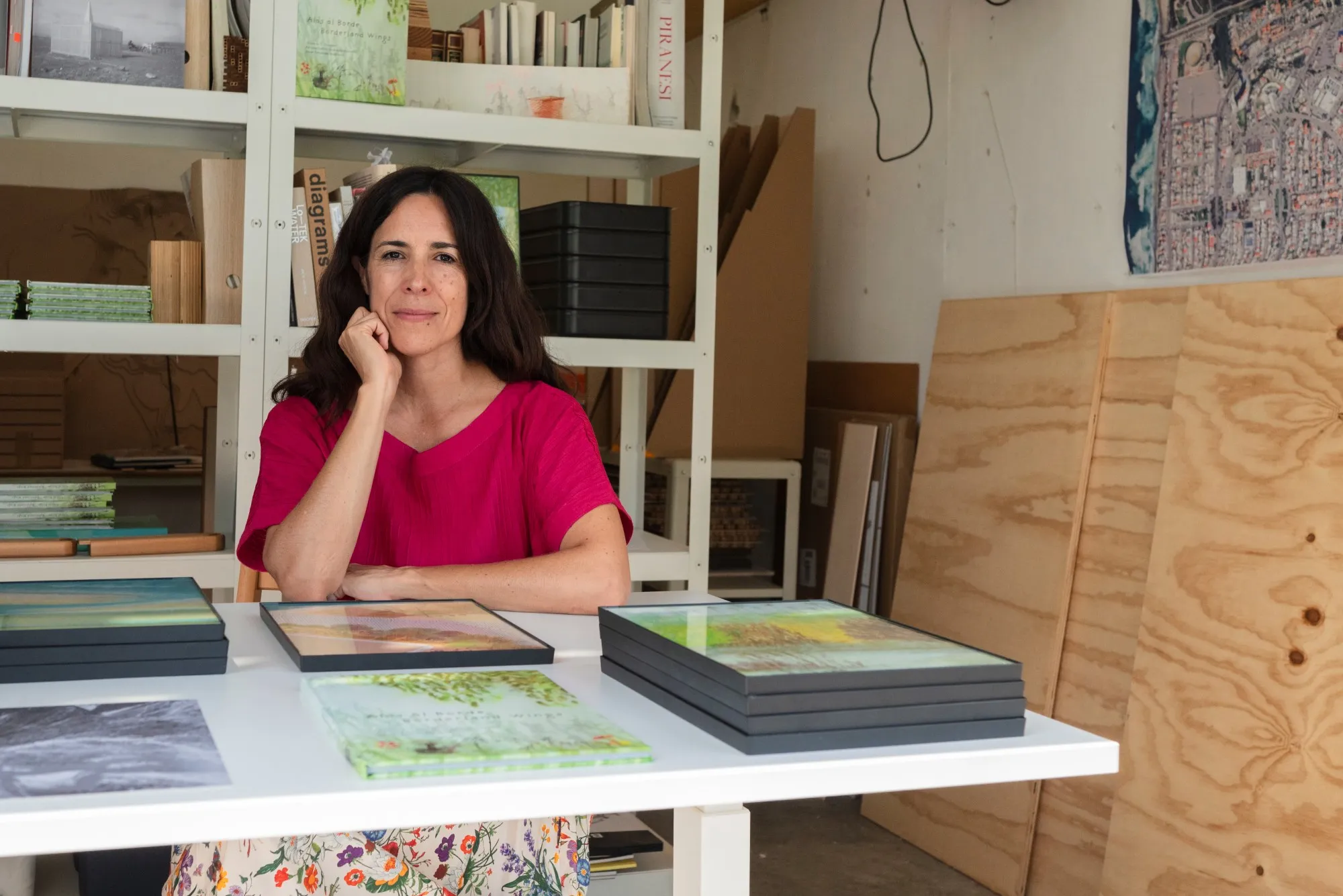
“Alas al Borde / Borderland Wings” is about a native bird and a migratory bird who meet at the U.S.-Mexico border and travel the land together while learning about environment. Co-authored with Javier Fernandez, and written in English and Spanish, Cuellar’s illustrations are based on Fernandez’s writings, and the research she leads as an associate professor at the University of San Diego in their Border Design Lab, which she founded. An architect and designer, her work is centered on the ways that architecture can be used to explore history and art; and through her CRO Studio founded with her husband, Marcel Sanchez Prieto, who’s also an architect and associate professor at USD, they take on projects aimed at improving on social issues faced by folks living in and around the border.
“The Border Design Lab emerges as a platform to deepen research projects through the lens of design. There’s several institutions or organizations that do a lot with the border and the conditions of our national border, but this one focuses primarily on that lens of architectural design—architecture, landscape architecture, urbanism, and those topics we focus on in our classes,” she says. “This book has been one example where we receive funding to further deepen these topics with a team of research students who want to continue that, and myself and other coworkers just kind of build on that.”
“Borderland Wings” includes 23 illustrations across 40 pages for children 7 to 10 years old, but the material is still appropriate for children a bit younger, and older kids and adults (there is an ability to sign up for notifications on the website for where to get copies). Cuellar, 51, lives in San Diego’s Webster neighborhood with her husband and their identical twins (Bruno and Luca, who are 10 now), and took some time to talk about the research and collaboration behind the book, and the importance of sharing information about the environment with children. (This interview has been edited for length and clarity. )
How did the idea for “Borderland Wings” come together?
It was when I was working with the Border Design Lab at the university, in the department of architecture, and we partnered with Promotora de las Bellas Artes in writing this. We started this collaboration in the canyon with my students, in an architecture class in the design studio. Even though the focus is on architecture, we focus on landscape strategies for landscape conservation. In the studio, it was the first time that I was teaching it, and it’s been a place that I’ve been interested in for some time because I used to take my kids there when they were just born; walking with a stroller and seeing the environment and the smells and this beautiful canyon that, of course, we contaminated, but at the same time it was beautiful. That stayed with me, and I had the opportunity to develop this syllabus, and one of the students was working for the San Diego Foundation. Maybe after six months after the class, the director of the Binational Resilience Initiative reached out and said one of my students was working with them, and they were interested in learning more about what we were doing in class. We met and talked about the work, and she told us about a grant, an international partnership, to further our work. One thing led to another, and I met Victoria (Zepeda Sotelo, director of Promotora de las Bellas Artes) and we really clicked. We share the same values, and they work on educational programs on the environment for children, particularly with music. This was their first time working with architecture and the students of San Diego, and the idea of design. It was quite exciting.
Through that process of finding a way of connecting the academic research and the design ideas that we had with children, the idea of the book came from that exchange. That was the last piece that evolved out of the field workshops with the children at the border. We created more drawings, spent time understanding the landscape, taking inventories of native plants, and so on. The drawings are more architectural landscape drawings that speak about the place, and the watershed, and then all of that knowledge that we build collectively, leading to the story of a children’s book.
We worked with Javier Fernandez, who writes about the environment in Baja California. I think it was the first time he was developing a children’s book, but he was very knowledgeable of everything that’s been going on, and he was extremely resourceful. The story emerged with the drawings, with the images, and we had a map of conditions of the landscape that we wanted to make sure came across. Being careful of simple polarization, but the negotiation between the collective care of the landscape and that they’re part of this shared environment. And, the possibilities of how even a neglected landscape could have a rebirth, it has a soul, it’s living. So, children are learning about attention to the environment, understanding to read it, and hopefully discover little things in the details.
This book was inspired by the research from your Border Design Lab? What kind of research were you doing that led to this book?
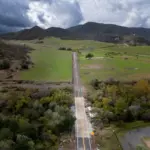
Yes, so we were specifically working on the Canon de los Sauces, which in English is called Yogurt Canyon because there’s a yogurt shop right there, I think. It’s named Yogurt Canyon in the U.S., and in Mexico it’s named Canon de los Sauces, which means “canyon of willows” and that’s the first little canyon right next to the ocean. It stops right at the international border.
Read more New anti-suicide barrier for Coronado Bridge clears final hurdle
I think another layer to the problem is how the city of Tijuana has been densifying, and the organization and practice of taking over land, even if it’s for conservation. This was not a conservation site when they developed it that way, but unfortunately, there’s a housing project right on top of where the water passes through the canyon, that was built in the 2000s. There’s been an incredible impact because there’s schools around that the kids would go and explore the site. There’s not that many green spaces in Tijuana, so bringing awareness, as well as this different approach of how to think of architecture, not just when you have an environment that is in crisis, but that we have that responsibility to the environment regardless of what project we’re doing. We always have that interest of how to design with more passive systems in ways that you can incorporate the landscape: How does the building open up to the street, or to canyons? These are conditions that we explore, and that was the interest with what can be done on the scale of architecture that can contribute to these canyons. That was an instrumental topic for my classes, in general. Then, we specifically did site-specific research on this.
Why was it important to you to share these findings with children in this way?
That’s super important because having children makes you so much more aware that the commitment goes beyond the university. We understand that the problem is so big and we’re not going to solve it, but we can work collectively on building a culture, a way to perceive our region, to understand our places. I have no doubt that education is the foundation for how we want to live in the future. We have to start from when the kids are young and learning together with their families, and opening up this understanding as a child is important. This is also a personal story because I grew up in Tijuana. In that time, for people of my generation, there’s basically no landscape because they were making a landfill or just this open landscape; the city would never provide for the idea of a space the way you have it in San Diego. If you wanted to explore the ocean, or the beaches, or the parks or canyons, you will cross the border; I think that’s still the case right now. So, as the city builds so quickly, you have even less access to the landscape. As a child, you don’t question about that; you just have a happy life and you live with whatever you have. There are conditions, of course, that are really beautiful outside of the city, so I think how children experience landscape in Tijuana versus in San Diego is extremely different. I’m not sure if this is the case, but I think around the time when we started this idea, the secretary of education in Tijuana prohibited schools from taking children to the ocean because it was contaminated. So, there’s no access for the children, for anyone. It’s a protection, but it shouldn’t have to be like that, we need to do something about it and we can’t be waiting for the big decisions to happen on their own. I think we all have to raise our voices on what we have in our communities, in order to do the things that we want to do. I think we’re starting to hear a little bit more about these topics within government because the pressure is building up.
What are some examples of the research that people will see in this story?
Several of the drawings of the landscape are from the observations, from what we do in the lab. There are two buildings that speak to how buildings extend to the terrain. Some builders understand the land, and they let the trees hold the land. Part of the story says, “I was born close to here, on a nest on the sands…but then a tower covered it,” and there’s a drawing of the tower. We know that there is parking that is sitting over the canyon, over the watershed, so those are spatial conditions that come directly from that, and there are others like that, that are more speculative.
We have different science strategies that have emerged from the class with the students, that the project can become this kind of bigger garden. There’s already Friendship Park, and they have murals; it has become a canvas for artistic expression, but there’s also this community involvement with developing gardens that display the native landscape of the region. So, there’s a drawing that has this sort of fictional rendering of the abandoned construction debris, of the facts that we know are there, but they’re fictional. Then, it shows a design speculation on how the Friendship Park garden on the south could expand. Probably not a lot of people would understand it unless you really know the area, that that is a fictional space and it’s not a real space, but it can spark a little bit of design ideas that are evolved from the lab.
Can you walk us through a bit of the creative process for the book? How did you develop the concept for this story? The choice of the birds? How to present the information in a way that children would understand?
Yeah, this was a back-and-forth conversation that developed to have the story of the birds, then we have the story of the landscape. It makes sense to travel the landscape with the birds, and that’s where Javier Fernandez brought in the native least tern and the migrant cinnamon teal, which come from that back-and-forth (with the everyone involved in the project).
Another important element to the drawings and our collaboration was that we did a workshop with elementary school students-now they’re either middle schoolers or perhaps high school-that Promotora has been working with Tijuana. The workshop was like nine hours where we did maps and drawings, cartographies, where the children will try to map out the trajectory from the school to their house, or somewhere. They would notice where would the water go? They would think through the landscape and where the water would pass. Are there any canyons, or is the canal there? Some of them had very beautiful reflections about that, so a lot of those drawings became integrated into the book, and all of the birds are montages of the drawings from the children from that workshop. Then, the cover has a sample of a lot of their little drawings; there’s always some touch or texture or fragment from the children of their drawings.
How would you describe the ecology at the border?
That’s a hard question. That’s so complex. I mean, I think something that we are very much moved by, is that there’s more richness of what the border can offer than all the polarization and negative parts of it. And, I think we learn a lot from the environment. The estuary is one example; the Tijuana watershed. Those are natural border conditions from which we can learn that the river water meets the ocean. You have these natural exchanges that create a very interesting diversity of habitats that coexist, and it’s kind of an environmental point of view. I think that there’s no coincidence to the fact that that sits right at the border between the two cities; I think it works metaphorically, but I think it’s also practical. That idea of exchange and the richness of diversity is important, and learning how to become more diplomatic between the two.
Read more Ramona woman sues market, egg ranch as salmonella infection cases grow