






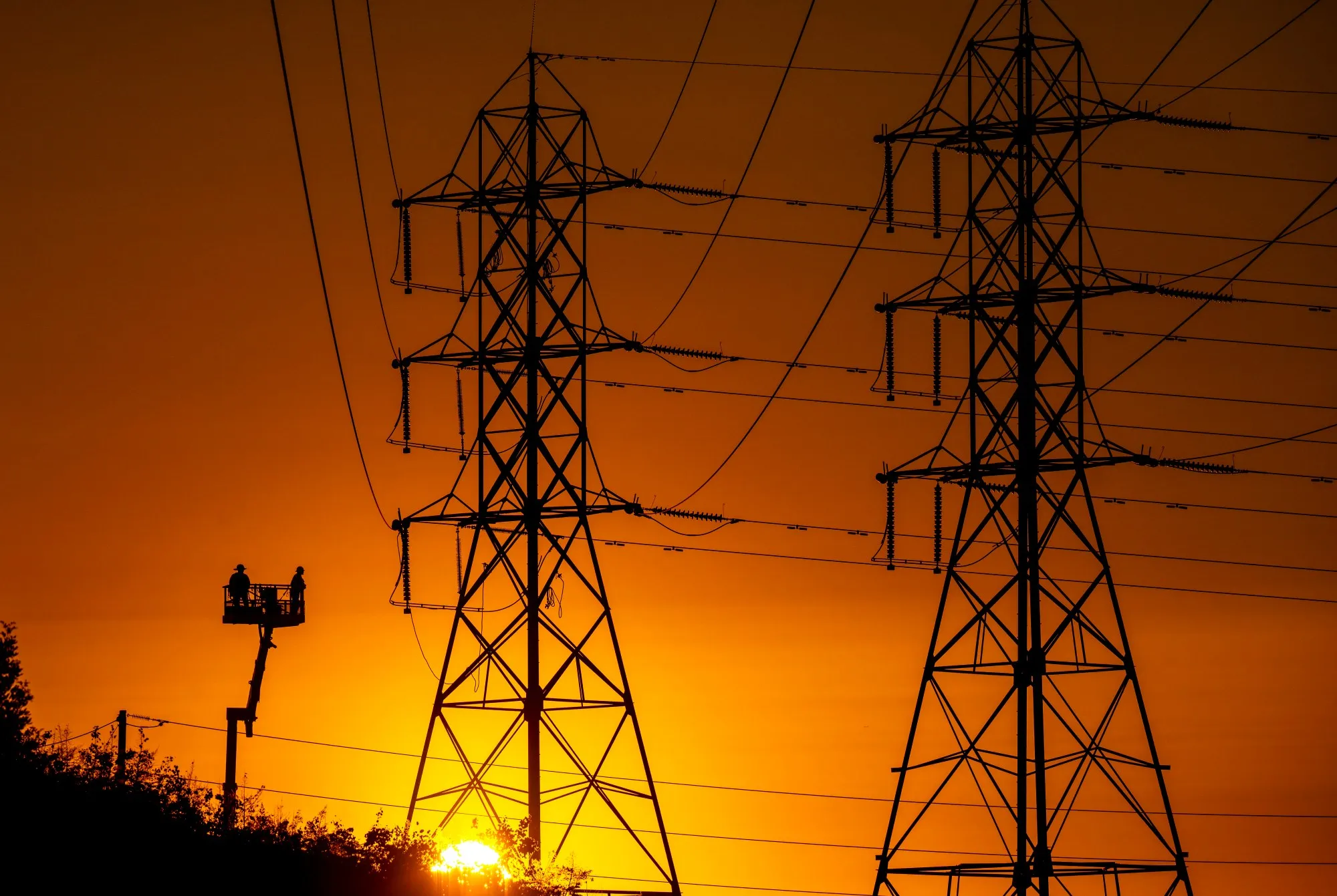
California has the second-highest electricity prices in the nation, according to an analysis by a pair of free-market organizations that looks at the effects of state energy policies on customers, but a representative for Gov. Gavin Newsom dismissed the findings as the work of groups favoring fossil fuel interests.
Read more The Pentagon is moving forward with mandatory testosterone testing for most male troops
The Institute for Energy Research and Always On Energy Research recently launched a website called Blue States, High Rates that includes an interactive map breaking down all 50 states plus the District of Columbia, as well as 10 regional transmission organizations across the country.
According to the report, California in 2025 had an average retail price for electricity of 27.63 cents per kilowatt-hour — more than double the national average of 13.63 cents. Since 2018, the site said that after adjusting for inflation the average price has risen 29.9% — the largest absolute increase of any state.
Hawaii had the report’s highest price for electricity, with an average retail price of 35.72 cents per kilowatt-hour in 2025.
North Dakota had the lowest average, at 8.2 cents per kilowatt-hour, followed by Oklahoma at 9.5 cents per kilowatt-hour.
“A significant chunk of the blue states have higher rates than the national average and a significant chunk of the red states have electricity rates below the national average,” Tom Pyle, president of the Institute for Energy Research, said during a webinar on Wednesday.
The analysis looked at six criteria:
- whether each state has enacted renewable portfolio standards
- if and how states compensate for rooftop solar installations, such as net energy metering programs
- enactment by states of carbon pricing or cap and trade programs (known as cap and invest in California)
- adoption or absence of data center protection for consumers
- access to natural gas, and
- whether a state’s utilities have net-zero goals for greenhouse gas emissions
“These are voluntary choices that can affect the generation mix, how much transmission you have to build out, a whole host of things that end up showing up in your bills,” Alex Stevens, manager of policy and communications at the Institute of Energy Research, said of net-zero targets for power companies.
California has adopted nearly all of the measures the Institute of Energy Research and Always On Energy criticize for driving up costs — including a mandate to derive 100% of the state’s electricity from carbon-free sources by 2045, if not sooner.
“Blue States, High Rates captures what we’ve been saying for years: bad energy policy leads to higher electricity rates,” Always on Energy CEO Amy Cooke said in a statement announcing the website’s rollout.
But California policymakers have long defended the state’s clean energy goals, pointing to dramatic reductions in air pollution and smog (especially in the Los Angeles area) and the Golden State leading the nation by a wide margin in the adoption of electric vehicles (roughly 1 in 5 new vehicles sold in the second quarter of this year were zero-emission vehicles).
The U.S. Energy Information Administration reported that in the first five months of this year, utility-scale solar generation surpassed natural gas generation in the California Independent System Operator, which manages the electric grid for about 80% of the state.
Asked by the Union-Tribune for a reaction to the Blue States, High Rates report, the California Energy Commission referred questions to the Governor’s Office.
Read more Trump administration begins building border wall in Texas’ Big Bend region
A Newsom spokesperson directed comments to an exchange on X between U.S. Energy Secretary Chris Wright and the governor.
In a back-and-forth in March about rising gasoline prices, Wright posted, “California has strangled its own oil and gas production as well as its refinery capacity, driving up CA energy prices to 40% higher than the country as a whole.”
Newsom responded through his press office X account by saying, “The Trump administration’s taxpayer-funded oil and gas lobbyist has spoken: armed with fake research from a Koch-funded fossil fuel front group.”
The Koch network is a coalition of conservative and free-market political organizations funded by billionaires Charles Koch and his brother David, who died in 2019. According to Forbes, their father, Fred Koch, improved a method of refining heavy oil into gasoline in 1927 and started the family business in 1940.
A page on Legistorm, a website that tracks members of Congress, staffers and lobbyists on Capitol Hill, says Pyle was listed as a lobbyist for Koch Inc. from 2001 to 2008.
During the webinar, Pyle said the figures in the Blue States, High Rates analysis come from government sources, such as the Energy Information Administration.
“We try to be neutral in terms of the numbers and the data just simply does the talking for us,” he said.
At one point in the webinar, Pyle talked about “our good friend coal.”
High utility bills have become a hot topic across the country, especially in California.
According to a recent report from the Public Advocates Office — an independent consumer arm of the California Public Utilities Commission — the average rate for residential San Diego Gas & Electric customers has risen 97% in the past decade.
The average has soared 101% for residential customers of Southern California Edison and 69% in the service territory of Pacific Gas & Electric.
Read more Early voting begins in US midterm elections that could flip control of Congress