




San Diego County officials are taking steps to adopt the first zoning rules for large battery energy storage systems, aiming to steer future projects away from residential areas and set safety standards.
Read more Book tells story of people behind San Diego-based Pacific Southwest Airlines
As commercial battery energy storage facilities continue to appear across San Diego County to meet demands from the expansion of renewable energy, officials are taking steps to develop clear safety standards for them.
Large battery storage projects mainly store excess solar power generated during the day so it can be used at night or during peak demand times. They play a key role in the state’s goal to get 100% of its electricity from carbon-free sources by 2045, or sooner.
While the alternative energy storage system offers a modern alternative to older methods, it has also drawn criticism. Following a string of lithium-ion battery fires in 2024, residents who live near existing or planned battery storage systems are pushing back.
Battery fires are particularly hazardous. A single overheated cell could spread flames to adjacent ones, creating a fire that can burn for days, resist water suppression and release toxic gas.
Those fires prompted the San Diego County Board of Supervisors to direct staff to establish clear standards for future battery storage projects in unincorporated areas.
As it stands, the region lacks specific zoning rules for non-utility battery storage projects in unincorporated communities.
“I think it’s time to pump the brakes a little bit here … to ensure that battery storage projects are designed and located in the safest way possible,” District 5 Supervisor Jim Desmond said.
Now officials are moving forward with their plans to standardize the development of battery storage systems by amending the county’s zoning ordinance.
The draft ordinance was released on Aug. 13. According to a staff report, officials hope to define what types of systems are permitted and identify where facilities can be located, while reducing potential impacts on surrounding areas.
The document defines battery energy storage systems as a distinct land use, applying only to facilities exceeding a total capacity of 600 kilowatt-hours. If approved by county leaders, the ordinance would also prohibit applicable facilities from residential zones.
Read more Morrison’s exit sets up bruising National City race between Bush and Rodriguez for mayor
Before any permits for battery facilities can be granted, the amendment requires that the proposed project must “be compatible with adjacent uses, residents, buildings, or structures.”
That includes a variety of potential impacts on the site’s surrounding area, including density, possible worsened traffic and the “harmful effect, if any, upon desirable neighborhood character.”
But the advancement comes at a time where many unincorporated communities in the county — particularly backcountry towns situated near transmission lines — have already become home to battery storage facilities, or are fighting them. Whatever rules the county puts into place, they will not apply to projects already under consideration by officials.
The controversial Starlight Solar project in the rural East County community of Boulevard — proposing roughly 588 acres of solar panels and a 217-megawatt battery storage system — has drawn intense local opposition over fire risks and the placement of batteries.
After a June delay for further reviewing, the San Diego County Planning Commission advanced a modified version of the project, with some added setbacks and community benefits.
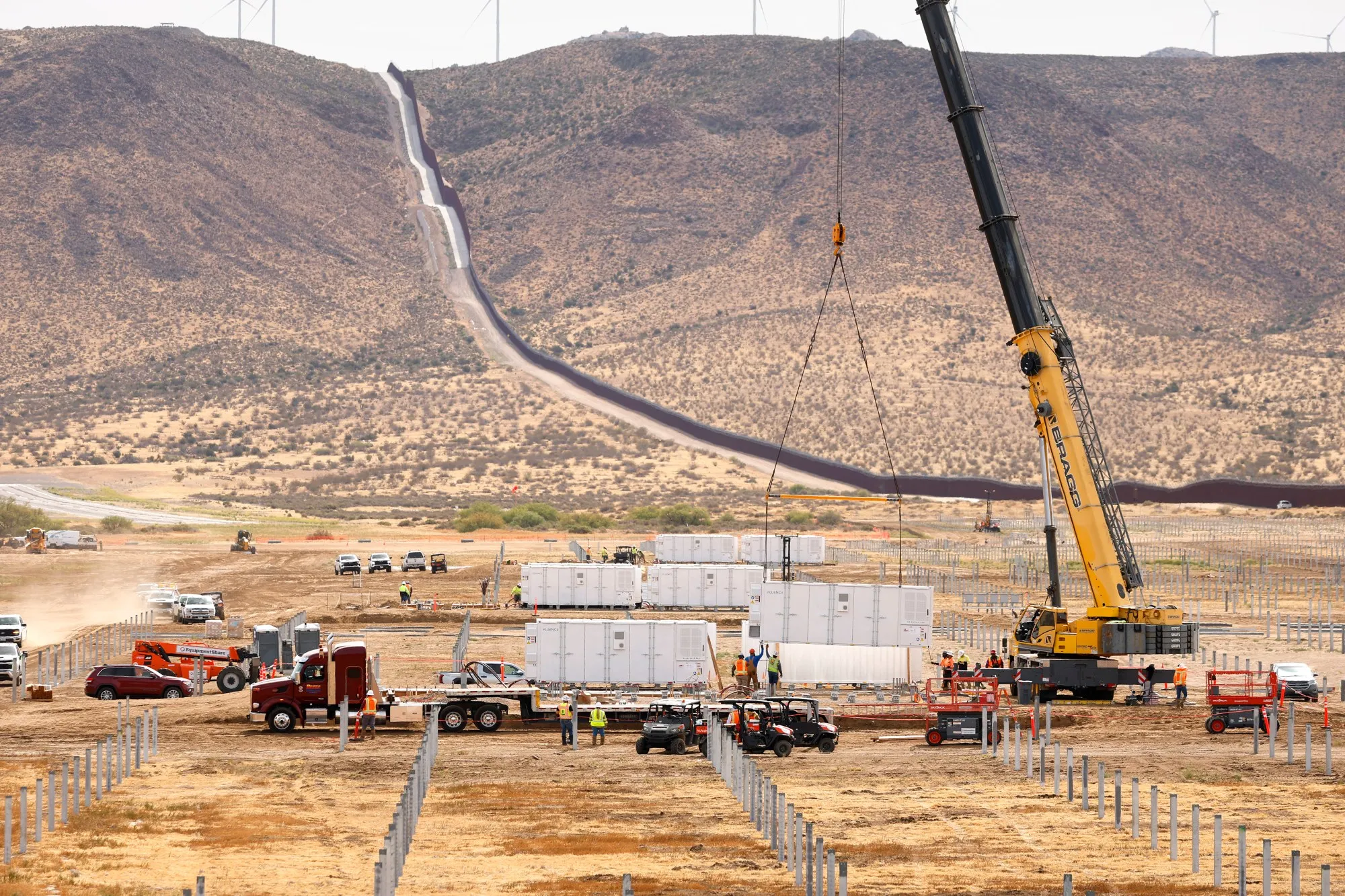
In the nearby unincorporated community of Jacumba, another utility-scale solar and battery project is currently being constructed.
Jeff Osbone — who co-owns the Jacumba Hot Springs Hotel and chairs the community’s sponsor group — is an opponent of both projects, citing safety concerns and other potential impacts.
The draft ordinance is missing a restriction on battery facilities based on fire hazard severity, he said. The county should always require a major-use permit for battery projects to get approved, he added.
“Just because the battery storage is next to an industrial zone doesn’t mean there aren’t people living nearby,” Osborne said. “So, you really need to consider what the impacts of a fire would be and you have to look at each individual project.”
The draft ordinance is available for public review and comment through Sept. 27. After that, it will go to the Board of Supervisors for approval.
Read more Effort to revive Balboa Park’s Starlight Bowl at a crossroads