







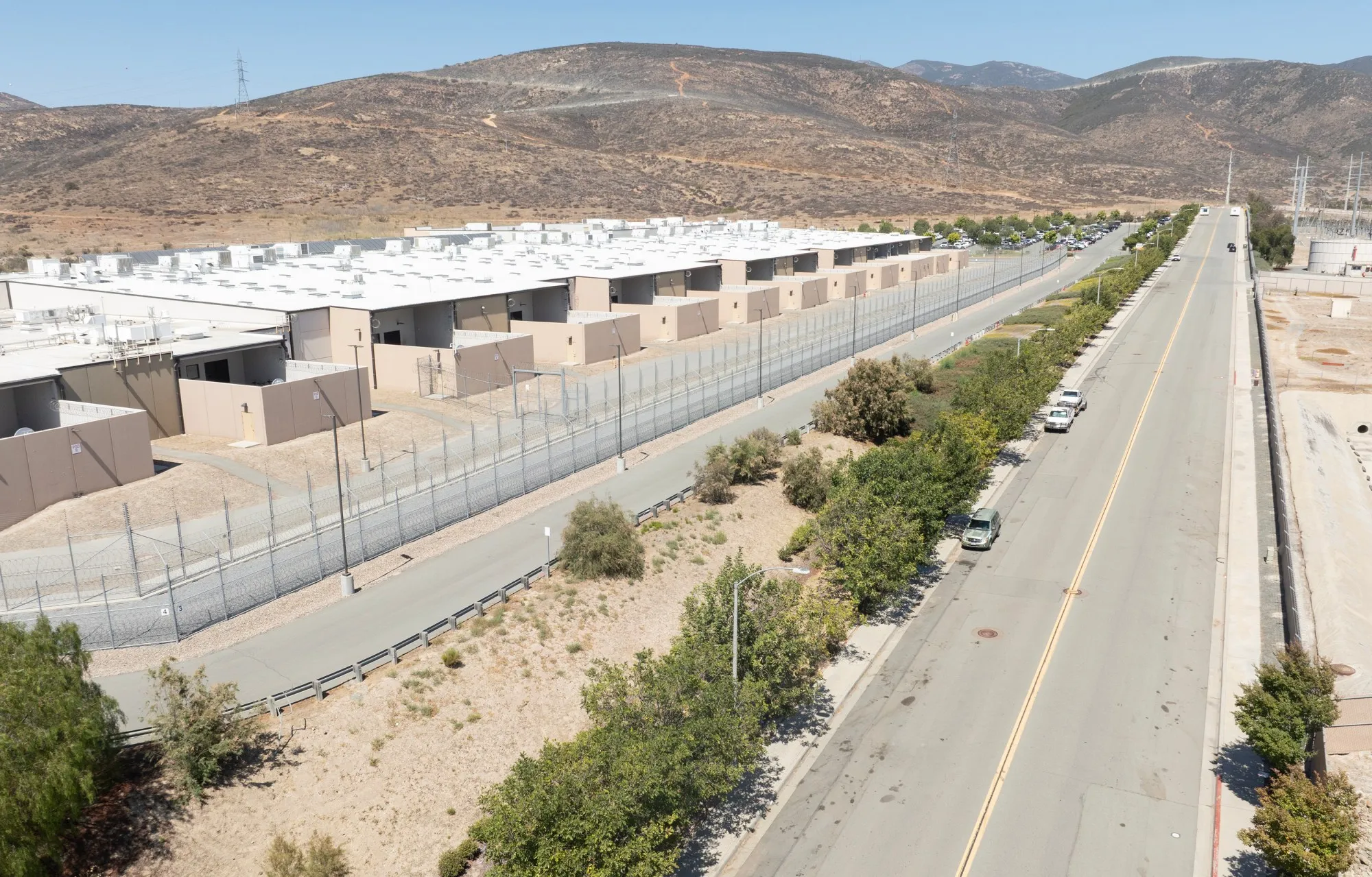
An eight-hour county public health inspection of the Otay Mesa Detention Center found that the immigration detention facility generally complied with recommended state standards, though inspectors noted some concerns, including two suspected tuberculosis cases that were not properly reported, according to a Monday.
The public health inspection occurred in June after a San Diego federal judge issued a preliminary injunction in response to a lawsuit filed by the county seeking full access to the facility.
The county report was based on conditions at the detention center during the inspection on June 12, taking into account a review of policies and procedures, interviews with staff and detainees, and a review of medical records.
The nearly 2,000-bed detention facility was owned by Tennessee-based CoreCivic at the time of the inspection, but it has since been sold to the federal government.
Last month, the private prison operator said that it will continue to manage the San Diego detention center under existing contracts with U.S. Immigration and Customs Enforcement.
A CoreCivic spokesperson noted on Tuesday that the report found the facility to be in compliance with several health, medical, mental health, environmental, and nutritional standards.
“As with any inspection, recommendations were identified to further strengthen operations,” CoreCivic spokesperson Ryan Gustin said in a statement. “We take those recommendations seriously and have already reviewed them with facility leadership and healthcare staff.”
The report noted that two cases of tuberculosis were not reported properly by the facility’s medical staff. Instead, it was a vendor that provides medical testing services to the facility that notified the authorities, the report said.
County officials said the facility went weeks without responding. “Only after the Public Health Officer became involved and reached out to the Clinical Director, responsiveness improved,” the report states.
Health officials said that delays in reporting “can result in missed opportunities to identify exposed individuals, initiate treatment, and prevent further transmission.”
“Fortunately, in this case, the risk related to the suspected cases was low, but failure to communicate promptly is a serious breach of basic public health protocol and creates unacceptable risk for detainees, staff, visitors, and the surrounding community,” county Public Health Officer Sayone Thihalolipavan said in a news release.
In response, Gustin of CoreCivic said that “while inspectors identified concerns related to responsiveness in certain interactions with public health officials, those findings involve process improvements rather than a lack of clinical care.”
Read more Antisemitic graffiti on Jewish fraternity students’ home being investigated as hate crime
He added that the company has “reinforced procedures to support timely communication, transparency, and continued collaboration with public health authorities.”
Other concerns in the report included an individual not being provided a necessary medical device 18 months after admission and the facility not having vaccines in stock, the report said.
“Healthcare services at (Otay Mesa Detention Center) are delivered by licensed medical professionals and supported by robust quality improvement programs, regular clinical audits, infection-control protocols, and continuous review processes,” Gustin said. “The facility maintains systems designed to identify, assess, and address healthcare needs, including chronic care, mental health services, infectious disease monitoring, specialty referrals, and emergency medical care.”
The report outlines recommendations from the county, including that operators report communicable disease investigations promptly, provide recommended vaccinations and medical devices in a timely manner, and not delay or restrict future public health inspections.
The U.S. Department of Homeland Security, ICE’s parent agency and new owner of the facility, did not respond Tuesday to a request for comment.
The county said it will share the findings with the California Department of Public Health, the state Attorney General’s Office and the county’s congressional delegation, which exercises oversight of federal facilities.
County public health officials tried to conduct an inspection in February at the facility, but the county alleged that they were granted only partial access. The county sued for access, claiming to have the authority to conduct such inspections under the California Health and Safety Code.
“We have proven that local governments do not have to sit back while private immigrant detention centers operate in secrecy,” county Supervisor Terra Lawson-Remer said in a news release.
“Now that we’ve documented the realities on the ground, the work does not stop here. Oversight cannot be a one-time event,” she said. “Our Congressional delegation must be relentless and intentional in their inspections moving forward to ensure humane conditions, proper medical care, and accountability for every person detained.”
The county said it does not believe the federal government’s ownership of the detention center will have an impact on future inspections.
Read more Seven people who died in separate crashes identified