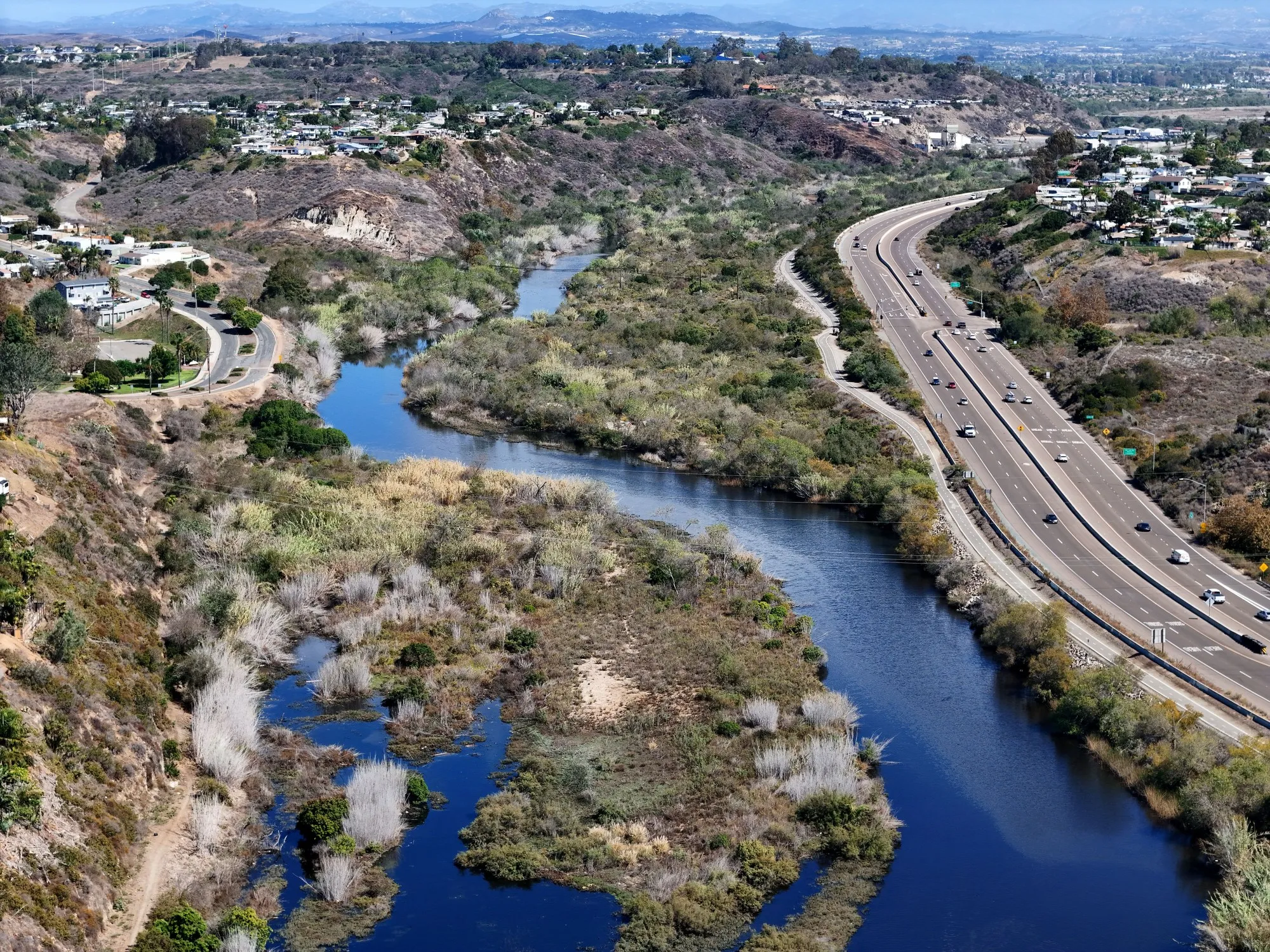







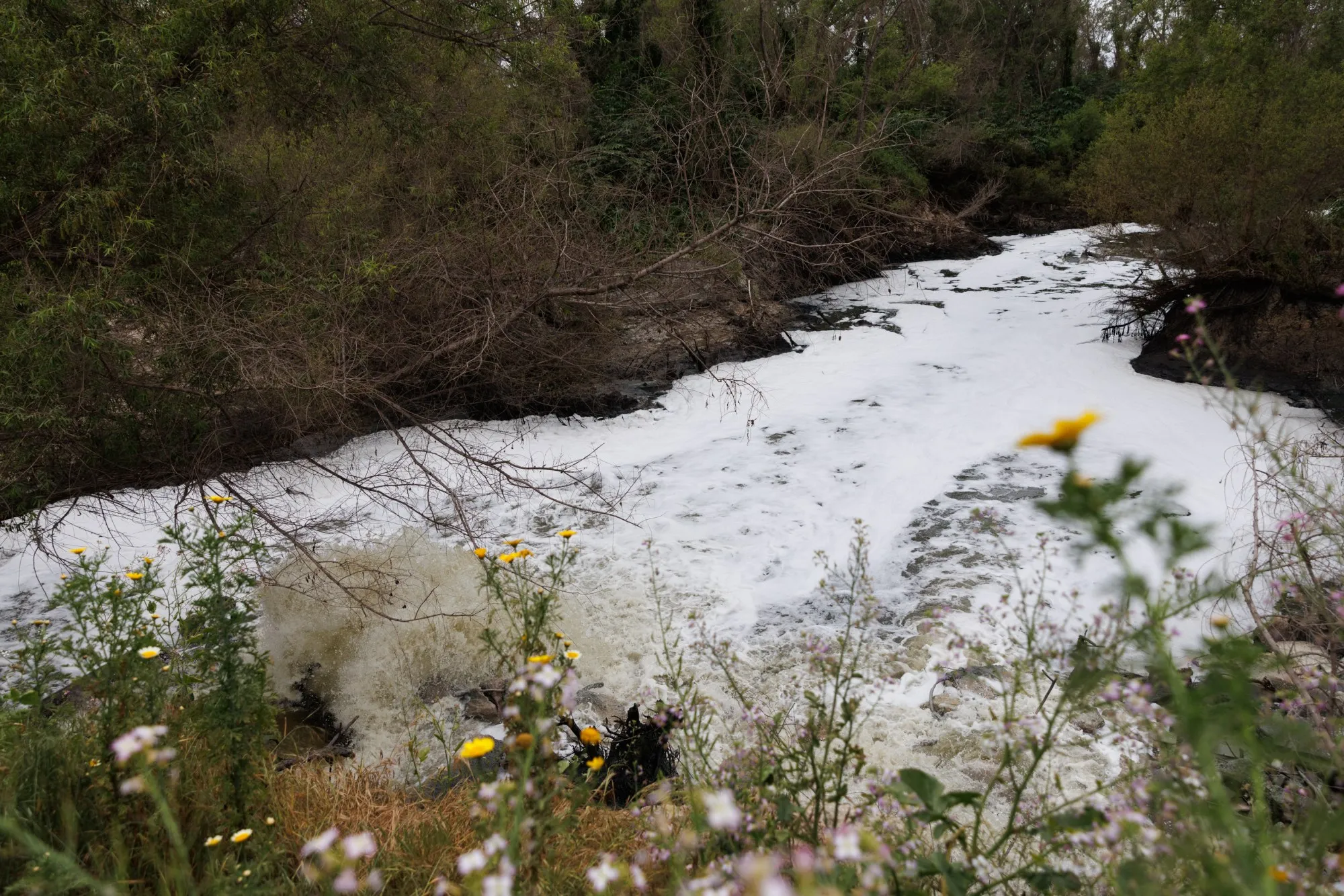
The county is moving to launch a bold plan to construct a treatment plant near the U.S.-Mexico border to capture and clean raw sewage and industrial waste flowing through the Tijuana River — infrastructure separate from the existing South Bay treatment plant, and the first step toward giving the county direct control over the river’s pollution before it reaches San Diego County’s communities and beaches.
Read more Legislature bypasses voters, transfers remaining Palomar Health assets
The San Diego County Board of Supervisors is scheduled to vote Tuesday on two related measures: launching the first phase of the Tijuana River Capture and Cleanup Initiative and advancing a permanent infrastructure fix for a pollution hot spot at Saturn Boulevard.
Supervisors Terra Lawson-Remer and Paloma Aguirre, who chair and co-chair the board, announced the proposals at a news conference Monday, saying the SBIWTP, operated by the U.S. section of the International Boundary and Water Commission, treats wastewater that Mexico captures and conveys to the plant. It does not treat polluted flows that enter the Tijuana River itself and cross the border untreated.
The capture and cleanup measure would direct the county’s chief administrative officer to begin an 18-month project development and engineering analysis, funded by $1.8 million from the county’s Unlocked Reserves Framework, according to a county staff report. The item would also convert the board’s ad hoc subcommittee on the crisis into a standing committee with permanent oversight.
Much of the long-term funding for the initiative could come from a proposed countywide sales tax measure headed for the November ballot. The measure would raise the countywide sales tax rate from 7.75% to 8.25%. Estimates expect the tax to generate $360 million in new revenue in its first year, with 22.5% dedicated to Tijuana River Valley sewage mitigation.
Aguirre said the local revenue measure, if approved by voters, would generate about $80 million annually for Tijuana River solutions, which the county could use to bond for up to $1 billion.
“We wouldn’t have to depend on the federal government or Mexico to bring immediate relief,” she said at the news conference.
Aguirre said every step of the initiative must return to the Board of Supervisors for public review before advancing, pointing to that process as a safeguard for the project going forward.
“Everything has to go through public review, public scrutiny,” Aguirre said. “Anytime we have a board meeting, people have to come and voice their opinion, and at the end of the day, (every phase) still has to be approved by the board.”
A separate measure would allocate $4 million to advance design, environmental review and permitting for a permanent box culvert project at Saturn Boulevard, where hydrogen sulfide levels have reached 16 times the state air quality standard. That work would proceed alongside a $2.5 million interim pipe-extension project already underway, with construction anticipated in 2027. Preliminary estimates put the permanent project’s construction cost at roughly $23 million.
Read more What we know about Trump’s deal giving US access to vast oil reserves in Venezuela
Between 2018 and 2026, more than 200 billion gallons of polluted water crossed into the U.S. through the Tijuana River, according to the staff report, carrying sewage, industrial chemicals, pesticides and “forever chemicals” into the river valley and coastal waters. Researchers at UCSD Scripps Institution of Oceanography estimate water pollution causes roughly 34,000 illnesses annually in Imperial Beach alone, the staff report states.
Lawson-Remer said the existing South Bay International Wastewater Treatment Plant, which received more than $650 million in congressional funding for capacity upgrades and is operated by the U.S. section of the International Boundary and Water Commission, treats wastewater that Mexico captures and conveys to the plant. It does not treat polluted flows that enter the Tijuana River itself and cross the border untreated.
“Managing this crisis is not the same as solving it,” Lawson-Remer said at the news conference.
Aguirre said the county has already distributed 13,000 air purifiers, with 17,000 more planned, and expanded air and water monitoring.
“You don’t fix broken trust with words,” she said. “You fix broken trust with action.”
Lawson-Remer said the initial $1.8 million investment is necessary to develop a design before pursuing larger funding sources.
“It’s very hard to raise money for a project that you don’t have a design for,” she said.
Asked about potential legal liability if the county takes on treatment operations, Lawson-Remer said the county already bears significant responsibility for clean water.
“It would be a really sad day if you don’t do the right thing because you’re scared of doing the right thing,” Lawson-Remer said.
Read more Trump has asked Apple to change Lake Ontario name to ‘Lake America’ on its maps, interior chief says