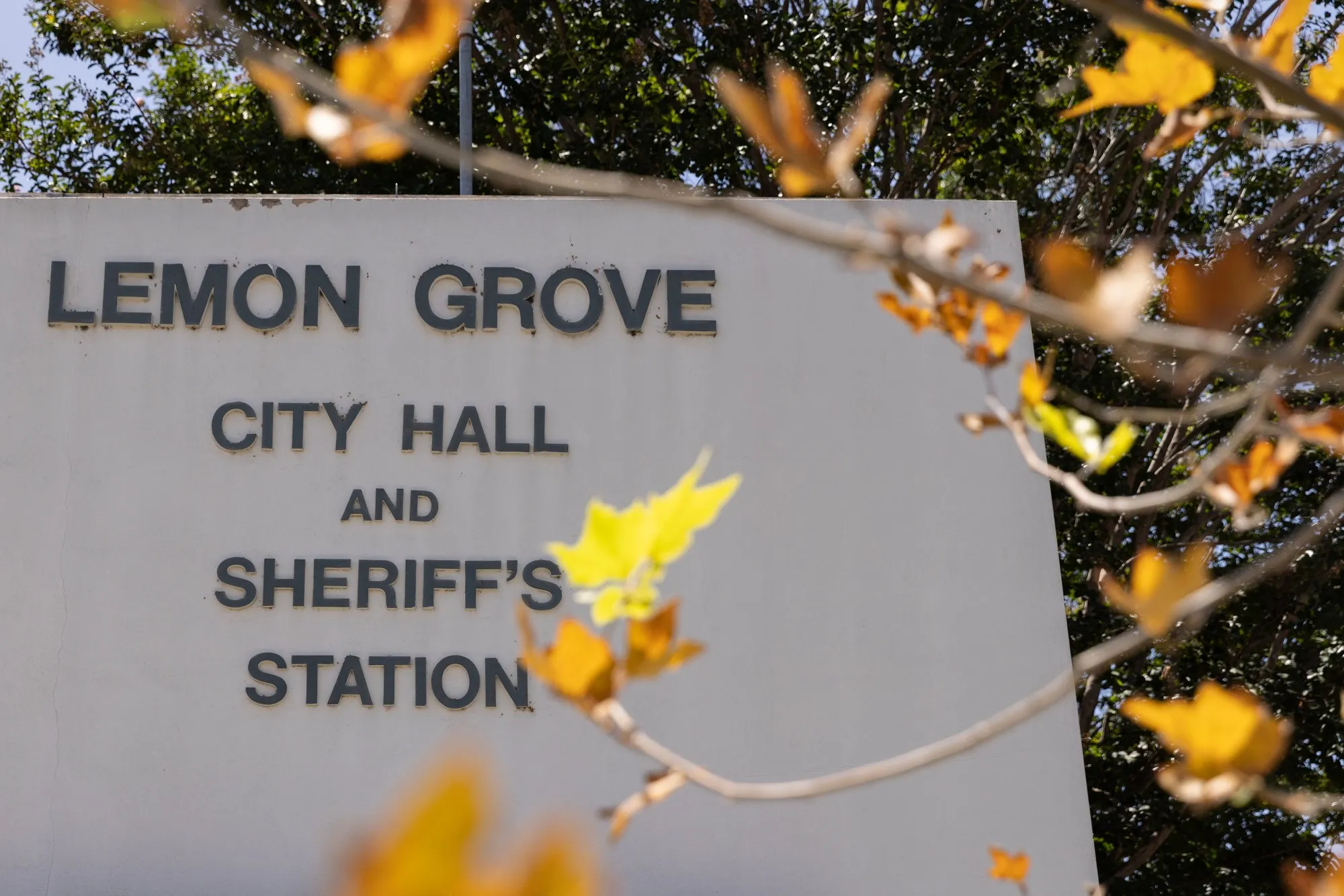








National City officials are moving closer to placing a business license tax reform measure before voters in November, aiming to tax businesses based on their gross receipts and drawing sustained opposition from business owners even as a city-commissioned survey shows support.
Read more Pet of the week: Kitty with a soft meow looking for a home
The City Council held a special workshop Tuesday to review two versions of the proposal, one week after the National City Chamber of Commerce hosted its own forum on the issue July 15. No formal action was taken at either meeting.
The council is expected to decide whether to place the measure on the November ballot at its Aug. 4 meeting. If approved by voters, the new tax structure would take effect Jan. 1, 2028.
The proposal, developed with consulting firm HdL Companies, would replace the city’s nearly 50-year-old tiered flat-fee business license system with a gross receipts tax. The leading option would set rates from 0.1% to 0.3% depending on business category, with a $150,000 cap per business added after feedback from the business community.
City Manager Doug Schulze presented a second option at the Tuesday workshop that would cut the general retail rate to 0.05%, lowering projected new revenue from roughly $7.5 million to about $5.8 million. Both options apply a $25 flat fee only to the first $25,000 in annual gross receipts, with the percentage rate applying above that threshold.
The city faces an estimated $13 million deficit in its roughly $89 million adopted budget, Schulze said. Of that budget, about $21 million goes toward mandatory legal obligations and $54 million toward public safety, leaving about $14.5 million in discretionary spending — covering services like parks, recreation and street repairs — that Schulze said would have to be eliminated entirely to close the gap without new revenue.
“But if we take everything that’s discretionary and we cut it, we fill our budget gap, but we don’t really have a community that provides the types of services that create quality of life and make people feel proud to be in this community,” Schulze said, arguing the business tax reform would allow the city to close its deficit without eliminating those services.
Business owners packed both the chamber forum and the council workshop to voice opposition. Jennifer Ball, vice president of Ball Automotive Group and president of the Mile of Cars Association, has argued gross receipts do not reflect a business’s actual financial health.
“A gross receipts tax is not an accurate measure of a business’s financial success,” she said. “Gross receipts reflect revenue, not profitability.”
Mark Phillip Valerio Santos, owner of Valerio’s Bake Shop, urged the council to slow down.
“Behind every storefront is a person, not just the business,” he said, warning thin margins could force family-owned businesses to delay hiring or expansion.
Rental housing groups have also raised concerns. Molly Kirkland, director of public affairs for the Southern California Rental Housing Association, said residential rental properties face some of the steepest increases under the proposal, which taxes rental income at the top 0.3% rate.
“Their choice to not pay that additional cost is usually to move,” she said, referring to renters facing potential rent increases.
Using the city’s own rate structure and an assumed $2,000 monthly rent, the association calculated the proposed tax would add about $72 per unit annually, or roughly $6 a month, if landlords pass the full cost to tenants. A 200-unit property example drawn from the city’s presentation would see its business tax bill nearly triple, from $5,150 to $14,400, under the analysis.
Support has also emerged. Jeremy Day, president of the National City Firefighters union, and Karla Apalategui, president of the National City Municipal Employees, have both voiced support for the measure in previous reporting.
City officials have pointed to a survey conducted by FM3 Research between June 4 and June 25 that found 71% of 412 likely November voters would support the measure, rising to 77% after they heard information about how the revenue could be used, pollster Richard Bernard told the council on Tuesday.
But the survey has drawn scrutiny. Questioned whether respondents knew the scale of the deficit or impact on businesses when they were surveyed, Bernard said he could not confirm what voters knew, though he said the data showed a broad perception that the city needs more funding. He added the survey — which cost a little over $30,000, according to the city — did not ask voters what spending they’d be willing to cut instead.
Read more House Democratic leader Hakeem Jeffries kicks off 100 days till midterms with affordability agenda