







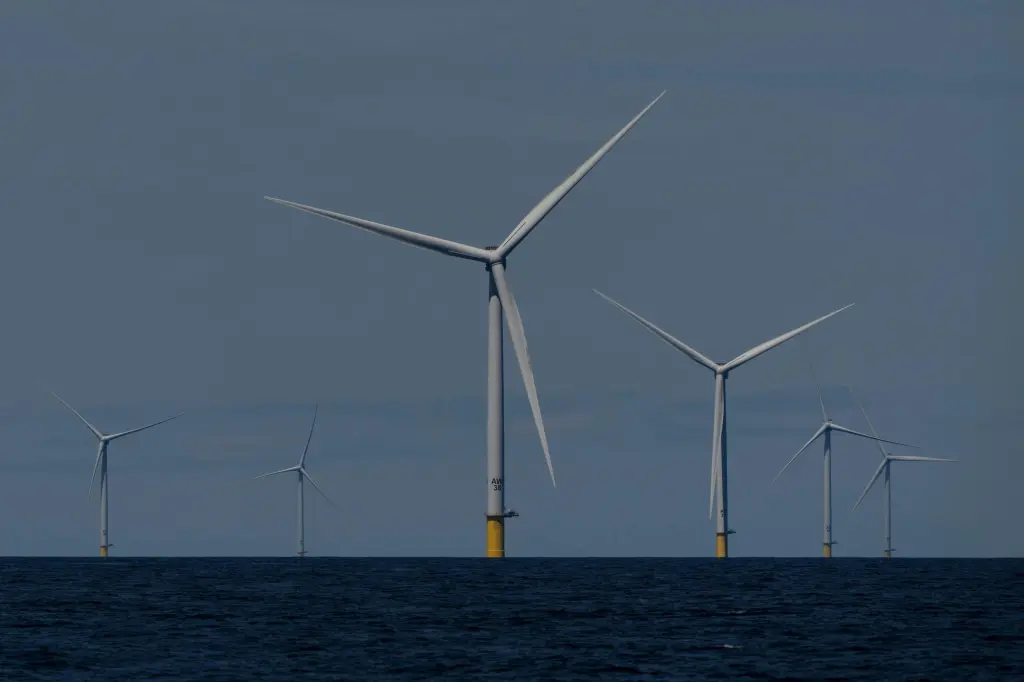
California officials intend to take the Trump administration to court over a buyout between the U.S. Department of the Interior and an energy company that took a floating offshore wind project off the table.
Read more ‘Half-baked’ mega sports complex remains in play for Chula Vista Bayfront
The California Attorney General’s Office and the California Energy Commission also said Tuesday that they have taken the first step to initiate a potential lawsuit regarding a similar agreement that the Department of Interior struck last week with another company.
“California won’t stand idly by as the Trump administration illegally strikes deals to kill offshore wind projects and replace them with more windfalls for his fossil fuel friends; we’re putting the administration on notice that we intend to sue,” Attorney General Rob Bonta said in a statement.
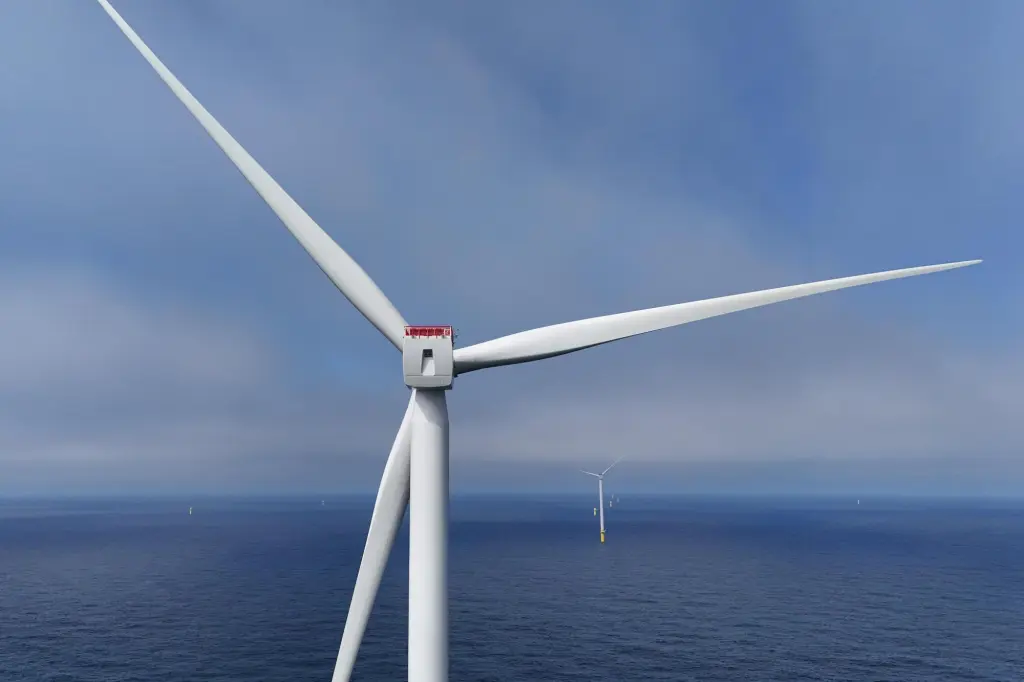
Two months ago, the Department of the Interior announced a deal in which Golden State Wind LLC agreed to “voluntarily end” its lease to develop a huge wind farm on more than 80,000 acres off the coast of Morro Bay. In exchange, the company can recover $120 million in lease fees by spending an equal amount on U.S. oil and gas assets, energy infrastructure or liquefied natural gas projects on the Gulf Coast.
The deal with Golden Wind came on the same day that Interior announced another company had agreed to take a dollar-for-dollar reimbursement to forego a wind project off the coasts of New York and New Jersey.
“The companies that bid for these offshore wind leases were basically sold a product in 2022 that was only viable when propped up by massive taxpayer subsidies,” Interior Secretary Doug Burgum said at the time, calling them “expensive, unreliable, intermittent” energy projects.
On Tuesday, California alleged that the Golden Wind buyout violates the Outer Continental Shelf Lands Act, designed to ensure that California gets a say in offshore leasing and “prevent corrupt backroom deals.”
The state attorney general sent a to a slew of federal agencies, including the Department of Interior, as well as Golden State Wind LLC. The notice provides a 60-day window for the Trump administration and the company to fix the alleged violations of the Outer Continental Shelf Lands Act before California formally files a lawsuit.
The Union-Tribune sent emails to the Department of the Interior and Ocean Winds, one of the partners in the Golden State Wind project, asking for comment but did not receive responses, as of 5 p.m. Tuesday.
The action by California officials comes just days after a second energy company struck the same type of agreement with the administration and withdrew its lease to build an offshore wind project in Central California.
On June 17, Interior announced a $765 million buyback of four wind leases off the coasts of New York, Maine and California that were held by Invenergy, a Chicago-based multinational power generation company. The withdrawals include the Even Keel Wind project — also in Morro Bay and also covering more than 80,000 acres.
Invenergy will redirect the money earmarked for offshore wind to other energy projects, such as developing natural gas plants in Indiana, Wisconsin, Iowa, Kansas and Missouri, plus geothermal projects in the West.
The California Energy Commission said Tuesday that it has issued an administrative investigative subpoena to Invenergy, demanding the company submit a copy of its settlement agreement with Interior, plus provide information on the negotiations and the reasoning that went into the deal.
The subpoena, an energy commission spokesperson said, may act as precursor to filing a potential lawsuit.
The lease withdrawals would likely jeopardize California’s ambitious net-zero energy targets. Offshore wind is considered a cornerstone of the state’s goal to derive 100% of its electricity from carbon-free sources by 2045, if not sooner.
Read more COVID-19 vaccine study that was blocked from CDC journal is published elsewhere
The California Energy Commission, or CEC, had touted plans to develop 25 gigawatts of floating offshore wind power in the space of 20 years. That’s enough generation for roughly 25 million homes and would provide about 13% of California’s electricity supply.
“California will continue to lead the way toward a cleaner, more reliable grid powered by domestic resources,” CEC Chair David Hochschild said Tuesday. “Offshore wind remains an essential component of that work.”
Environmental groups cheered the move by the Attorney General’s Office and the energy commission.
“The CEC’s notice to file suit makes it very clear that there are consequences for breaking your word to the California families and workers depending on these gigawatts and jobs,” said Eddie Ahn, executive director of San Francisco-based Brightline Defense.
While U.S. offshore wind development is in its early stages, the industry in California is in its infancy. No offshore wind farms are operational yet in the state.
Back in December 2022, five companies collectively bid $751.1 million to win leases to build wind farms, each to be located at least 20 miles from the mainland, in federal waters.
But with U-turns by Golden State Wind and Even Keel Wind, the number of leases and potential developers in California is now down to three — two in Humboldt Bay in Northern California and one in Morro Bay.
Some wind energy supporters fear other deals between the Trump administration and the remaining companies may be in the offing.
Offshore wind projects in California are different than facilities in other parts of the country.
Unlike the East Coast, where turbines can be bolted into the seabed, the continental shelf off the Pacific coast plunges steeply.
That means offshore wind farms in California must float on the water’s surface, tethered or moored by cables to the ocean floor. Electricity generated by turbines will be transmitted to a floating substation and carried to a power plant onshore via buried cables.
There are no plans to construct floating offshore wind farms in San Diego or Southern California. That’s in large part due to discussions between military officials and the Bureau of Ocean Management that led to designating Southern California as a “wind exclusion” area because of concerns that offshore wind facilities would interfere with training missions.
In addition, wind speeds in the south are not as strong or steady as those in Central and Northern California.
Read more Officer opens fire on barricaded suspect in burning apartment building in Cortez Hill